


According to an OpinionWay study for La Retail Tech (March 2024), 51% of French people say they are ready to change retailer in the event of a stock-out. on food products. This figure alone illustrates the extent to which product availability has become a critical issue: it no longer just conditions the ability to sell, but directly affects the ability to retain customers and protect market share.
Product availability is a key performance indicator for any company operating in distribution, retail or e-commerce. It reflects an organization’s ability to make a product available to a customer at the precise moment of demand, without disruption or uncontrolled delays.
In a context where purchasing is increasingly instantaneous and comparative, unavailability mechanically translates into a loss of sales, a shift to competitors and a deterioration in the perception of reliability associated with the brand. It also influences the quality of order tracking and the overall post-purchase experience.
The stakes are all the more strategic as purchasing preferences evolve. According to the Made in France Barometer carried out by IFOP for Pro France, 78% of French people say they prefer Made in France products, with a particularly high level in the food sector. This trend has a direct impact on planning, supply flows and the management of delivery times, especially when value chains are more local but sometimes less flexible, making securing availability more complex.
More than just a logistics indicator, availability is part of a broader strategic analysis of supply and demand. It requires structuring trade-offs between service level, rotation, inventory cost and profitability. It determines the ability to check availability in real time and make home delivery more reliable , elements that have become central to the omnichannel customer experience.
The main pain point for organizations lies in the difficulty of managing these trade-offs in an integrated way: the supply chain seeks to secure the service rate, finance to control working capital, and sales to guarantee the customer promise, often without optimal alignment. With rigorous, data-driven management, availability becomes a major lever for commercial and operational performance.
What is product availability?
Product availability is the rate at which a product is actually available at the time of potential purchase. It measures the company’s ability to respond immediately to demand, whether in store, in warehouse or on a digital platform. It directly impacts the customer experience, particularly when a product becomes unavailable at checkout.
It is part of the market analysis as an indicator of the coherence between sales strategy, demand forecasting and supply chain execution. Low availability is reflected in orders in progress that cannot be fulfilled on time, or by ordered products whose order will be processed with delays. It generally reflects a misalignment between internal and external analysis, whether due to forecasting errors, supplier constraints or poorly calibrated trade-offs.
Availability is not limited to the physical existence of stock. It also depends on product visibility, accessibility and the ability of systems to synchronize information between channels. This synchronization ensures the reliability of status of your order and the consistency between commercial promise and operational execution.
Agentic AI: why product availability becomes critical to exist in the buying journey?
In an e-commerce environment driven by agentic AIs, product availability is no longer just a matter of operational performance; it directly conditions your presence in the buying journey.
Agents only offer immediately actionable options. An out-of-stock condition no longer means a lost sale, but an exclusion from recommendations. In other words, an unavailable product makes the brand invisible.
Anticipating demand, ensuring inventory reliability and automating replenishment are no longer options: they are prerequisites for existence.
To find out more, read our full analysis:
Agentic AI: why product availability becomes critical to exist in the buying journey?

Availability types: stock, department, e-commerce
Availability is expressed at several levels, each revealing a specific link in the decision-making and operational chain. Understanding these levels enables us to identify precisely where weaknesses lie, and to act with method.
Stock availability corresponds to the actual presence of the product in systems and warehouses. It depends directly on forecast accuracy, replenishment settings, and the reliability of delivery lead times. suppliers. An error at this stage can result in a order placed that cannot be fulfilled in time or by a partially processed order.
Theoretically adequate stock levels can mask poor allocation between sites or inappropriate segmentation of SKUs. Conversely, excessive stock levels can secure short-term availability, but reduce profitability and turnover. Stock availability is therefore a key indicator of the balance between service levels and working capital management, directly influencing the amount of your order and the quality of the proposed delivery method.
On-shelf availability, often measured by OSA, reflects the ability to transform available stock into real sales opportunities. It depends on the quality of in-store execution, internal flow management and the prioritization of strategic SKUs. A product available in the backroom but missing from the shelf represents a perceived stockout, which can impact in-store pickup or force the customer to modify your order.
Availability in e-commerce is based on consistency between theoretical and actual stock, reliability of real-time data and synchronization between physical and digital channels. Inconsistencies lead to cancellations and degrade the status of your order, disrupts the tracking of your package and complicatesdelivery by the carrier.
Each level of availability refers to a distinct lever: forecast accuracy, quality of operational execution or robustness of information systems. By analyzing them separately, we can refine our strategic diagnosis and target corrective actions more effectively.
Why is the availability of a product online or in-store a key issue for retailers?
Impact on sales and revenue
Product availability has a direct impact on sales. Each breakdown represents a lost sale, and immediately exposes the company to a transfer to a direct or indirect competitor. When repeated, it weakens the customer relationship, erodes confidence and progressively reduces market share. Its impact is cumulative: beyond the lost transaction, it affects loyalty and medium-term profitability. In an omnichannel environment An undelivered order, or an order delivered late, is a concrete manifestation of this operational failure.
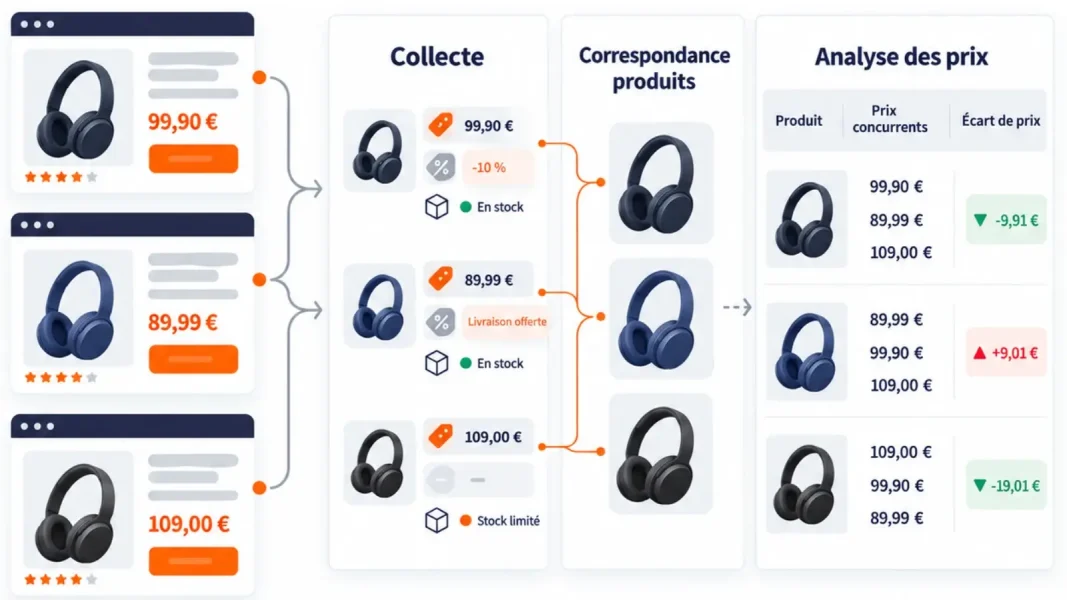
In the age of agentic AI, this issue takes on a new dimension: competitive prices and product availability become decisive criteria, particularly for pure players, as they directly condition whether or not they are included in recommendations. Find out more about our article here
Consumer behavior confirms this increased demand. In France, 44% of customers say they cannot tolerate the unavailability of electronic products in-store, with this sensitivity particularly strong in high-value categories. More generally, 4 out of 10 French people change their retailer when confronted with a stock shortage, whether at the point of sale or online. This situation has a direct impact on delivery tracking, the perceived reliability of current orders and the ability to deliver on the promise made to the end customer.
These data, taken from an OpinionWay study carried out for Autone, highlight the concrete impact of disruptions on purchasing behavior and the stability of customer relations. Companies that maintain high availability rates consolidate their competitive position by securing their customers’ supply. delivery of your parcel and guaranteeing that orders are delivered as expected.
Impact on customer satisfaction
Availability makes a major contribution to the perception of reliability. Customers confronted with repeated stock-outs change their consumption habits and reconsider their choice of retailer.
Satisfaction is not based on price or promotion alone. It depends on the ability to deliver on the implicit promise of availability. This has a direct impact on brand awareness, loyalty and long-term performance.
Operational consequences
Poor availability generates multiple costs. Lost sales forecasts, compensatory overstocking, urgent transport, increased operational complexity.
It often reveals weaknesses in strategic analysis, internal and external diagnosis, or coordination between sales strategy and supply chain. Conversely, controlled availability helps optimize stock levels, improve rotation and secure margins.

The impact of product availability on brand image
The impact of product availability on brand image is direct, measurable and often underestimated. Each stock shortage not only represents a loss of sales: it also affects the company’s perception of reliability, professionalism and operational mastery. In an environment where comparisons are immediate and alternatives are just a few clicks away, unavailability undermines the commercial promise.
In fact, availability is concrete proof of consistency between marketing rhetoric and operational execution. A brand that communicates quality, expertise or proximity, but fails to make its products accessible at the moment of demand, creates a misalignment perceived by the customer. This misalignment alters trust and reduces perceived credibility.
Conversely, a high level of availability reinforces an image of solidity and reliability. It reassures the consumer, consolidates the relationship over time and contributes to loyalty. The ability to offer the right product, at the right time, through the right channel is becoming a distinctive marker, particularly in sectors with strong competition or high added value.
The impact of product availability therefore goes beyond the purely logistical dimension: it plays a part in building brand equity. Controlling this indicator means protecting your reputation, stabilizing your market share and ensuring that your sales performance is sustainable.
Common causes of availability problems
Forecast errors and peak demand
Inadequate forecasting is one of the main causes of disruption. Inadequate market analysis, poor segmentation and underestimation of major trends all lead to gaps between supply and demand. These imbalances translate into an order in progress that cannot be fulfilled, an order placed and then delayed, or the need tocancel the order.
Peaks linked to promotions, seasonality or new product launches amplify these tensions if forecasting models are not sufficiently robust. The impact is measured in If you are unable to track your order, if it takes longer to process, or if you are unable to meet the estimated delivery date, your order will be delivered.
Supply chain and supplier problems
Supplier constraints, logistics lead times and operational hazards have a direct impact on availability. Insufficient external analysis of supply chain risks can undermine the entire system, and lead to delays in delivery. difficulties for the carrier.
Identifying key factors and competitive forces specific to the business sector enables us to anticipate these risks and strengthen resilience, in particular by securing delivery addresses and making the tracking number communicated to the customer more reliable.
Limits of manual processes
Processes based on manual adjustments lack responsiveness and consistency. The absence of a dedicated strategic tool makes it difficult to prioritize actions and manage by exception.
Decisions become fragmented, increasing the risk of misalignment between corporate strategy and operational execution, and multiplying the number of situations requiring us to contact our customer service department or file a return request.
How do you measure product availability?
Key indicators: ISF, OSA, Fill Rate
Product availability is based on several complementary indicators that enable us to assess operational performance. ISF (Immediate Service Rate) measures the ability to meet demand on first contact, revealing any forecasting or stock management problems. OSA (On Shelf Availability) focuses on actual on-shelf presence, highlighting discrepancies between theoretical stock and actual customer availability. Finally, Fill Rate assesses the ability to fill orders without breakage or splitting, particularly in an omnichannel or B2B context.
Taken in isolation, these indicators offer a partial vision. But analyzed together, they can identify the root causes of stock-outs, optimize processes and secure sales.
To understand their role in more detail, read the full article : How to measure and improve product availability

Tools and software for tracking product availability
Relevant management of product availability depends on the ability to consolidate, make reliable and exploit data on an ongoing basis.. Dashboards are an indispensable foundation: they enable you to monitor key indicators (out-of-stock rates, service levels, stock coverage, OTIF) and, above all, to quickly identify significant deviations. The challenge is not to monitor the entire catalog, but to organize management by exception, prioritizing alerts according to their potential impact on sales, margin or market share.
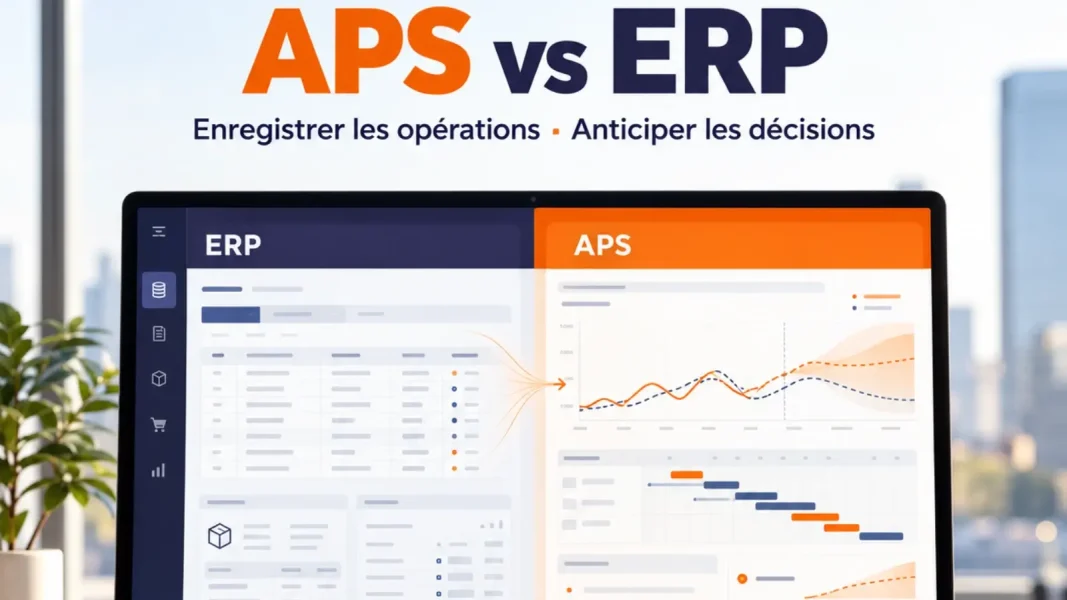
Automation plays a decisive role here. By integrating internal data (inventories, sales, lead times), demand signals and market elements, modern tools transform availability into a genuine strategic variable, at the service of planning and not simply a reaction to shortages. This approach reduces the need for manual adjustments and improves the consistency of trade-offs.
Sustainable improvement in availability does not mean mechanically increasing inventory, at the risk of damaging profitability and working capital requirements. It is based on three structuring levers:
- advanced forecastingAI models capable of integrating seasonality, promotions and weak signals;
- fine segmentation of references (contribution, volatility, criticality) ;
- dynamic replenishmentcontinuously adjusted according to observed trends.
Specialized forecasting solutions such asOptimix Solutions fit within this approach: structuring forecasting, automating replenishment, and visualizing stockout points. The aim is not to replace human decision-making, but to reinforce anticipation.
How can I find out when products are available in certain stores?
Knowing the availability of a product in a specific store has become a decisive criterion in the purchasing process. Before going to the store or confirming an order online, customers want to check availability in real time, to avoid stock-outs or undelivered orders. This requirement has been reinforced by the widespread use of click & collect, home delivery and in-store collection.
In the specialized retail sector, brands such as Gifi now offer store-by-store availability directly from the online product sheet. Customers can select a store and see whether the item is available immediately, in limited stock or temporarily unavailable. This transparency enhances the shopping experience, reduces unnecessary trips to the store and limits the number of unfulfilled orders in progress.
On the pure player side, Amazon has structured a particularly advanced system. The platform displays instant availability, estimated delivery date, stock status and shipping options. Customers can thus anticipate delivery times, track their parcels thanks to a tracking number, and know the exact status of their order. This operational reliability is based on close synchronization between actual stocks, distribution centers and forecasting algorithms.
For the company, displaying product availability in-store or online requires upstream data reliability. Consistency between theoretical and actual stock levels is crucial. Incorrect information leads to cancellations, delays, refund requests or repeated contacts with customer service. The ability to provide reliable information on availability is therefore an indicator of the maturity of information systems and the supply chain.
From a strategic point of view, making availability visible in each store also helps to optimize flow allocation. An informed customer can choose another point of sale, adapt his delivery method or accept an additional delay. This flexibility reduces pressure on certain saturated sites and improves the overall service rate.
Checking in-store availability is therefore not just an e-commerce function. It reflects an integrated approach to forecasting, inventory management, replenishment and omnichannel synchronization. The more reliable and up-to-date the information, the more credible the sales promise, and the more sales performance is consolidated over time.
Improve product availability to boost sales performance
Product availability is not just a matter of logistics execution. It is a strategic indicator revealing the organization’s level of maturity and the coherence between sales strategy, market analysis and operational capacity. A repeated discrepancy between actual demand and effective availability often reflects a deeper misalignment between forecasting, planning and economic trade-offs.
To transform availability into a performance driver, several structuring principles can be adopted.
It is essential to integrate availability into strategic planning, rather than treating it as an isolated indicator. Decisions on assortment, pricing policy or segment prioritization must be consistent with supply chain capacities and forecasting parameters. This alignment reduces reactive decision-making and strengthens strategic discipline, particularly by securing the delivery times and limiting out-of-stock situations .
Measurement must be based on reliable indicators, monitored over time and analyzed jointly. The challenge is not to accumulate KPIs, but to produce a usable strategic diagnosis, capable of guiding a clear action plan. Exception-based management, supported by consolidated data, enables teams to focus efforts on the products that truly drive revenue and market share, while improving order tracking and reliable order status.
Process structuring is also a determining factor. Automating certain decisions, making forecasts more reliable and clarifying management rules improves consistency between sales ambitions and operational execution. This organizational rigor limits ad hoc decision-making and ensures sustained performance by reducing cases of unfulfilled or undelivered orders.
Finally, availability should be seen as an indicator of competitive position. In an environment where comparison is immediate and loyalty more volatile, the ability to make the right product available at the right time is a tangible competitive advantage. It helps strengthen market share, stabilize forecasted revenue, and support overall business performance in demanding markets, particularly through reliable home delivery and orders delivered as promised.
Controlling availability is not a matter of increasing stocks, but of structuring decisions. It is this discipline, based on strategic analysis, process coherence and continuous monitoring, that transforms an operational indicator into a genuine lever for sustainable performance.