



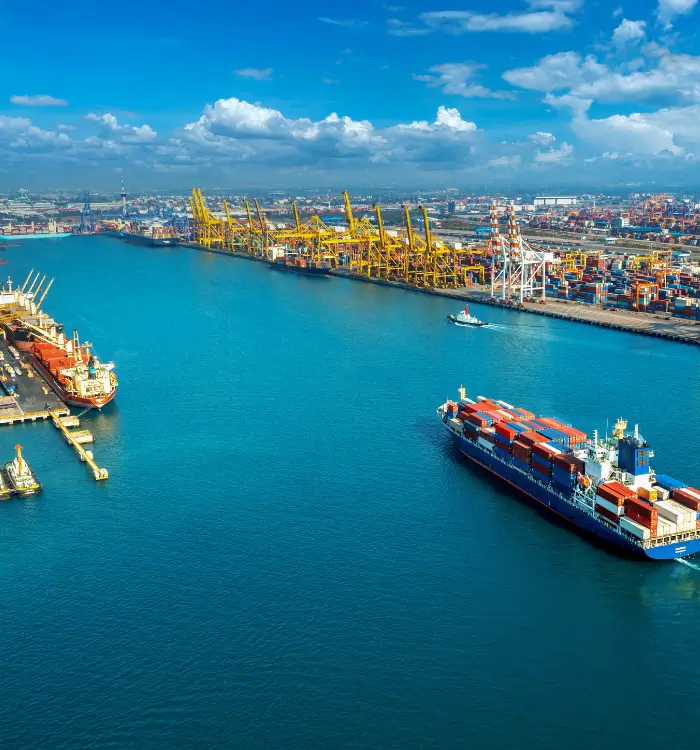
Since February 28, 2026, tensions in the Strait of Hormuz have considerably disrupted global logistics flows. According to the Drewry index, sea freight costs on Asia-Europe routes have jumped by more than 250% in just a few weeks. As a direct consequence, delivery times have doubled, safety stocks have doubled, and margins have deteriorated sharply in several industrial sectors, notably in the French solar industry, which is already facing a persistent shortage of photovoltaic panels.
This episode illustrates a now structural reality: global supply chains have become extremely sensitive to geopolitical crises.
For several years now, companies have been operating in an environment marked by permanent international instability. War in Ukraine, tensions in the Red Sea, Sino-American rivalries, economic sanctions, energy inflation and the accelerating fragmentation of international trade: all these factors are accelerating the disorganization of global flows, putting pressure on purchasing, transport, supply chain and pricing departments.
For retailers, the impact goes far beyond the simple question of supply. A product disruption can now disrupt the entire value chain: loss of sales, unbalanced assortments, pressure on margins, promotional inflation and degradation of the customer experience.
The result: unbalanced inventories, soaring costs and weakened delivery capacity. In this context, the real challenge is no longer simply to optimize costs, but to guarantee business continuity while preserving profitability.
Limiting disruptions thus becomes a strategic priority.
A vulnerable supply chain
For decades, global supply chains have been structured around one overriding imperative: cost optimization. Production relocation, just-in-time delivery, international sourcing and reduced inventory levels have enabled companies to considerably improve their competitiveness and margins. This model, based on the fluidity of global trade and geopolitical stability, has long been the bedrock of industrial and commercial performance.
But this balance is now showing its limits.
The growing number of geopolitical crises highlights the fragility of ecosystems that are now heavily dependent on strategic maritime routes, suppliers concentrated in a few regions of the world, critical raw materials and energy infrastructures sensitive to international tensions. In such an interconnected environment, the slightest diplomatic, military or economic event can now cause disruption on a global scale.
Slower deliveries, soaring transport costs, supplier shortages, volatile purchase prices or pressure on production capacity: the effects of these crises are now spreading throughout the value chain with unprecedented speed.
For distributors and retailers, this instability greatly complicates the trade-offs between product availability, inventory control, price competitiveness and margin protection. The supply chain is no longer just an operational issue; it has become a strategic challenge directly linked to the company’s economic resilience.

Stocks under strain: the new impossible balance for retailers
Faced with this uncertainty, many retailers have reviewed their stocking strategies.
Some have reinforced their safety stocks to limit the growing instability of supplies. Others have maintained tighter models to preserve cash flow.
In both cases, the limits quickly become apparent.
The hidden cost of overstock
Stockpiling can temporarily secure supplies, but this strategy leads to significant capital immobilization in a context of high inflationary pressure on logistics costs. It also increases the risk of unsold stock, markdowns and pressure on margins. In retail, where product cycles are increasingly short, overstocking quickly becomes value-destroying.
However, thanks to better anticipation of needs and more precise allocation of stocks, some retailers have managed to improve their margins by more than 5%, while reducing their exposure to out-of-stocks and overstocks.
The critical risk of breakage
Conversely, understocking directly undermines sales performance.
A product breakthrough today :
- immediate sales,
- customer loyalty,
- the conversion rate,
- the brand’s price image,
- omnichannel consistency.
In some sectors, a few days of disruption can be enough to switch consumers to competitors.
So the issue is no longer just logistical: it’s becoming strategic and financial.
Rising logistics costs: why are retailers under pressure?
Permanently unstable maritime flows
Today, geopolitical crises are exerting direct pressure on the world’s major trade routes, upsetting international logistics balances. Tensions in certain strategic zones, such as the Strait of Hormuz or the Red Sea, are forcing many carriers to modify their routes, considerably lengthening transit times. These detours automatically lead to higher fuel costs, increased intermediate storage requirements and a heightened risk of delivery delays. For international retailers, this unpredictability greatly reduces their ability to plan their supplies.
Energy inflation hard to absorb
Energy remains a central pillar of the global supply chain, whether for industrial production, warehousing, transport or distribution. However, against a backdrop of persistent geopolitical tensions, energy prices are becoming particularly unstable and difficult to anticipate. This volatility is gradually having repercussions throughout the value chain, driving up supplier costs, purchase prices and logistics rates. For distributors, the challenge now lies in their ability to absorb these variations without damaging their margins or undermining their price competitiveness.
Critical dependence on certain markets
Many industries remain heavily dependent on a few geographic zones for their supplies of semi-conductors, electronic components, rare metals or strategic manufactured products. This concentration of production capacity mechanically increases the vulnerability of global supply chains. The slightest political, industrial or logistical slowdown rapidly increases the risk of disruption, as do variations in costs and restocking times. For retailers, this dependence makes the trade-offs between product availability, inventory management and pricing policy increasingly complex, in an environment already marked by strong economic instability.
Which sectors are most at risk?
Not all sectors are affected by geopolitical crises with the same intensity. The most exposed are generally those that rely heavily on imports, energy costs and globalized supply chains.
Retail is one of the most vulnerable sectors. Retailers have to simultaneously manage the risks of disruption, rising logistics costs and pressure on selling prices. In a context where consumers remain highly sensitive to purchasing power, the balance between product availability and margin protection is becoming particularly complex.
The manufacturing industry has also been hard hit, particularly in the automotive, electronics and industrial equipment sectors. Dependence on semi-conductors, rare metals and Asian components is seriously undermining production capacity.
Energy-intensive sectors such as chemicals, metallurgy and transport are directly affected by the volatility of oil and gas prices, while the food industry remains exposed to pressures on raw materials and transport costs.
In this context, companies able to anticipate tensions thanks to better visibility of their inventories, supplies and pricing have a decisive competitive advantage.
Faced with global tensions: how can retailers adapt to avoid losing out on margins?
Faced with geopolitical instability that has become structural, retailers are now seeking to secure their operations while preserving their competitiveness. This trend is accelerating the emergence of new supply chain resilience levers, capable of reducing exposure to disruptions, logistical tensions and cost volatility.
Diversifying suppliers and accelerating nearshoring
Supplier diversification is becoming a strategic priority to limit dependence on certain sensitive geographical areas. Many retailers are stepping up their nearshoring strategies to bring part of their supplies closer to consumer markets. This gradual regionalization of flows reduces lead times, improves supply chain visibility and limits exposure to international shipping disruptions.
Some banners, for example, are looking to move part of their production to Eastern Europe, Turkey or North Africa to reduce their dependence on Asia-Europe flows.
Towards more predictive inventory management thanks to AI
Traditional warehousing models are evolving towards much more dynamic approaches. Thanks to artificial intelligence and predictive analysis, retailers can now adjust their buffer stocks according to supplier risks, geopolitical tensions or fluctuations in demand. The aim is no longer to massively overstock, but to secure supplies in a more targeted and cost-effective way.
Forecasting tools, for example, enable us to identify tensions on certain strategic references more quickly, and automatically adjust replenishment policies in line with changes in demand.
Driving pricing with data and AI
In a context of high cost volatility, pricing policies need to become more responsive. Retailers are now seeking to implement more dynamic pricing strategies, capable of rapidly integrating variations in purchasing costs, inventory pressures or changes in demand. This approach makes it possible to absorb part of the inflation while protecting margins and price competitiveness.
Some chains are increasingly using intelligent pricing tools capable of automatically detecting market variations and adapting prices in near-real time, in order to preserve margins without damaging price competitiveness.
Secure transport with more flexible freight contracts
Securing transport capacity is also becoming a major challenge. To limit their exposure to extreme fluctuations in sea freight, many companies are now adopting hybrid strategies combining long-term contracts and spot purchases. This flexibility makes it easier to absorb market fluctuations, while guaranteeing operational continuity in a logistics environment that has become much more unstable.
Strategic partnerships with several carriers thus become a key lever for guaranteeing greater flexibility and ensuring continuity of operations even during periods of major logistical disruption.

Why is pricing a strategic issue in this particular context?
In this new economic environment, pricing policies are becoming much more complex for retailers to manage. The volatility of supply, transport and energy costs now forces retailers to constantly arbitrate between price competitiveness, product availability, margin protection and customer perception.
A sudden rise in costs cannot always be passed on immediately in stores or e-commerce outlets, particularly in a context where consumers are highly sensitive to purchasing power. Conversely, absorbing such inflation over the long term without adjusting prices rapidly weakens profitability and reduces investment capacity.
This instability is profoundly transforming pricing strategies. Static models or one-off adjustments are no longer sufficient in the face of markets that have become much more volatile. Retailers must now adopt more dynamic approaches, capable of integrating cost variations, supply tensions, stock levels and demand behavior in real time.
Pricing thus becomes a genuine strategic lever, at the crossroads of sales performance, supply chain resilience and margin preservation.
The limits of manual piloting
For a long time, inventory and pricing decisions were based mainly on sales histories, manual adjustments and relatively stable planning cycles. These models enabled retailers to steer their operations in an environment where market fluctuations remained relatively predictable.
But in a context marked by high geopolitical unpredictability and accelerating structural disruption, these approaches are now showing their limits. Demand variations, supply instability and cost fluctuations are evolving far too rapidly to be effectively managed manually.
According to McKinsey, forecasting models powered by artificial intelligence can reduce forecasting errors by 20-50%, significantly improving product availability and the operational performance of supply chains.
Companies that continue to operate with limited visibility expose themselves to growing operational imbalances: a proliferation of out-of-stocks, overstocking of certain references, delayed reactions to market developments and increased pressure on margins. In this new environment, the ability to anticipate becomes a key factor in resilience and performance.
Data and software become levers of resilience
Faced with growing operational complexity, the most resilient retailers are now investing massively in supply chain management and pricing technologies. The aim is no longer simply to automate certain tasks, but to strengthen their ability to anticipate in an environment marked by highly unpredictable costs, supplies and demand.
The new control platforms enable you to :
- anticipate supply tensions,
- detect breakage risks earlier,
- adjust stock levels in real time,
- simulate different demand scenarios,
- optimize restocking policies,
- adapt prices according to costs, availability and customer sensitivity.
Thanks to predictive analysis and artificial intelligence, retailers now have much greater visibility of their operations, and can react more quickly to market disruptions. In this context, data becomes a central strategic asset, capable of securing product availability, preserving the customer experience, maintaining price competitiveness and sustainably protecting margins in a stressed economic environment.
Resilient supply chain: towards more agile inventory and price management
Geopolitical crises are permanently reshaping the balance of the global supply chain and profoundly transforming retail models. Rising logistics costs, supply tensions, price volatility and growing risks of disruption are forcing retailers to move beyond traditional approaches based solely on cost reduction, just-in-time delivery and flow optimization. In this context, retailers can no longer pilot their operations with fixed models. The ability to anticipate fluctuations in demand, adjust stock levels and rapidly adapt pricing policies is becoming a key factor in resilience and competitiveness.
Performance increasingly relies on companies’ ability to gain resilience, agility and real-time visibility. Anticipation is becoming as strategic as supply. Retailers able to better manage their inventories, sales forecasts and pricing policies will have a major competitive advantage in the years to come.
This development is also accelerating the use of intelligent management tools, capable of analyzing data in real time, simulating different demand scenarios and adjusting operational and pricing decisions more rapidly in the face of market fluctuations.
The question is no longer whether another crisis will occur, but whether organizations will have the visibility, responsiveness and tools they need to secure their business, protect their margins and maintain product availability in a context marked by structural disruptions to the global supply chain.