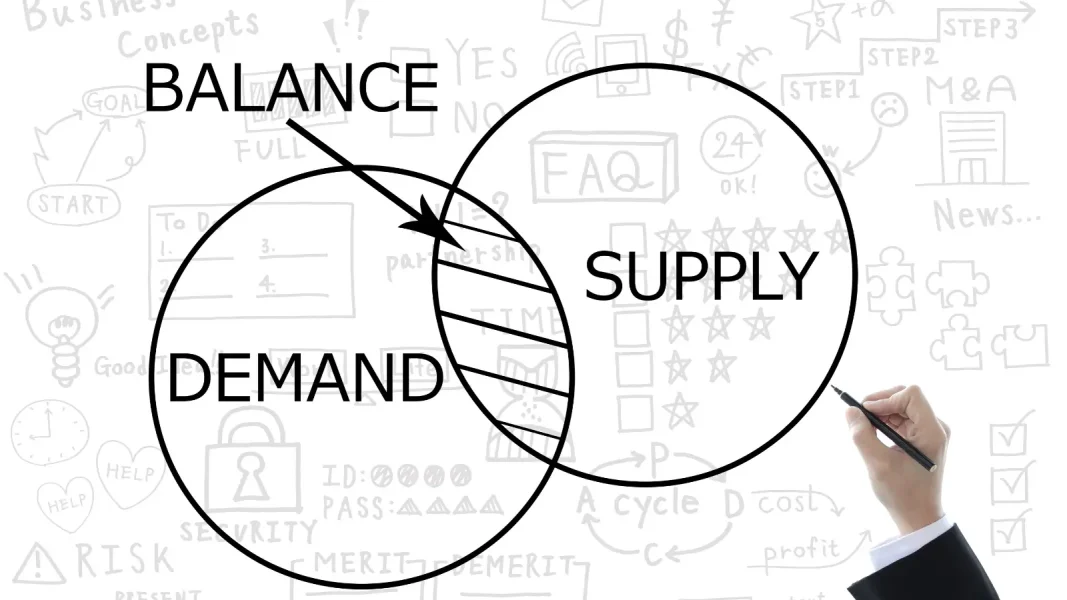




Product availability is no longer measured solely by the amount of inventory a retailer holds, but by its ability to make that inventory available where demand arises.
For the consumer, however, the equation remains simple: a product is either available or it isn’t.
Peu lui importe qu’il reste dix unités dans un autre magasin, que le stock soit présent dans un entrepôt ou qu’une référence soit théoriquement disponible sur un autre canal. What matters is being able to buy the product at the time and in the way the customer chooses.
For the retailer, the reality is much more complex.
Stores, warehouses, e-commerce, click-and-collect: Behind the seamless experience that customers expect lie multiple inventories, multiple flows, and sometimes multiple approaches to forecasting, allocation, and inventory management.
The result: a retailer may have the right amount of inventory across its network and still lose sales because that inventory isn’t located where demand arises.
So the management question is no longer just: “Do we have enough inventory?”
It becomes: How can we leverage the network and the various channels as a single availability system rather than as multiple silos?
Having inventory no longer necessarily means being available
Let’s imagine a product that’s particularly sought-after as the school year begins.
It’s out of stock at one store, but several units are still available at another location. The item is in stock at the warehouse, but the restocking lead time won’t allow us to meet local demand quickly enough. On the e-commerce site, the product appears to be unavailable, even though it might be available from another part of the network.
On paper, the store has inventory.
From the customer’s perspective, however, it is out of stock.
This distinction fundamentally changes the way we view availability.
In an omnichannel environment, performance no longer depends solely on the total volume held by the retailer. It depends on the retailer’s ability to know where inventory is located, where demand is emerging, and how to adjust its allocation and replenishment quickly enough.
This issue becomes particularly critical at the start of the school year. When peak activity is concentrated over just a few weeks, an imbalance that persists for several days can be enough to cause the company to miss out on some of its sales potential.

Inventory fragmentation can lead to both stockouts and excess inventory at the same time
That’s one of the paradoxes of omnichannel retailing.
One store may be out of a particular item, while another may have too much of it. The e-commerce channel may experience an unexpected surge in demand, while part of the inventory remains tied up in the physical retail network.
The retailer may therefore find itself facing, at the same time, a local shortage and a surplus elsewhere in its network.
Ordering more isn’t necessarily the right answer.
Adding to overall inventory to resolve a local availability issue can actually exacerbate the imbalance: more capital is tied up, even though the necessary units may already exist elsewhere.
Before asking how much to order, another question becomes essential:
Is the inventory already available in the network being utilized to its full potential?
In a multi-site environment, the challenge is therefore no longer simply a matter of determining the optimal overall inventory level. It is also necessary to determine how this inventory should be allocated among the various product-sites to best meet expected demand. Allocation thus becomes a key driver of availability and economic performance.
This issue shifts the focus of omnichannel from a retail topic to a true driver of economic performance.
Building a Unified View of Inventory
You can’t orchestrate what you can’t see.
The first requirement, therefore, is to have a sufficiently reliable and up-to-date view of available inventory at the various points in the network: stores, warehouses, and digital channels.
However, this visibility should not be an end in itself.
Knowing that a unit exists somewhere is only valuable if that information can then be used to inform a procurement or allocation decision: to ensure a need is met, to adjust a distribution, or to direct inventory toward the products and locations where demand is highest.
Following this logic, each inventory management method must be based on information that is sufficiently accurate to support these decisions.
Inventory visibility becomes strategic when it translates into the ability to allocate inventory.
The network then begins to function not as a collection of independent inventories, but as a set of resources that can be mobilized to meet demand.
This view must also be granular enough to allow for trade-offs at the level where they are actually needed. A balanced situation at the network level can, in fact, mask significant disparities between products, stores, or demand zones.
Allocate inventory based on demand, not just on channels
This approach also requires a review of how inventory is allocated.
Historically, brick-and-mortar stores and e-commerce have been managed according to their own specific needs and rules. But consumer behavior is increasingly blurring these boundaries.
A purchase can begin online and be completed in-store. An item discovered in-store can be ordered online. Click-and-collect turns the store into a pickup location, while other models may give it a role in order fulfillment or shipping.
So the question is no longer simply a matter of how much to allocate to the store and how much to set aside for e-commerce.
We need to be able to reevaluate this allocation in light of the actual demand observed.
If sales pick up in a particular area, the allocation rules must be able to adapt. If a product underperforms at certain locations but demand is growing elsewhere, the allocation of volumes can be reassessed. If digital channels absorb more demand than expected, requirements must be reassessed accordingly. Allocation, therefore, is not simply a matter of distributing available volume. It involves defining distribution rules that take into account priorities, needs, and expected demand in order to direct inventory to where it can create the most value.
The goal is simple: to prevent an allocation rule set before the season from becoming a hindrance when actual demand takes a different direction.

Effective allocation relies on reliable inventory data
Having effective allocation rules first requires having access to sufficiently reliable and up-to-date inventory information. A decision based on theoretical availability that no longer reflects reality can result in directing volumes to the wrong location and compromising the quality of the allocation.
Performance therefore depends not only on the relevance of the rules applied, but also on the quality of the data used to feed them.
In a multi-site environment, this requirement becomes all the more important, as trade-offs must be made at a fine level of granularity and on a large scale. An inventory management tool capable of providing a reliable and up-to-date view of inventory availability can help ensure these decisions are sound.
Conversely, a sufficiently reliable view of inventory availability can enable the retailer to display more stock to customers and increase conversion opportunities without necessarily increasing the volume of inventory held.
The challenge of an omnichannel approach, therefore, is not simply a matter of adding shopping paths.
It involves making existing inventory truly accessible to more customers and in more purchasing situations.
The real challenge: aligning demand, inventory, and price
But a unified view of inventory and better allocation mechanisms are not enough.
Because demand itself changes in response to business decisions.
A promotion can boost sales of a particular product. A price change can shift demand. A sales campaign can create a spike in sales for certain categories or channels.
If these decisions are made without taking into account available inventory and demand forecasts, the retailer risks boosting sales precisely where its capacity to fulfill those orders is weakest.
A successful omnichannel strategy therefore requires the coordinated management of demand, inventory, and pricing.
Before a promotional campaign, for example, the retailer must be able to anticipate likely changes in volume and verify whether inventory is sufficient to meet that demand.
During the operation, actual sales trends may require adjustments to forecasts, inventory levels, or the allocation of products across channels.
And when an imbalance arises, the response does not necessarily have to be purely logistical. Depending on the context, commercial and pricing decisions can also play a role in resolving the issue.
The issue, then, goes far beyond the mere visibility of inventory.
It becomes the coordination between Sales, Pricing, and Supply Chain based on a shared understanding of demand.
Make the network a single availability system
That is probably where the true promise of omnichannel lies.
Not to offer consumers more channels, but to ensure that the entire network can help meet demand, regardless of where the inventory was originally located.
This involves gradually shifting from a siloed approach—separate stock for retail stores, warehouses, and e-commerce—to a coordinated approach.
A unified view shows what is available. Forecasts help anticipate where demand is likely to arise. Actual sales figures help identify discrepancies. Allocation and replenishment rules then allow for adjustments to volume distribution when necessary.
Following this line of reasoning, inventory is no longer the sole property of a single channel or retail location; it becomes a resource to be managed at the corporate level.
However, this approach does not mean seeking to maximize availability everywhere and at all times. The challenge is to balance service levels, business priorities, and operational constraints so that resource allocation actually improves performance rather than adding another layer of complexity.
And this development could profoundly alter the economic equation.
Before tying up more capital in new inventory, the retailer may seek to improve availability by making better use of the units it already has.
From Omnichannel Complexity to Competitive Advantage
Expanding the number of stores, channels, and fulfillment options automatically increases operational complexity.
But this complexity is not necessarily a weakness.
An extensive network can also be a significant advantage when it gives retailers more opportunities to align inventory with demand, offer different purchasing options, and respond more quickly to local changes.
It all depends on how it is operated.
Optimix’s Forecast & Replenishment from Optimix are part of this approach by enabling the integration of demand forecasts, inventory levels, allocation, and replenishment decisions. By providing teams with a more detailed view of needs at the product-site level, these systems enable them to adapt decisions as demand changes and to make better use of available inventory across the network.
The goal is no longer simply to optimize each store or each channel individually.
The goal is to empower teams to make decisions across the entire network: Where will demand materialize? Where is inventory available? How should volumes be allocated? And how will business and pricing decisions affect this equation?
Because for the consumer, omnichannel shopping should remain simple: I want this product—can I buy it now, using the method that works best for me?
For the retailer, turning this apparent simplicity into an operational reality is precisely what constitutes its competitive advantage.
The most successful retailers, therefore, will not necessarily be those with the most inventory, but those that know how to allocate it where demand is most likely to arise.