
Inflation: Decryption of the Descrozaille law

Whitepaper-How-to-choose-a-Pricing-solution-optimix-solutions
How to choose your pricing solution?
This guide offers you a clear overview of the key steps to selecting a pricing solution, by asking the right questions and involving the relevant stakeholders, to ensure a successful strategic project in a rapidly changing environment.
inflation decryptage de la loi descrozaille optimix solutions

Request for a one-year postponement of the application of the Descrozaille law

Since its adoption last March, the Descrozaille law has been awaiting its application for March 2024. It aims to regulate the promotions of certain items in supermarkets. However, it raises questions among major retail players.

It regulates promotional offers for certain products and seeks to balance relationships between suppliers and distributors.

Alexandre Bompard affirms that it limits promotions of drugstore, hygiene and care products to 34%.

Carrefour CEO warns of falling consumption. He speaks of a “tidal wave of deconsumption” which impacts French households.

The genesis of this bill comes from the deputy of the Renaissance, Frédéric Descrozaille, under the title: “ Law aimed at strengthening the balance between suppliers and distributors”. Overall, it strengthens the position of manufacturers. Parliament definitively adopted it in March 2023.

Restrictions on promotional offers concerning non-food products

The Descrozaille law means the cessation of massive promotions such as “three packs of diapers for the price of one”. Thanks to this legislation, supermarkets will no longer be able to display discounts exceeding 34% in the sections dedicated to drugs, perfumery, hygiene and maintenance (“DPH”).

This rule aims to prevent supermarkets from putting excessive pressure on their suppliers to force them to reduce their costs at all costs.

Although this measure may be seen as a disappointment for consumers, MP Descrozaille argues that it aims to protect employment.

Its objective is to safeguard small and medium-sized businesses that are unable to lower their selling prices, which is crucial even if the supermarkets’ suppliers are major international companies like Procter & Gamble or Unilever, which have also subsidiaries and employees in France.

Extension of the ban on selling food at a loss

The Descrozaille law, introduced since the first Egalim law in 2018, is the subject of criticism from consumers.

Distributors must ensure a profit margin of at least 10% on food products. This rule protects farmers from excessive demands from supermarkets. It remains in force until 2025, except for fresh products such as fruits and vegetables.

However, parliamentary studies question its effectiveness. A Senate report in July 2022 presents reservations.

He mentions: ” A prime example of the ‘trickle-down’ theory, [cette mesure] appears to have only partially achieved its objective, as a Senate report in 2019 demonstrated. It has resulted in higher prices for end consumers, with no apparent benefit reaching farmers. This raises questions about the use made of these additional margins, estimated at around 600 million euros according to various sources.”

Improved conditions for suppliers

Finally, the Descrozaille law gives more power to manufacturers during annual price negotiations. It aims to clarify an area of legal uncertainty: when producers and supermarkets do not agree on prices.

Today, supermarkets keep the old prices even if production costs increase for manufacturers.

Under this new law, suppliers will simply be able to stop deliveries to stores.

More information on the EGalim 3 law

Why was Egalim 3 introduced?

Egalim 3 raises the loss leader threshold to 10% of the purchase price of products, except for fruit and vegetables. This change prevents sellers from offering food products below cost.

What is the definition of an Egalim product?

The Egalim law also aims to guarantee a decent income for farmers by rebalancing the distribution of value. This is based on reversing the pricing approach: farmers offer the contract and the corresponding price, taking into account production costs.

Who is affected by Egalim 3?

Egalim seeks to ensure a fair wage for farmers by balancing the distribution of profits. Farmers now set the contract and the price, taking into account production costs.

Who must comply with the Egalim law?

This law aims to protect small and medium-sized French businesses from harmful promotions. It imposes a threshold for resale at a loss until April 15, 2025, forcing distributors to maintain the price of food products above their cost increased by 10%.

Who is Egalim aimed at?

Egalim applies to all those involved in collective catering, including school canteens, from crèches to universities.

Subscribe to our Newsletters :

Our Last Articles :

Why is Demand Planning Essential in Supply Chain Management?

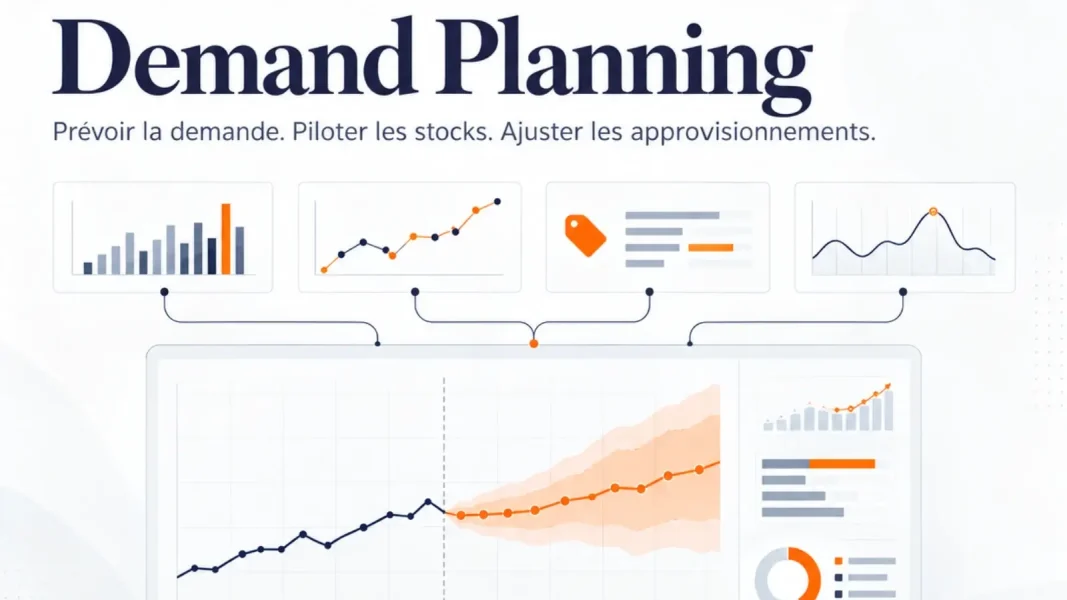
Some critical decisions in the supply chain must be made before the actual demand is known. Companies must commit to procurement, reserve capacity, start production, position inventory, and organize supply flows even before customers have made a purchase. However, these decisions cannot always be corrected quickly. The longer the lead times, the broader the product assortments, and the more complex the distribution networks, the more costly a forecasting error becomes. That is precisely what makes demand planning essential. Its role is not to perfectly predict future sales. Rather, it is to reduce uncertainty enough to enable the company to make better decisions before actual demand is known. Underestimating demand can lead to stockouts, lost sales, rush orders, and a decline in customer satisfaction. Overestimating demand ties up capital, increases inventory costs, and exposes the company to excess inventory, markdowns, or obsolescence. But the issue goes beyond the total quantity of goods available. It is essential to have the right product in the right place at the right time. The quality of demand planning thus directly influences inventory management, procurement management, production management, and, more broadly, the management of material flows. So the question isn’t just: “What will demand be?” Above all, it is: “What decisions do we need to make today, given what we know—and what we don’t yet know—about future demand?” Demand Planning: Plan to Make Decisions, Not to Eliminate Uncertainty The Demand Planninginvolves estimating future customer demand based on historical data, forecasting models, and business intelligence. Statistical forecasting is an important component of this process, but it does not encompass the entire approach. Demand planning must also take into account events that could affect demand: promotions, price changes, product launches, changes to the product mix, new store openings, or shifts in purchasing behavior. This distinction is fundamental. An algorithm can identify a trend or seasonality. It does not necessarily know the timeline of a planned sales campaign, the impending loss of a customer, or the expected substitution between two products. Conversely, business intuition is not necessarily more reliable than a model simply because it comes from the field. The challenge, therefore, is to compare the various sources of information, document the assumptions, and gradually assess their contribution to the quality of decisions. The expected result is not a figure presented as a certainty. It is a regularly updated estimate of what might be requested, accompanied by an understanding of the factors that could cause it to change. This approach changes the way we evaluate demand planning: A forecast isn’t valuable simply because it’s accurate. It’s valuable when it enables you to make a better decision early enough to still take action. Why is Demand Planning Essential to Supply Chain Performance? The supply chain operates with a structural lag: customers may want to be served immediately, while companies sometimes need several weeks or months to source, produce, and ship a product. This time lag between when a decision must be made and when demand actually becomes apparent accounts for much of the value of demand planning. The longer or more costly it is to reverse a decision, the more important it becomes to plan ahead. Reduce stockouts without increasing inventory levels In the face of uncertainty, a simple solution is to increase safety stock. This strategy can reduce certain stockouts, but it ties up more capital and does not guarantee that the additional inventory will be for the right SKUs or in the right location. Demand Planning enables a more selective approach to inventory management. Regular, seasonal, intermittent, or heavily discounted products do not carry the same level of uncertainty or have the same consequences in the event of an error. Similarly, a forecasting error for an item that is easy to restock does not have the same impact as one for a seasonal product ordered several months in advance. Not all forecasting errors are therefore the same. The goal should not be to uniformly maximize reserves or even statistical accuracy, but to focus efforts where uncertainty can actually impair service or economic performance. Demand planning thus helps minimize inventory while protecting the products, time periods, and markets where a stockout would have the most significant consequences. Provide visibility into procurement and production Suppliers and industrial sites need visibility to reserve capacity, organize raw materials, and plan their resources. When information arrives too late, the supply chain must compensate by making schedule changes, arranging urgent procurement, or using more expensive transportation solutions. When volumes are overestimated, however, the supply chain commits resources that may not necessarily be put to use. Demand Planning provides a time-based view of demand, which helps improve supply chain management and production planning. It also makes it possible to distinguish between relatively predictable volumes and those that depend on more uncertain assumptions. Teams can then adjust their commitments based on the level of risk rather than treating every forecast figure as a certainty. This visibility improves the organization’s responsiveness, but above all its agility : it’s not just about reacting faster, but about knowing in advance which decisions can be adjusted if demand deviates from the anticipated scenario. Prevent uncertainty from spreading throughout the supply chain A relatively small change in customer demand can lead to much larger adjustments as it moves up the supply chain. A distributor increases its orders as a precaution. The warehouse increases its requirements. The purchasing department reports an even larger increase to the supplier to secure the volumes. At each stage, the initial uncertainty can be amplified. The result is paradoxical: the company seeks to protect itself against risk, but in doing so, it actually contributes to creating greater volatility in its logistics flows. Shared demand planning limits this amplification by providing the various functions with a common reference point and, above all, by making visible the assumptions that explain its evolution. The quality of information flows then becomes just as important as that of physical flows. Better control of these flows is not simply a matter of

Read More »

What is price scraping?

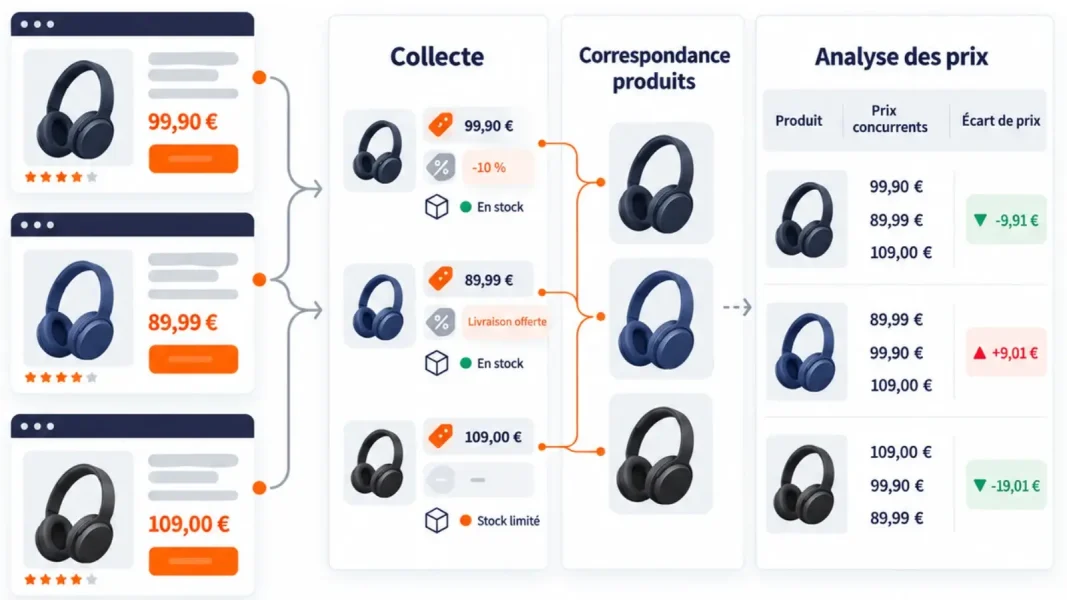
Price scraping automates the collection of prices and pricing information online. Learn how it works and how to use this data to analyze the competition and refine your pricing strategy.

Read More »

Trade news

Immerse yourself in the latest Pricing and Supply Chain news!

Découvrez nos actualités liées au Pricing et à la Supply Chain