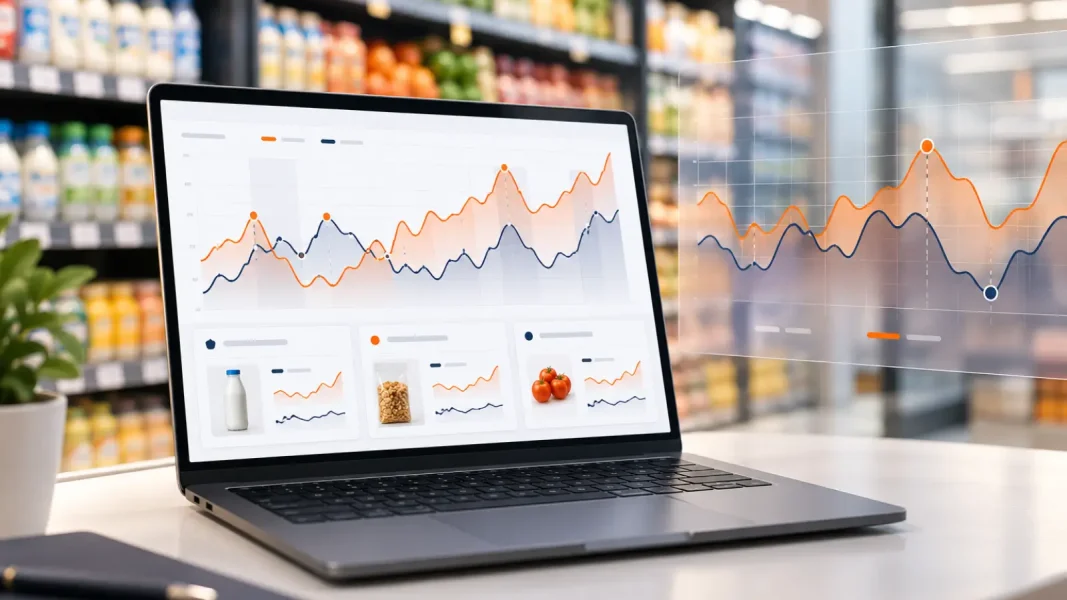




Companies are faced with an ever-increasing number of operational decisions to be made every day. Setting a priceapplying a promotion, authorizing a discount, triggering a replenishment or validating a subscription often involves a combination of business rules, constraints and special cases. For a long time, these decisions were coded directly into systems or processed manually by teams, at the cost of high rigidity and a high risk of error.
The rules engine responds to this problem by providing a structured framework for automating decisions while retaining business control. It makes it possible to formalize explicit rules, make them evolve without heavy technical dependency, and guarantee consistent application on a large scale. This logic is particularly relevant in areas such as pricing, promotions management and personalized sales paths, where reactivity and consistency are decisive factors. pricing analytics tool capable of integrating market data, internal constraints and performance objectives.
Rules engine and pricing: what are the concrete benefits?
In the field of pricing, consistency and responsiveness are difficult to maintain when rules are scattered across different systems or managed manually. The rules engine centralizes pricing logic and applies it consistently across all channels.
Clear rules can be defined, taking into account stock levels, sales channel, customer profile, period or competitive pressure. Once these rules have been formalized, they are executed automatically, without the need for repeated manual intervention.
This automation improves responsiveness to market variations, limits application errors and reduces discrepancies between the defined pricing strategy and its actual implementation. It also provides a framework for price adjustments, by integrating safeguards such as margin thresholds or variation limits.
The role of the rules engine in the supply chain: Benefits
In the supply chain, many decisions have to be taken quickly, consistently and repeatedly. Arbitrating a replenishment, prioritizing an order, adjusting a safety stock or managing an out-of-stock situation cannot rely solely on manual decisions or implicit rules.
The rules engine formalizes these operational logics in the form of explicit, shared and automatically executable rules. It translates supply chain policies into concrete decisions, applied consistently across the entire perimeter.
In concrete terms, a rules engine can drive decisions such as triggering replenishment according to stock levels, prioritizing certain customer flows in the event of tension, adapting delivery times according to logistics workload, or differentiating product management according to criticality.
This formalization reduces improvised arbitration, secures processes and improves operational responsiveness. The rules become a common base for the supply chain, purchasing, logistics and planning teams, facilitating the coordination and clarity of decisions.
Integrated with existing ERP and WMS systems, demand planning or pricing or pricing tools, the rules engine acts as an orchestra conductor. It does not replace the tools, but ensures the consistency of decisions between forecasting, procurement, inventory management and logistics execution.

How does a rules engine work?
In functional terms, a rules engine is based on three main elements.
First, a rule base, in which business rules are stored in a structured form. Next, an execution engine, responsible for evaluating conditions and applying the relevant rules. Finally, a management interface for creating, modifying and testing rules.
Operation generally follows a simple pattern. An event is detected, such as an inventory change or a request for quotation. The engine analyzes the situation, applies the corresponding rules and returns a decision that can be used by downstream systems.
A common example is to define a rule such as: if stock falls below a certain threshold, then apply a limited discount or restrict certain promotions. The rules engine executes this logic systematically and unambiguously.
These engines integrate with other information system bricks, such as ERP, CRM or e-commerce platforms, to fit in with existing processes.
Rules engine: Customize your processes without coding
One of the major advantages of a rules engine lies in its ability to make business logic accessible without heavy development. Many solutions today offer no-code or low-code interfaces, based on visual editors, forms or decision trees.
In this way, business teams can make rules evolve without systematically relying on technical teams. As a result, implementation times are shortened, adjustments become more frequent and the logic remains understandable to those who define it.
In addition to saving time, this autonomy strengthens the coherence between the defined strategy and its operational application. Rules are no longer fixed in code, but integrated into a living, controllable framework.
To find out more, read our article. Rules engine: how to customize processes without coding?
The difference between a rules engine and ERP-coded rules
ERP systems have long included mechanisms for managing business rules. Parameters, decision tables or scripts are used to control standard cases such as validation thresholds, replenishment rules or simple pricing conditions. This type of operation remains appropriate when the rules are few in number, stable and limited to a well-defined functional perimeter.
Difficulties arise as soon as rules increase in volume, complexity or frequency of change. When they are coded directly in the ERP, they are scattered across different modules, become difficult for business teams to read, and are highly dependent on development cycles. Each adjustment involves technical arbitration, testing phases and the mobilization of IT teams, which slows down operational decisions.
The rules engine introduces a clear separation between the decision-making logic and the transactional system. Rules are centralized in a dedicated repository, structured and comprehensible to business teams. They can be modified, tested and deployed without affecting the core application, while retaining full traceability of the decisions applied.
In pricing, this distinction is particularly marked. Where ERP systems often apply rigid pricing conditions, the rules engine enables you to combine several criteria, such as stock levels, sales channels, customer profiles or margin constraints, without multiplying specific developments. In the supply chain, it facilitates the rapid evolution of prioritization, replenishment or exception management rules, without disrupting existing flows.
The rules engine does not replace the ERP. It acts as a complementary decision-making layer, dedicated to the management of business rules, while the ERP retains its role as a transactional foundation. This distribution improves the consistency of decisions, accelerates their implementation and reinforces operational control over the long term.

The main uses of a rules engine
The rules engine can be used in many processes where decisions depend on explicit, evolving criteria.
In pricing, it enables differentiated pricing rules to be applied to different products.
In managing promotions, it sets out the conditions for eligibility and possible combinations.
In the supply chain, it can trigger specific actions depending on stock levels or supplier lead times.
In customer relations, it helps guide eligibility, prioritization or automatic processing decisions.
This cross-functional approach explains why the rules engine is often used as a central component of decision automation, serving several business functions.
When does a rules engine become relevant?
The use of a rules engine comes into its own when decisions become too numerous or too complex to be managed manually or coded rigidly. The multiplication of exceptions, channels or customer segments quickly makes rules difficult to maintain.
It also becomes relevant when rules need to evolve frequently, as a result of the market, competition or internal strategy. Without a dedicated engine, each change involves development, lengthy testing and the risk of regression.
Finally, a rules engine is essential when traceability and consistency are essential. Every applied decision can be explained, audited and adjusted, a major advantage in complex environments.
Rules governance
Setting up a rules engine quickly raises the question of governance: who defines the rules, who can modify them, according to what processes and with what controls. Without a clear framework, even a high-performance rules engine can become a source of inconsistencies or contradictory decisions.
First and foremost, rules governance involves clarifying roles. The business, pricing or supply chain teams have the right to define the logic of the rules: margin thresholds, replenishment priorities, eligibility conditions or exception management scenarios. IT teams, for their part, guarantee the system’s technical integration, security and performance, without intervening in the decision-making content.
A good governance system also relies on formalized processes. Each rule must be documented, versioned and tested before being put into production. Impacts must be understood upstream, especially when a rule has a direct influence on prices, stocks or delivery times. This discipline avoids side effects and reinforces confidence in automated decisions.
In pricing, governance ensures that adjustments respect brand positioning, margin constraints and commercial rules. In the supply chain, it ensures that replenishment, prioritization and stock allocation decisions remain aligned with global strategy and operational capacities.
Finally, governance facilitates auditing and continuous improvement. Rules can be analyzed a posteriori, adjusted according to observed results, and adapted to changes in the market or organization. The rules engine thus becomes a structuring tool, managed and controlled, rather than a simple automation mechanism.

Automation and artificial intelligence: towards augmented rules engines
Rules engines were originally designed to automate decisions based on explicit business logic. This capability remains fundamental, but is now being extended by advanced automation and artificial intelligence, which enable us to handle more complex and volatile environments.
Automation reinforces the role of the rules engine by placing it at the heart of operational flows. Rules can be continuously triggered by data from business systems, such as stock levels, logistics lead times, variations in demand, competitor prices or customer behavior. Decisions are no longer taken on an ad hoc basis, but integrated into execution chains capable of reacting rapidly to events.
Artificial intelligence complements this deterministic logic. It can analyze large volumes of data to identify trends, relevant thresholds or recurring patterns, which teams can then formalize in the form of rules. In this way, the engine retains a readable, governed logic, while relying on a more refined analysis than that enabled by static rules alone.
In pricing, this combination enables prices to be adjusted automatically to take account of demand, stocks, competition or commercial constraints, while respecting margin or positioning rules. In the supply chain, it facilitates the triggering of replenishment, inventory allocation or flow prioritization according to rules enriched by forecasts or field signals.
These augmented rule engines are not intended to replace human control. They structure the decision, secure its execution and offer a clear framework for integrating automation and AI without losing control of business rules. It is this combination of explicit rules, operational automation and analytical intelligence that turns the rules engine into a true cross-functional management tool.
Control your decisions with a mastered rules engine
The rules engine responds to a key challenge facing organizations: industrializing decision-making while maintaining strict business control. By dissociating decision-making logic from technical developments, it enables clear, auditable and scalable rules to be formalized, while guaranteeing consistency and conformity in execution.
Whether used in pricing, supply chain or customer relations, the rules engine becomes a structuring brick in decision-making automation, securing arbitrations and reducing dependence on manual adjustments.
Combined with data, predictive models and artificial intelligence, it doesn’t replace strategy: it reinforces it. It enables us to build more agile systems, capable of adapting to market variations while respecting a clear framework: the business rules, objectives and safeguards defined by the company.