



For some retailers, pricing decisions are still a matter of guesswork. An increase is decided to “regain margin”, a decrease to “boost sales”, or an alignment to “remain competitive”. Yet these adjustments often have the opposite effect: volumes fall sharply, margins erode, and the perception of value deteriorates. Most pricing decisions destroy value without the company even realizing it.
The problem isn’t the price itself. The problem is the lack of a clear understanding of price sensitivity.
Without it, pricing becomes reactive, short-termist and dependent on the competition. With it, it becomes a structuring performance lever, capable of arbitrating precisely between volume, margin and positioning.
Understanding price sensitivity isn’t just about “observing a reaction”. It means modeling economic behavior, identifying critical thresholds and actively steering value creation.
What is price sensitivity (beyond the classic definition)?
Price sensitivity refers to the way consumers react when a price varies. It measures the extent to which an increase or decrease influences actual demand. The stronger the reaction, the more price-sensitive the product.
A highly sensitive product sees its sales plummet as soon as its price rises. Conversely, an insensitive product continues to sell even when its price rises, because customers perceive its value to be higher than the asking price.
For example, a five percent increase on a brand of milk may cause an immediate drop in sales if cheaper alternatives are available on the shelf. Conversely, a specific drug or product with no direct substitute will be much less affected, as the consumer has no real alternative.

Price elasticity: the central metric
In concrete terms, price elasticity measures how demand reacts to a price change.
- Below -1 → demand is very sensitive: a small price increase leads to a sharp drop in sales
- Between 0 and -1 → demand is insensitive: volumes fall, but only slightly
- Close to 0 → demand is virtually insensitive: price has little impact on sales
In other words, this ratio makes it possible to go from a vague intuition “customers react a lot” to to an precise, usable measure for decision-making.
However, there is one key point to bear in mind:
elasticity is neither neither fixed nor universal.
High sensitivity means that consumers react strongly to the slightest price variation. Demand fluctuates rapidly, because the product is easily replaceable or perceived as having little differentiation. A few pennies can be enough to make the consumer switch to an alternative deemed equivalent.
Low sensitivity reflects a more stable demand. It often concerns products that are indispensable, highly differentiated or associated with a high perceived value. In this case, the customer accepts a price increase because he feels that the benefit, the brand or the usage justify the asking price.
Why price sensitivity is a major strategic lever
Precise trade-offs between volume and margin
Pricing is not a trade-off between volume and margin. It’s a constrained optimization problem, and most companies still treat it as a simple commercial decision.
On an insensitive product: a price increase directly increases the margin
On a sensitive product: the same increase destroys sales
Without measuring sensitivity, these trade-offs are based on averages, which mask the realities of each product.
2. Avoiding invisible destruction of value
Two mistakes are common. Lowering prices is the easiest decision… and often the most destructive:
Lowering an already optimized price → loss of margin without gain in volume
Increase price significantly → disproportionate loss of volume
These errors are not always immediately visible, but they have a lasting impact on performance.
3. Out of dependence on competition
Without understanding sensitivity, companies fall into line. Aligning with the competition is often an admission of ignorance, not a strategy.
With a keen understanding, they arbitrate:
when to follow
when to step aside
when to capitalize on their perceived value
The 3 levels of pricing maturity
Not all companies manage their pricing in the same way. In fact, there are three levels of maturity that directly determine pricing performance.
In practice, not all companies are at the same level when it comes to this complexity.
Reactive pricing
This is the most widespread level. Decisions are taken in response to the market: alignment with the competition, promotions to boost sales, one-off adjustments to correct a drop in volume.
Pricing is often short-termist, and generates little value creation.
Analytical pricing
At this stage, the company begins to rely on data. It measures elasticity, carries out A/B tests and analyzes customer reactions.
Decisions become more rational, but often remain limited to a logic of local optimization, product by product.
Strategic pricing
This is the most advanced level. Pricing is no longer limited to adjusting prices, but actively drives value.
The company acts on perception, finely segmenting its customers, structuring its offer and arbitrating according to global objectives (margin, volume, positioning).
Pricing then becomes a lever for differentiation and a sustainable competitive advantage.
Price sensitivity is the key to moving from the reactive to the strategic level

The critical point that most companies ignore
Demand is not linear. In most cases, it presents :
zones of tolerance (little reaction)
breaking points (sudden drop in volumes)
psychological threshold effects
This is precisely where performance pricing comes into play.
A +3% increase can be neutral… until it crosses a threshold and causes a -20% drop in volumes.
Without sensitivity modeling, these points remain invisible.
Why are consumers increasingly sensitive?
Impact of inflation and the purchasing power crisis
Rising prices have changed the way households look at their spending. What used to be a no-brainer now requires real arbitration, as every euro counts for more. Consumers are comparing more, questioning their usual reference price and looking more for the right price based on the market price. This increased attention makes price variations much more visible, and naturally reinforces price sensitivity, especially for everyday products.
More and more price comparison sites
Instant access to information has changed the way consumers think about prices. In a matter of seconds, the consumer can check prices, spot a cheaper alternative or observe price alignment between brands. This transparency sometimes fuels a price war, which directly influences the perception of value and the desire to buy.
Effect of permanent promotions
The list price is no longer perceived as a reliable benchmark, as consumers now expect to see a discount. The discounted price then becomes the reference price, while the regular price becomes less legible. As the gap between the two widens, the expectation of low prices sets in, and price sensitivity increases almost automatically.
Why integrate price sensitivity into your pricing strategy?
Integrating price sensitivity is above all a way of optimizing margins without sacrificing volumes. Not all products react in the same way: some can withstand a price rise without significant impact, while others drop off immediately. Understanding these differences makes it possible to adjust prices precisely and exploit the full potential of each reference.
It’s also a way of avoiding costly pricing errors. A poorly-calibrated price increase can lead to a sharp drop in sales, while an unjustified price cut can rapidly erode profitability. Without fine-tuned analysis, decisions are based on averages that mask actual behavior and undermine performance.
Finally, price sensitivity allows us to personalize pricing strategies. Not all customers have the same expectations: some seek the lowest price, others prefer quality or brand. Adapting prices by segment, channel or competitive context can significantly improve results.
In practice, this means concentrating efforts on high-impact products, avoiding one-size-fits-all approaches and also acting on perceived value. Pricing is not just about adjusting figures: it’s about steering a dynamic balance between price, perceived value and customer behavior.
What factors influence price sensitivity?
Price sensitivity is based on several key levers:
- Competition and substitutes the more easily a product can be replaced, the more customers will compare and react to price differences
- Weight in the budget The more expensive a product, the more visible and impactful the price variation.
- Perceived value and brand strong differentiation reduces sensitivity and increases price acceptability
- Building over time The following factors have a lasting influence on sensitivity: promotions, comparators or positioning.
For a detailed analysis of each factor, see the complete section of the article dedicated to price sensitivity.
Price-sensitive product characteristics
High-frequency products (bread, milk, toothpaste)
Products that are bought regularly, those that appear week after week in the shopping basket, create a form of familiarity that makes their prices particularly visible. Consumers come to know their usual price levels, sometimes even without realizing it, and immediately notice the slightest variation. These everyday purchases become benchmarks that influence the general perception of a brand’s price positioning, as they embody the concrete reality of the everyday budget.
Undifferentiated goods and conveniences
In categories where products are very similar, price naturally plays a greater role in the decision. When the perceived differences between references are small, consumers compare more easily and can switch brands without any real constraint. This low level of differentiation reinforces price sensitivity and accentuates competitive pressure, since even a modest difference can be enough to redirect choice.
Articles with low emotional impact
Some purchases carry no symbolic dimension or particular attachment. In these situations, price becomes the simplest and most immediate criterion for making a decision. The consumer chooses the most economical option, not out of cold rationality, but because nothing in the experience or the object justifies paying more. Sensitivity is then built around the economic effort the customer feels he must make.
How to really measure price sensitivity
Price sensitivity analysis is based above all on the observation of actual behavior. One of the most reliable approaches is to measure elasticity using historical data. By analyzing volume variations following price changes, it becomes possible to quantify demand reaction in concrete terms. This method provides a vision rooted in market reality, far more robust than declarations of intent.
A/B testing is another particularly effective lever. By comparing different pricing strategies across distinct customer segments, geographical areas or channels, we can isolate the precise impact of price on sales. This experimental approach makes it possible to test hypotheses without risk, and identify the most effective price levels.
Finally, segment analysis is essential. Not all customers react in the same way to price changes. Some are very sensitive to promotions, others are brand loyal, while some prioritize quality above all else. A global approach masks these differences and often leads to ineffective decisions. Segmentation, on the other hand, enables us to adapt pricing to each profile and optimize performance in a much more refined way.
The role of pricing analytics tools
The complexity of price sensitivity makes intuitive management rapidly inadequate. The diversity of products, the variability of customer behavior and competitive pressures make it difficult to make reliable decisions without solid data.
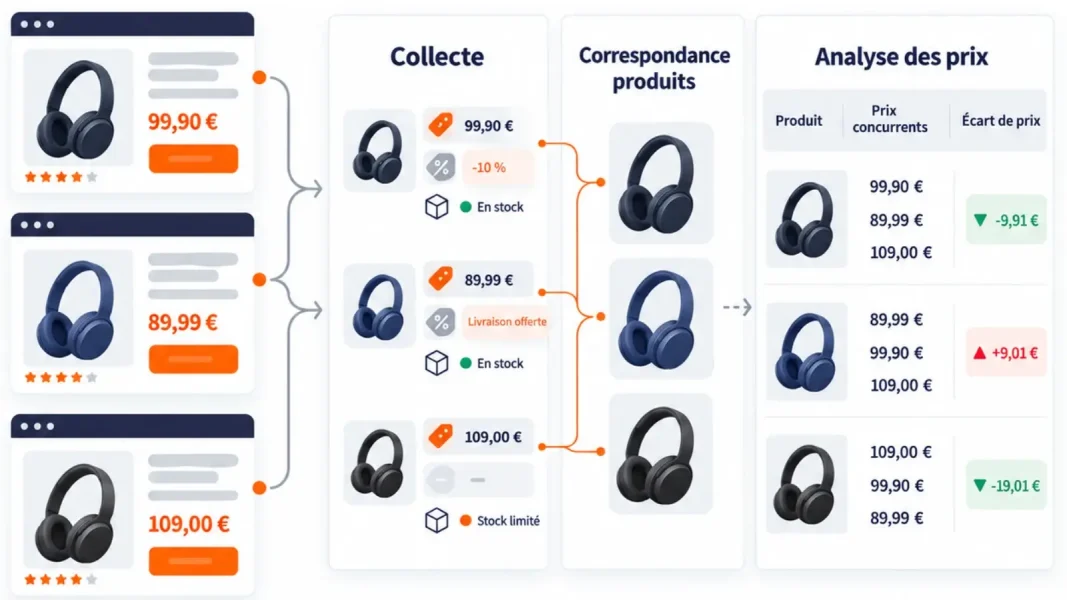
Pricing analytics solutions provide just such a capability. They can automatically estimate elasticities, identify price thresholds that must not be exceeded, and provide a better understanding of areas where demand is becoming particularly sensitive. Thanks to these tools, companies can also simulate different pricing scenarios and anticipate their impact even before applying them.
Our Pricing Analytics platform, Optimix Pricing Analytics, goes even further. by centralizing sales, pricing and competitive data to provide a precise, actionable reading of pricing performance. It enables optimization opportunities to be rapidly identified, pricing strategies to be tested, and decisions to be steered at a much more granular level.
Beyond analysis, these solutions offer a concrete vision of performance. They measure the effect of pricing decisions on sales, volumes and margins, enabling precise trade-offs between growth and profitability.
By structuring all this information, pricing analytics tools transform pricing from a succession of isolated decisions into a genuine data-driven system, capable of adapting continuously to market trends.
Best practices for managing price sensitivity
Dynamic pricing by segment
Adapting prices according to segments maximizes sales performance, as a uniform pricing policy often leaves opportunities on the table. By taking into account the price sensitivity, loyalty or purchase volume of each customer group, companies can preserve volumes while optimizing margins. For example, a supermarket can offer aggressive pricing on everyday products to promotion hunters, and maintain premium prices for less sensitive occasional buyers.
Communication perceived value
Reinforcing perceived value reduces price sensitivity over the long term, since customers are more likely to accept a higher price when the benefits are clear and tangible. By highlighting a product’s superior quality, after-sales service or durability rather than its technical features, communication can transform a price objection into a profitable investment. For example, explaining that a product costs 20% more but lasts twice as long creates a natural tolerance for high prices.
Bundling and package deals
Combined offers dilute the perception of the unit price and significantly increase the average basket, because the customer then assesses the overall value of the pack. This strategy also encourages the discovery of complementary products and strengthens customer loyalty. For example, combining a price-sensitive toothpaste with a high-margin electric brush in a bundle boosts total sales while maintaining optimum profitability.
What most companies underestimate
Price sensitivity is not a parameter to be measured on a one-off basis.
It is a dynamic system that is constantly evolving under the influence of :
- your own pricing decisions
- competing actions
- the perception of value built up over time
In other words, each price decision modifies future sensitivity.
Pricing doesn’t just exploit demand.
It transforms it.
Master price sensitivity to improve your performance
Price sensitivity goes beyond the theoretical, as it directly determines your daily sales volume and operating margins.
Companies that integrate it into their pricing strategy make better-informed decisions, avoid ill-calibrated price adjustments and react more quickly to competitive developments.
Every price variation has an impact on sales performance: a poorly anticipated price increase can reduce volumes by 10-20%, while good sensitivity management can optimize margins without compromising sales. Pricing is more than just setting prices.
It’s about deciding where and how you create value.