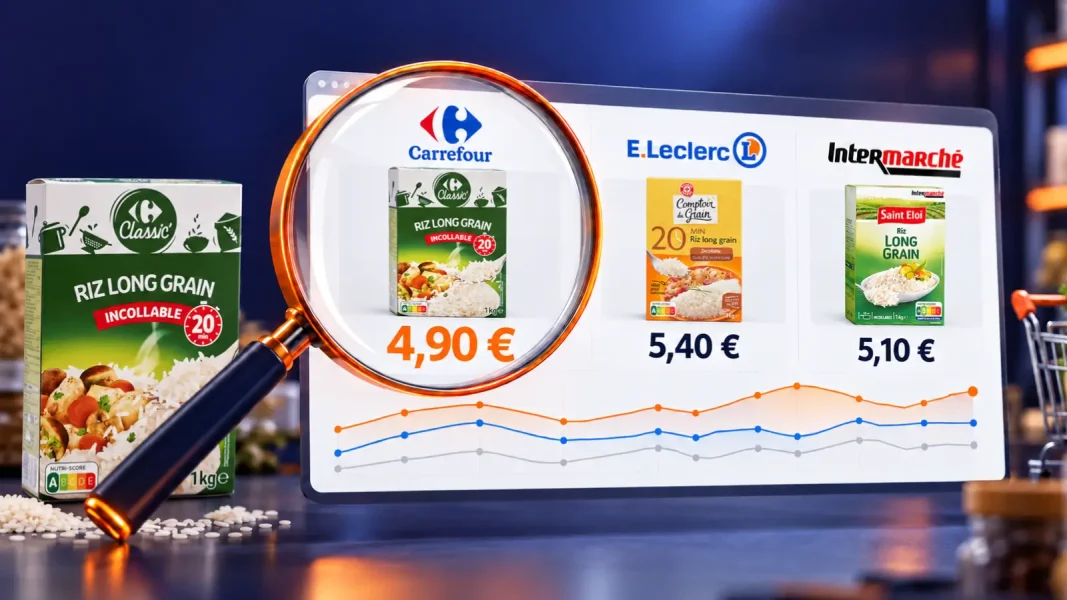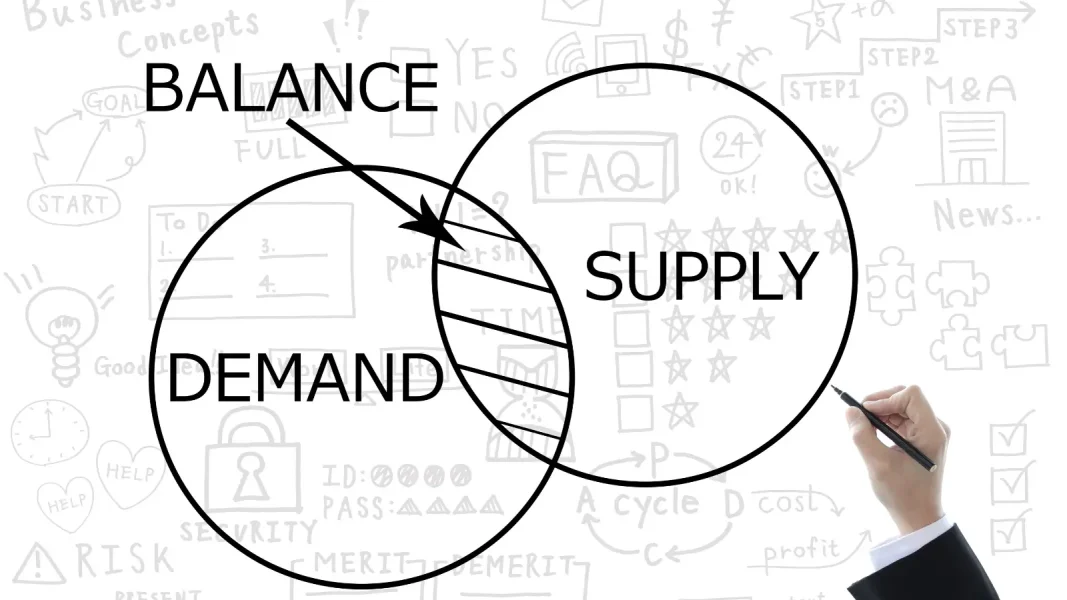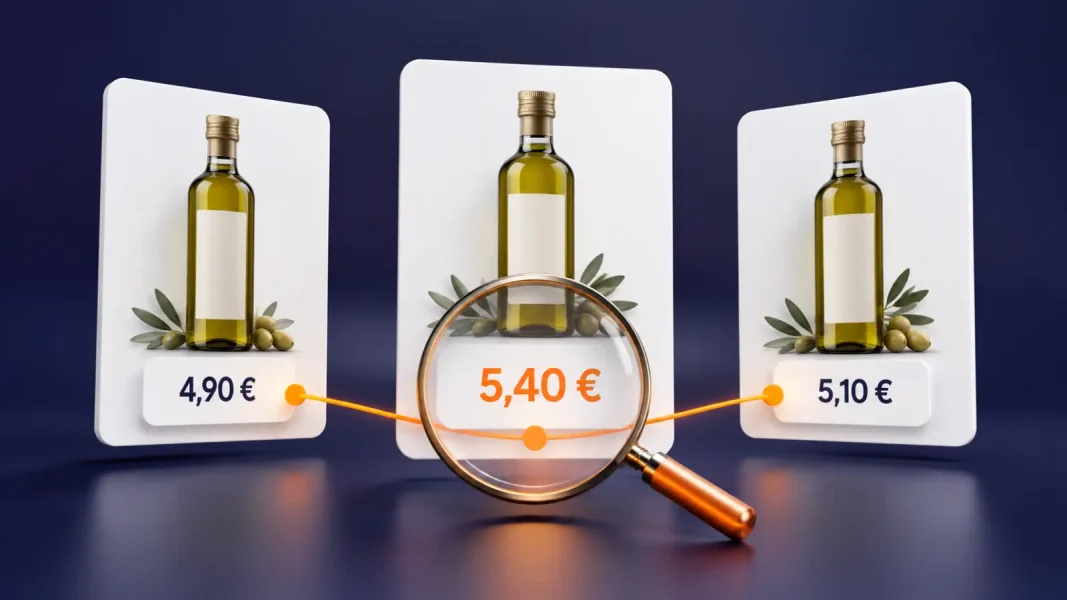




Psychological price plays a singular role in the purchasing decision, as it shapes the way a consumer interprets the value of a product. Behind a posted price lies much more than a simple cost calculation: consumer perception is influenced by cues, emotions and cognitive biases.
This can be seen in very simple situations: an item priced at 19.90 euros immediately appears more affordable than the same item priced at 20 euros, even though the actual difference is minimal. Yet this slight difference is enough to change the perception of value and the way customers assess whether the price is coherent or excessive.
Setting a price therefore means guiding the customer’s reading of the offer. The price becomes a signal, a message that creates a first impression and conditions the evaluation of quality, the effort required and the interest of the purchase. In a saturated market, where competitors sometimes charge very similar prices, this ability to influence perception even before rational analysis becomes an essential strategic lever.
Pricing is no longer limited to covering fixed costs or reaching a break-even point: it becomes a positioning tool and a means of setting the right price according to perceived value, market price and desired price positioning.
Why does psychological pricing work?
The psychological price corresponds to the amount that the customer perceives as acceptable and consistent with the product’s value. It is based above all on how the consumer interprets the price, rather than on its economic value alone.
Cognitive mechanisms that influence perception
The human brain is constantly simplifying information. A price is never interpreted in a totally rational way: it activates biases, cues and automatisms. The first figure immediately influences the evaluation, an amount slightly below a threshold seems more accessible, while a rounded price may evoke stability or quality. Perceived value is thus built up from subtle signals, sometimes independent of the actual cost of the product or the prices charged by competitors.
The impact of mental biases on perceived value
Cognitive biases transform a simple price into an emotional signal and directly influence purchasing behavior. Anchoring creates an initial cue that influences comparisons, while framing modifies the way an offer is interpreted according to its presentation. The contrast effect makes a price more attractive when placed next to a deliberately less advantageous alternative. These mechanisms are widely studied in price psychology and pricing marketing.
A price may thus seem more reasonable without the product having changed, simply because the pricing structure guides the reading of the offer. Two identical amounts can then provoke very different reactions, depending on the context in which they are presented.
In a market where price levels are often close to each other, these mechanisms strongly influence the perception of value and the way consumers judge a price to be consistent, attractive or excessive.
This dynamic shows that pricing depends as much on the customer’s interpretation as on economic data. Price sensitivity, visual cues and cognitive mechanisms play a decisive role in the purchasing decision. This is what makes psychological pricing particularly effective: it enables prices to be adjusted according to perceived value, and not just internal constraints.

The main psychological pricing strategies
The charming price
The charming price, such as 9.99 instead of 10, plays on the intuitive reading of the first digit. The customer perceives the difference to be greater than it actually is, which reinforces the accessibility of the offer and gives the impression of a lower price than that of competitors, even when the difference is just a few cents.
Tariff anchoring
Anchoring is based on a simple principle: the first price the customer sees becomes their mental reference point. This initial price serves as a basis for comparison, and influences everything that follows. When a lower price is presented later, it immediately seems more reasonable, even if it remains high in absolute terms. The mind does not judge the final price in isolation: it evaluates it in relation to the initial benchmark, enabling a higher selling price to be set while maintaining a positive perception.
The decoy effect
The decoy effect consists in introducing an option that is not intended to be chosen.The customer naturally turns to this more relevant alternative. Customers naturally turn to this more relevant alternative, not because they feel directed, but because the pricing structure makes their choice more obvious. This presentation clarifies the hierarchy of offers and reinforces their coherence, without resorting to discounts.
Bundled offers
Bundles work because they change the way customers assess value. Instead of analyzing each element separately, they perceive the whole as a single proposition that seems more advantageous than the sum of its parts. The idea of getting several products or services for one overall price creates a sense of gain, even when the real savings are limited. The comparison shifts from the detail to the whole, and this broader vision facilitates buy-in by giving the impression of a better value-price ratio, which directly influences the determination of the selling price.
Rarity and urgency
Scarcity and urgency stimulate immediate action because they change the way customers perceive the risk of losing an advantage. When a stock is running low or an offer is about to disappear, attention is focused on the possibility of missing an opportunity rather than on the rational assessment of price or value. This slight but present tension speeds up the decision, as the idea of seizing an opportunity before it disappears becomes stronger than the usual analysis of benefits. The customer then acts more quickly, driven by a perception of value amplified by the constraint of time or availability.
Subscription or tiered pricing
Subscriptions and tiered pricing transform a cost into a progressive commitment, changing the way customers experience effort. Instead of facing a single, potentially dissuasive amount, they perceive an expense spread over time, lighter and easier to integrate into their mental budget. This distribution softens the impact of the price, reduces friction at the moment of signing up, and creates the impression of smoother access to the value on offer.
How do you apply these strategies?
Adapting strategy to product and market
Every pricing strategy gains in effectiveness when it fits into a specific context, as price perception depends as much on positioning as on customer expectations. A charming price can boost conversion in e-commerce, where purchases are quick and sensitive to visual cues, whereas it loses credibility in a premium universe where consistency between price and brand image takes precedence over immediate impact.
Anchoring is particularly relevant in the service sector, where comparison structures the decision and helps the customer situate the real value of the offer. As for the decoy effect, it clarifies complex proposals, particularly in B2B, by guiding the reader without reducing the perceived value.
Concrete examples by sector
In e-commerce, charming pricing and bundled offers reinforce conversion by creating an impression of immediate gain. In services, anchoring and tiered pricing facilitate understanding of the offer by making the effort more acceptable and the structure more legible.
In B2B, the lure effect and service level hierarchy guide the decision by highlighting the most coherent option, without resorting to discounts that would weaken the proposition. These mechanisms directly influence the way a company can set its prices, determine a tariff or justify its price.
The importance of A/B testing and customer analysis
A/B testing allows us to observe how customers actually react to different price configurations, and to understand how each variation influences the perception of value. Perception analysis reveals what triggers adherence or resistance, showing whether the price seems fair, credible or aligned with the promise. Psychological pricing is always based on concrete data and observed behavior, because only measurement can adjust strategy and validate what really works.

Advantages and limitations
The benefits of controlled psychological pricing
A well-applied strategy improves conversion, reinforces perceived value and clarifies the offer by providing customers with reference points that facilitate their decision-making. Price ceases to be a mere amount and becomes a lever of attractiveness that supports sales performance without degrading margins. When it is consistent with positioning, psychological pricing creates a feeling of self-evidence around the offer, making the act of buying more fluid and reinforcing confidence in the proposition. In this way, it complements a pricing policy or a more comprehensive pricing marketing strategy.
Limits and risks
Overly visible use can appear manipulative and weaken the relationship with the customer, especially if the mechanisms seem artificial or overly emphasized. An over-aggressive strategy trivializes the effect and reduces its impact, as customers come to recognize the artifice and detach themselves from it. A price that is inconsistent with positioning weakens brand credibility and creates a gap between promise and experience. Consistency between price, discourse and real value remains essential if perception is to remain positive and lasting, especially when a company decides to charge high prices or aim for a higher price than its competitors.
Best practices
Building a coherent, sustainable strategy
An effective pricing strategy begins with the ability to identify the customer’s threshold of acceptability, the point at which the effort required is perceived as fair. Testing several price levels is an essential step in price optimization.
The way in which the price is presented also plays an essential role, as the same amount can be received differently depending on the purchase context, the channel or the moment when it is displayed. Adapting the message to the situation enhances relevance and avoids dissonance, which undermines trust.
Credibility remains a central pillar. Gimmicks that are too flashy create an immediate distance and give the impression that the brand is trying to steer the decision rather than clarify the value. A sustainable strategy favors transparency, consistency and continuity, as customers quickly perceive discrepancies between discourse and reality.
When pricing is naturally aligned with brand identity, it becomes an extension of the promise, not a pressure tool. Psychological pricing then becomes more effective, not as a mechanism to provoke a reaction, but as a perception lever that helps the customer understand the real value of the offer.
Psychological pricing: Influencing perception without reducing value
Psychological pricing is more than just a pricing technique: it directly influences the way a consumer perceives the value of an offer and makes a purchasing decision. By playing on cognitive cues, perceptual biases and emotional mechanisms, it can make a price more coherent, acceptable and attractive, without necessarily modifying the product itself.
When used consistently, psychological pricing reinforces the credibility of the offer, enhances the buying experience and supports sales performance without undermining margins. The price then becomes much more than just the amount displayed: it acts as a signal that guides perception, structures comparison and helps customers understand the real value of what they are buying.
Adopting this approach means considering pricing as a genuine strategic tool. The aim is not to manipulate the decision, but to create a clear alignment between perceived value, brand positioning and consumer expectations. It is this coherence that builds a lasting relationship of trust and makes psychological pricing an effective differentiating lever in an increasingly competitive market.