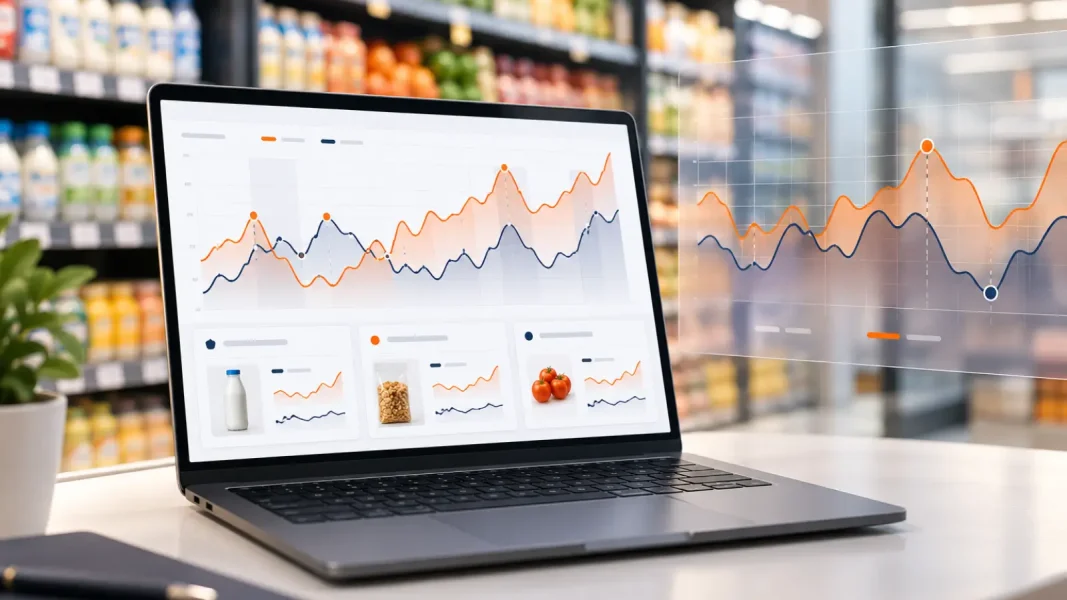



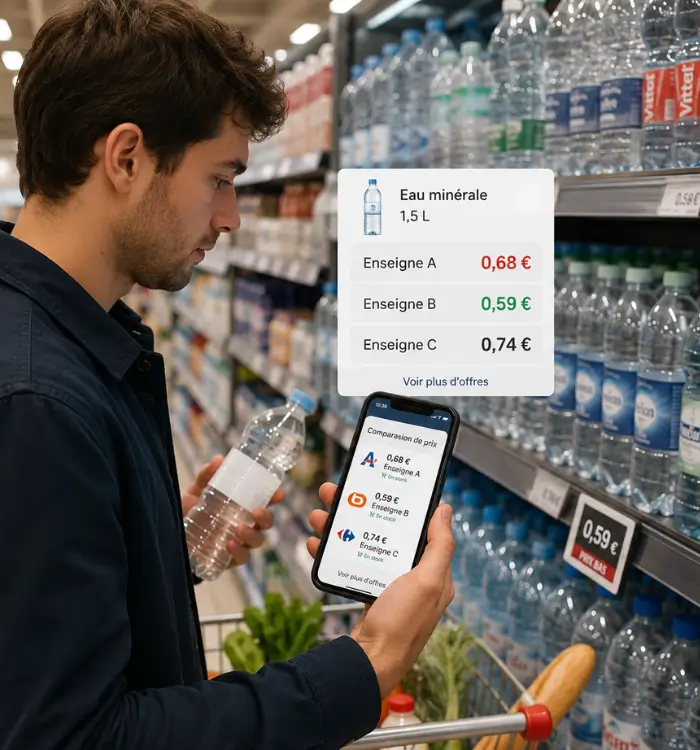
For a long time, promotions were primarily designed to boost sales. Today, they also help shape the retailer’sprice image, the perceived value of its offerings, and the trust it inspires in consumers.
This trend stems primarily from changes in consumer behavior. Price comparison sites, online marketplaces, mobile apps, and price history tools now allow consumers to verify a promotion in a matter of seconds and compare the practices of different retailers.
Regulations do not drive this trend. They formalize expectations that already existed among consumers and support a growing demand for transparency in pricing practices.
For retailers, the challenge is no longer limited to complying with new rules. It involves rethinking governance around pricing —specifically, how pricing decisions are formulated, documented, managed, and justified within the framework of a comprehensive pricing governance system.

Why Does Transparency Require a New Approach to Pricing Governance?
The summer sales, which are currently in full swing, perfectly illustrate this transformation. Both in-store and online, every price displayed is immediately compared, verified, and scrutinized. Consumers compare offers across e-commerce sites, marketplaces, brick-and-mortar stores, price comparison sites, and mobile apps—all in just a few seconds.
In this context, a promotion plays a direct role in shaping the brand’s price image and the trust it inspires in consumers.
The new rules do not simply require retailers to display the correct reference price.
Since the Omnibus Directive (EU 2019/2161) took effect, any price reduction must be based on the lowest price actually charged over the past thirty days—a requirement that the DGCCRF monitors with particular vigilance during promotional periods.
However, this development is only a first step. The proposed Digital Fairness Act, which is part of the European Commission’s work program, already signals broader regulation of price personalization practices and a greater focus on the transparency of algorithmic decisions.
These developments go far beyond the scope of compliance. They require retailers to demonstrate that every promotional decision is based on reliable, documented, and justifiable data.
For a multi-location, omnichannel, or international retailer, the implications go far beyond regulatory compliance.
Every pricing decision becomes potentially: traceable, explainable, comparable, and verifiable.
At the same time, consumers can instantly compare prices across e-commerce sites, marketplaces, brick-and-mortar stores, and price comparison sites.
A promotion also serves as a sign of trust.
When a reference price seems inconsistent or difficult to justify, the retailer’s credibility is directly called into question. It is no longer just a matter of offering an attractive discount.
The goal is to develop a pricing policy that can stand up to scrutiny from consumers, competitors, and regulatory authorities alike.
The key to standing out now lies in the quality of pricing decisions
All retailers must comply with the same regulatory requirements.
Compliance therefore becomes a prerequisite, rather than a differentiator.
The real difference will lie in organizations’ ability to turn this constraint into a more robust and more explainable decision-making system.
The most forward-thinking retailers no longer view transparency as a mere administrative requirement. They see this as an opportunity to improve the quality of their pricing decisions.
This involves, in particular:
- a reliable price history
- unified data governance;
- automated checks before each promotion;
- documentation of pricing trade-offs;
- greater consistency across the various channels.
- In other words, they are laying the groundwork today for what will become their competitive advantage tomorrow.
Pricing is no longer just about calculating a price. It involves making informed trade-offs between objectives that are sometimes conflicting.
The challenge is no longer simply a matter of setting the right price. It is about making the right pricing decision, taking into account objectives related to competitiveness, profitability, price perception, and consumer trust.

From Price Calculation to Informed Pricing Decisions
For a long time, the primary mission of pricing teams was to calculate the best price using various tools. This mission is evolving. Pricing departments must now address much more strategic issues.
– Why this promotion?
– Why the discount?
– Why is there a price difference between the two channels?
– Why this customized pricing?
And most importantly:
Are we able to explain each of our pricing decisions?
Pricing is gradually shifting away from being a discipline focused on price optimization. It becomes a decision-support system.
This trend is leading retailers to adopt pricing platforms capable of centralizing pricing data, simulating different scenarios, automating checks prior to launching promotions, and ensuring the traceability of decisions.
The goal is no longer simply to calculate a price. It’ is also to support data-driven decision-making.
Toward a New Approach to Pricing Governance
Price transparency does not make pricing more complex.
It simply highlights the limitations of practices that were still based on scattered data, poorly documented trade-offs, or decisions made in silos.
Today, the most forward-thinking retailers are shifting their approach.
They no longer focus solely on pricing. They manage their pricing decisions.
Pricing thus ceases to be primarily an operational function and becomes a true governance lever.
Retailers are gradually shifting from a price-setting approach to an approach based on Pricing Decision Intelligence, in which every pricing decision is simulated, explained, managed, and measured before it is implemented.
In a market where consumers can compare, verify, and question every promotion, It is no longer prices that set retailers apart. It is the quality of the decisions that lead to those prices and the trust they inspire.
Price transparency does not change the nature of pricing. It changes the way companies make pricing decisions.