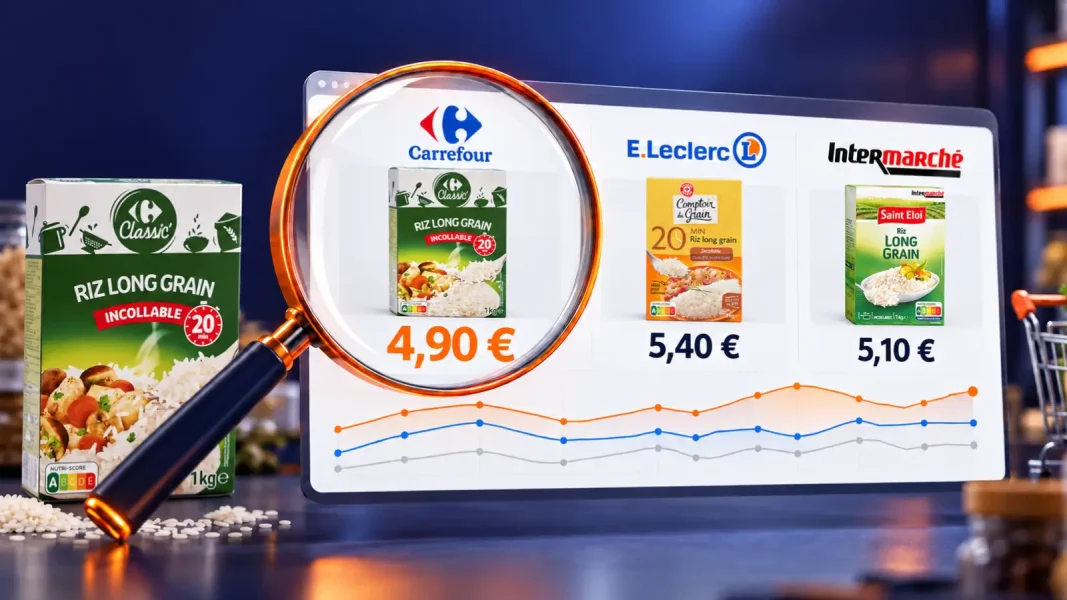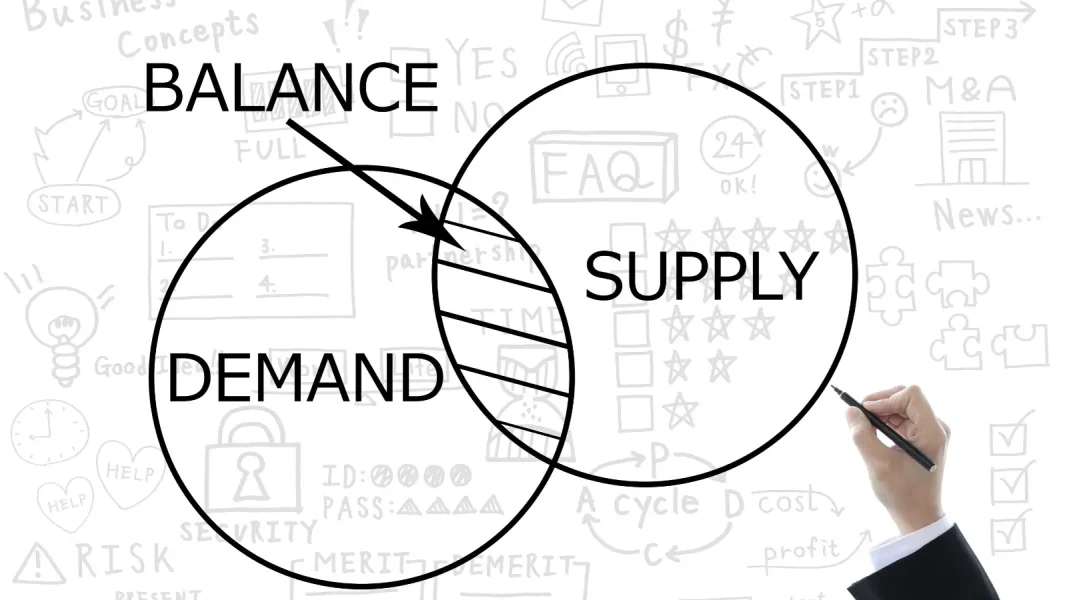

Offering attractive prices, maintaining profit margins, and building customer loyalty: retailers expect a lot from their private-label brands. But these goals don’t always go hand in hand. A low price can boost sales without improving profitability. A new product offering may attract customers while cannibalizing sales of other items on the shelf.
A private label refers to a brand owned by a retailer or distribution company, under which products are sold that are designed according to a positioning and characteristics defined by the retailer. It can span multiple categories and be available in economy, standard, or premium lines.
For retailers, developing a private label is therefore not just about offering an alternative to national brands. It involves defining its place in the product lineup, establishing a consistent price positioning, controlling costs, and ensuring product availability.
How can private-label brands be turned into a real driver of competitiveness, differentiation, and profitability?
The solution lies in an integrated approach that aligns decisions regarding product assortment, pricing, and the supply chain around a common strategy.
What is a private-label product?
The acronym MDD stands for “private label.” The brand belongs to the company that organizes the sale, while manufacturing may be handled by a partner or an in-house production facility. The retailer is primarily involved in determining the product’s specifications, packaging, positioning, and distribution channels.
“Private label” refers to the brand; a private-label product is an item sold under that brand. It may encompass several product families or focus on a specific category. INSEE specifies that a private label can be distributed by one or more retailers within a network and does not necessarily bear their name. When that name appears on the products, it is also referred to as a retailer’s brand.
This structure makes it possible to align product choices with the needs observed across the network. It also requires having the necessary expertise to design the product offering, select suppliers, and monitor performance.
Private Label, National Brand, and Generic Brand: What Are the Differences?
A national brand belongs to a company that develops its product line and markets it through various retailers. It may operate its own factories or outsource production. The main difference from a private label brand therefore lies in brand ownership and the way the brand is marketed.
Private label products are generally based on a product already developed by a supplier and then marketed by several companies under their own brand names. In a private label project, the retailer may request a custom design, with a tailored recipe, materials, or format. Some projects, however, start with an existing product: the degree of customization varies depending on the project.
To classify the model, it is necessary to examine who owns the brand, who defines the product, and what distribution rights are provided for. Commercial exclusivity over a manufacturer’s brand does not automatically transform it into a private label.
Why do retailers develop products under their own brand names?
Offer a product or service tailored to consumer expectations
Private label allows companies to develop products based on needs observed within the retail network: a more convenient format, a unique recipe, an affordable price, or a need that isn’t being adequately met. Sales data, customer feedback, and in-store observations help identify these opportunities.
The value of the project depends on whether there is a genuine need. A reference case may seem promising because it aligns with a trend, even though the brand’s customers prioritize other criteria. Testing on a limited scale helps to compare assumptions with actual purchasing behavior.
This approach must also take into account the accessibility of the product offering. Even a relevant product line may remain largely unnoticed if its presentation, name, or placement on the shelf is not understood. Product design and marketing must therefore proceed hand in hand.
Differentiate the brand and encourage repeat purchases
A popular private-label brand can give consumers another reason to return to the retail chain. Exclusivity helps consumers associate the product with the brand, especially when the brand’s promise is clear and consistently delivered over time.
Customer loyalty depends on repeated experiences: the customer finds the product again, recognizes its features, and considers its price to be fair. Variations in quality or frequent out-of-stock situations can undermine this relationship. The brand’s reputation must therefore be supported by consistent execution.
Differentiation can be based on a recipe, a feature, a source, or a product line designed for a specific use. It must offer something noticeable. Introducing more products similar to those already on the market may primarily result in sales being spread across more items, without increasing customer preference for the brand.
Gain a better understanding of design and the economics of supply
With a private label, the retailer can simultaneously manage the product’s features, cost, and selling price. This ability allows the retailer to tailor the offering to its market positioning and build a more cohesive product line.
It can also diversify its portfolio and reduce certain commercial dependencies on domestic brands. However, this shift comes with additional responsibilities: development, quality, industrial commitments, and performance monitoring.
The economic issue, therefore, concerns the value created after taking these activities into account. A retailer must ensure that it has the resources to manage the brand and the sales volume to support its operations. The role of private-label products in adapting to the challenges of the retail industry can thus be understood through the product offerings and the organizational structure that makes them possible.
To learn more about this topic, discover the importance of MDDS for retailers.

Sectors Private label dominance
Private-label brands have taken over various retail sectors and are now found in a wide range of product categories, from food to everyday consumer goods. Retailers have realized that private-label brands are not limited to a specific segment but can extend to many areas to reach a broad audience.
1. Food products
The food industry is one of the sectors most dominated by private-label brands. Retailers such as Carrefour, Lidl, and Auchan have developed lines of food products under their own brands, covering a wide variety of items, from fresh produce to shelf-stable goods. These private-label brands are often seen as affordable alternatives to major national food brands.
2. Beauty and Hygiene Products
The beauty and personal care sector is another area where private labels have established a strong foothold. Many supermarkets and retailers offer cosmetics, skincare and hygiene products under their own brand names, often at more competitive prices than national brands, while guaranteeing increasingly high perceived quality.
3. Clothing and Textiles
Private label clothing and textile products are growing in popularity. Retailers such as H&M and Primark have already integrated private labels into their collections, offering quality clothing at affordable prices. This approach enables retailers to capture a customer base that is both fashion-conscious and cost-conscious.
4. Household products
In the household products sector, private labels play a major role, with products ranging from detergents to cleaning accessories. Distributors are able to offer alternatives at lower prices than the major brands, while guaranteeing comparable effectiveness, which appeals to a broad customer base.
Private Label Brands: Examples in the Food and Specialty Retail Sectors
The Repère brand at E.Leclerc and Carrefour-branded products illustrate two possible approaches in the food retail sector. In sports, Quechua is one of the brands developed by Decathlon. In apparel, Siplec offers Tissaia as one of E.Leclerc’s private-label brands in the fashion category.
Private-label products also include beauty and personal care items, household cleaning supplies, and home goods. Their management must be tailored to each sector. Fresh products require special attention when it comes to storage. A clothing collection requires tracking sizes, colors, and seasonal trends. Sports equipment must meet the intended uses and expected performance standards.
The model therefore does not correspond to a single product line. It can support an entry-level, standard, or high-end offering, depending on customer needs and the distributor’s design capabilities.
Who manufactures private-label products?
The Role of Manufacturers, Small and Medium-Sized Enterprises, and Retailers
Private-label products may be manufactured by small and medium-sized enterprises (SMEs), specialized manufacturers, or companies that also produce goods under their own brands. Some retailers also have integrated manufacturing operations. Therefore, the brand owner cannot be directly identified based on brand ownership alone.
For a retailer, selecting a supplier must go beyond simply comparing purchase prices. Expertise, available capacity, consistent deliveries, and the ability to adapt the product all influence the project’s outcome. A competitive but unreliable partner can lead to additional costs and lost sales.
The relationship must also establish a framework for sharing information. The manufacturer needs visibility into volumes and anticipated changes. The distributor must be aware of lead times, production constraints, and dependencies that could affect its supply.
Specifications and Quality Control: How Is the Proposal Structured?
The technical specifications translate the commercial positioning into verifiable requirements. For a food product, they may specify the ingredients, recipe, weight, origin, packaging, and shelf life. For a non-food product, they may cover materials, durability, functionality, or ease of use.
Its development requires aligning customer expectations, the target price, and manufacturing capabilities. Poorly defined requirements make it difficult to compare suppliers and can lead to discrepancies between the expected product and the delivered product.
Quality monitoring then accompanies the product’s lifecycle: testing, inspections, supplier qualification, and handling of nonconformities, depending on the category. Changes to the recipe, materials, or suppliers must be evaluated before they are implemented on a large scale. A reduction in purchase cost may lose its value if it degrades the customer experience or increases returns.
Same manufacturer, same product: Why the comparison requires precision
Two products from the same factory may have different characteristics. The manufacturer can tailor the ingredients, proportions, materials, sizes, or finishes to meet each customer’s specific requirements. Therefore, a common industrial origin does not prove that the products are identical.
This distinction is important for evaluating quality and comparing prices. A less expensive product may offer equivalent performance, be designed for a different purpose, or incorporate less expensive features. It is important to examine the attributes that matter to the consumer in order to understand the difference.
In a grocery aisle, weight, composition, and nutritional characteristics can affect the comparison. For laundry detergent, the number of doses and usage instructions matter just as much as the price of the container. For clothing, the material and durability must also be factored into the analysis.
Why are store brands often cheaper?
How are their costs calculated?
The cost of a private-label product depends on raw materials, manufacturing, packaging, transportation, and the activities required to bring it to market. Designing a product tailored to customer needs, standardizing certain components, and organizing production runs can help keep these costs down.
Pooling volumes within a network can also facilitate purchasing. However, the resulting savings must be weighed against the required commitments. A high minimum quantity increases the risk if demand is insufficient or the shelf life is limited.
Expenses related to product development, quality control, and marketing continue to exist. While their structure may differ from that of a domestic brand, they do not disappear. To understand a lower price, one must examine this combination of factors rather than attributing it to a single factor, such as reduced advertising.
Are store brands always cheaper than national brands?
Private-label status does not determine the price. A premium private label can be more expensive than a standard national brand. A promotion on a national brand can also temporarily reverse the usual price difference.
The comparison must be based on similar uses and characteristics. Pricing per kilogram, liter, dose, or unit helps to account for certain differences in format. It is then necessary to examine what accounts for the remaining differences.
For the retailer, these comparisons serve to verify the clarity of its positioning. A product line marketed as affordable must maintain a clear advantage over comparable products. This goal does not necessarily mean being the cheapest option: quality, convenience, and other desired features can also influence the customer’s choice.
Does a lower price mean lower quality?
Price alone is not a reliable indicator of a product’s quality. A price difference may stem from design, marketing costs, or volume management. It may also reflect different characteristics, which must be identified.
Quality must be assessed based on the product’s intended use: taste and ingredients for food, effectiveness for cleaning products, and durability for equipment. The product must live up to its advertised claims, regardless of its price point.
For the retailer, testing and customer feedback help identify gaps between expected and perceived quality. An affordable product can fully satisfy its users. A premium private-label product may disappoint if the differences aren’t clearly visible. The evaluation must therefore combine measurable characteristics with the actual user experience.

How Price Optimization and Pricing Influence Private Labels
One of the key factors influencing the success of private labels is optimized management of pricing strategies. Retailers can adjust their prices more nimbly in response to market fluctuations, promotions and consumer trends. Price optimization and dynamic pricing tools play a crucial role in enabling retailers to maximize their margins while remaining competitive with national brands.
1. Dynamic Price Optimization
Dynamic pricing software enables retailers to readjust private label prices in real time according to demand, consumer behavior and market trends. This increases profit margins while ensuring constant competitiveness in a highly competitive retail environment.
2. Promotions and Discounts Management
Promotional and discount strategies can be quickly adjusted for private labels, offering greater flexibility than with national brands. By applying targeted discounts or seasonal promotions to private label products, retailers can attract more customers while maximizing their profitability on these products.
Private labels continue to grow and diversify in various retail sectors. Their ability to offer quality products at competitive prices, while enabling retailers to better control their margins and pricing strategy, makes them an essential strategic lever. In this context, price optimization and the use of intelligent pricing tools will play a key role in the sustainability and success of private labels in the future.
Retailers must therefore fully leverage the potential of private-label brands not only to differentiate themselves from national brands but also to build customer loyalty, all while maximizing their profitability
How to Build a Cohesive Private-Label Product Line?
An entry-level line generally caters to a desire for affordability and simplicity. A standard line offers a balance between expected quality and price. A premium line features more specific distinctions, such as ingredients, technical sophistication, or user experience.
These segments must have clearly defined roles. If their features are too similar, customers may simply choose the least expensive option. If the differences are not clearly explained, the higher-end segment may seem unjustified.
Organic, local, or specialty offerings can span multiple segments. They do not automatically constitute a premium tier. The product line must remain clear and sufficiently focused to support the sales volume of each SKU. Its coherence is measured by how well the products meet distinct needs without creating excessive complexity.
Which customer segments and needs should we prioritize?
The potential of a private label varies depending on the product category, the market position of established brands, and purchasing criteria. A retailer must analyze sales, price levels, unmet needs, and available alternatives before setting its priorities.
Industrial feasibility is also a factor. Even a promising market need may be difficult to meet if minimum production quantities are too high or lead times are incompatible with market cycles. The size of the distribution network and the planned reach must be aligned with the required volumes.
Every project benefits from having a specific objective: to fill a market gap, improve accessibility, or develop a unique offering. This definition then makes it possible to select the appropriate metrics. A product designed to meet a specialized need should not be evaluated solely as a product intended to generate high volumes.
What are the three types of private-label brands?
Private-label brands generally fall into three broad categories, based on their price positioning and value proposition:
Entry-level private-label brands : They meet consumers’ basic needs by focusing on affordable prices and a simplified product lineup.
Standard private-label brands : They offer a balance between quality and price, providing an alternative to national brands for everyday products.
Premium private-label brands : They focus on quality, innovation, or distinctive features to offer products with higher added value.
This segmentation allows retailers to cater to different consumer profiles while building a cohesive product lineup. Each category requires an appropriate pricing strategy, taking into account customer expectations, the competition, and margin targets.
How can we strike a balance between private-label and national brands in our product lineup?
National brands can bring brand recognition, innovation, and an established customer base. Private-label brands can complement this offering with positioning specific to the retailer. The balance between them must be evaluated on a category-by-category basis.
A high private-label share is not a sufficient goal to guide decision-making. The retailer must assess the impact on product selection, sales, and average basket size. Removing a popular national brand may cause some customers to shop elsewhere. Introducing a relevant private label can better meet a need and retain business that was previously spent with a competitor.
Assortment analysis helps identify gaps and redundancies. It must be supplemented by testing and monitoring of substitutions. The performance of an assortment is also judged by its contribution to the department as a whole.
Private-Label Pricing Strategy: How to Set and Manage Prices?
Compare competing offers on an equivalent basis
The Price Monitoring of Private-Label Brands A request to match products with different brands and identifiers. Equivalence must be determined based on relevant characteristics: use, format, composition, origin, quality, and product line tier.
A comparison based solely on the product name may lead to a decision in favor of a different offer. Prices must be converted to a consistent unit of measurement and then interpreted while taking into account promotions and purchasing terms.
Matching tools can help structure these comparisons, provided that the criteria remain transparent and verifiable. A reliable database makes it possible to track competitive positioning and understand the gaps. It prevents price reductions based solely on the observation of a cheaper product whose attributes are not comparable.
Establishing clear price differentials between product lines
The price should reflect the product’s role within the product line. The price differences between entry-level, standard, and premium products must be consistent with the features they offer. The sizes within the same product line should also be reviewed to avoid inconsistencies that are difficult to explain to customers.
The pricing strategy for private-label products also plays a role in the retailer’s price image. When it comes to everyday products—which are frequently purchased and easily comparable—consumers may be particularly attentive to price differences compared to national brands and competing offers. Competitive pricing on these items can help reinforce the perception that the retailer is affordable. Conversely, premium private-label brands can justify higher prices when their features and added value are clearly evident.
The challenge, therefore, is not to apply the same pricing policy to all private-label products, but to tailor decisions based on each product’s role, its price sensitivity, its competitive positioning, and the retailer’s margin targets.
The retailer remains free to set the resale prices for private-label brands: in principle, a supplier cannot impose them on the retailer. The unique feature of a private-label brand lies in the ability to simultaneously manage the product, its cost, and its positioning.
When costs change, several options can be considered: selling price, packaging, product line, or purchasing terms. Each must be evaluated for its business implications. Optimix’s Pricing Analytics solutions help inform these decisions by providing competitive intelligence and monitoring product line consistency.
Evaluate the effects of promotions and price changes
A promotion can encourage consumers to try a private-label product or boost sales of an established product. However, its effectiveness depends on additional demand, the discount offered, and shifts from other products.
The analysis should compare actual sales to an estimate of expected sales in the absence of the promotion, and then examine the following weeks. An immediate increase may be followed by a decline if customers brought their purchases forward. Promotions by national brands must also be taken into account, as they alter the available alternatives.
Dynamic pricing can support adjustments based on rules and up-to-date data. The frequency of these adjustments must be appropriate for the channel and ensure the offer remains clear. Before being rolled out across the board, the decision must take into account the expected effects on volume, margin, and inventory.
Are private-label brands really more profitable than national brands?
Distinguishing Between Unit Margin and Economic Contribution
A thorough understanding of the product and purchasing terms can offer margin potential. To assess profitability, however, it is important to distinguish between the profit per unit, the percentage of the selling price, and the total amount generated.
A simplified example helps illustrate the difference. A product that yields 0.90 euros per unit on 500 sales generates 450 euros before other costs. Another product generating 0.60 euros per unit on 1,000 sales generates 600 euros. The highest unit margin does not necessarily correspond to the best contribution.
Volumes, turnover, and the resources allocated round out this analysis. A private-label product with steady sales can generate stronger results than a high-margin product with low demand. The evaluation must remain consistent with the role assigned to each product.
Measuring Cannibalization and Category Performance
Cannibalization refers to the shift of sales from one product to another. A private-label brand can grow by attracting additional purchases, but also by replacing products already sold on the shelf.
The shift may improve results if the new mix of purchases generates a higher contribution margin. It may also reduce sales or shift sales without creating additional value. The growth of private-label products must therefore be compared with that of the category, the average shopping basket, and other products.
Tests must take into account promotions, seasonality, and availability to avoid jumping to conclusions. A store that receives special promotion does not necessarily represent the entire network. The analysis is more effective when it covers multiple periods and comparable retail locations.
Include development, quality, and inventory costs
The purchase price represents only a portion of the expenses associated with a private-label product. Design, testing, quality control, packaging, marketing, and supplier management also require resources. The significance of these costs depends on the volumes over which they are spread.
Inventory costs must also be factored in: storage, tied-up capital, markdowns, obsolescence, and unsold inventory. A large order can reduce the unit cost while still negatively impacting overall profits if the products do not sell.
A project evaluation must therefore compare several sales scenarios with the necessary commitments. After launch, it must be updated based on actual results. This method helps determine whether a product should be developed, adjusted, or discontinued, rather than keeping it on the market solely to maintain the breadth of the product line.
How can we ensure the supply and availability of private-label products?
Forecasting Demand for Product Launches and Promotions
A new private-label product does not have its own sales history. Forecasts can be based on comparable products, similar stores, and assumptions regarding price, visibility, and distribution. They must also factor in expected sales shifts from existing products.
Initial sales figures allow us to revise these assumptions, but they must be compared with actual availability. A stockout limits observed sales and may lead to an underestimation of demand. A temporary promotion may have the opposite effect.
Monitoring should distinguish between the trial period and the demand that develops over time. This perspective helps adjust orders without overinterpreting a few days of sales. It also allows you to plan promotions based on information that becomes progressively more reliable.
Incorporate lead times, minimum order quantities, and supplier capacities
Procurement recommendations must take into account production lead times, minimum order quantities, shelf life, and logistics capabilities. These constraints determine how quickly the retailer can adjust its orders.
A sales initiative must be communicated early enough to the purchasing department, suppliers, and the supply chain. Several product lines may depend on the same production line or a common raw material. Their requirements should therefore not be considered in isolation.
Forecast & Replenishment solutions help align demand forecasts with inventory levels and supply constraints. They help generate actionable recommendations when data is reliable and regularly updated. Tracking variances between planned and actual deliveries then helps improve parameters and decision-making.
Minimizing stockouts, excess inventory, and dependence on suppliers
An attractive but out-of-stock private-label product leaves demand unmet and may drive customers to another retailer. However, systematically increasing inventory is not an appropriate solution for all products, particularly fresh or seasonal items.
Protection levels should be based on the uncertainty of demand, lead times, and the consequences of a disruption. The distribution of inventory among warehouses, stores, and channels is just as important as the total amount available.
Industrial dependency also requires specific analysis. Switching suppliers may require new testing, appropriate packaging, and qualification lead times. Continuity options must be evaluated before an incident occurs. This preparation complements day-to-day inventory management and ensures a steady supply.
What metrics should be tracked to manage a private-label strategy?
The share of private-label products in revenue reflects their share of sales, but is not sufficient on its own to measure their performance. It must be considered in conjunction with the category’s economic contribution, inventory turnover, and associated costs.
Sales monitoring focuses in particular on volumes, repeat purchases, distribution, and transfers between product lines. Operational monitoring examines availability, stockouts, inventory coverage, and unsold inventory. Returns, complaints, and nonconformities round out the quality analysis.
These metrics must be linked to decisions. Low sales may result from poor pricing, insufficient visibility, or limited availability. The solutions will vary depending on the cause. A useful dashboard allows you to cross-reference this information and distinguish between local challenges and issues common across the network.
Building a Successful Private-Label Offering for the Long Term
Private label products allow retailers to develop their own product offerings, tailored to customers and the brand’s positioning. Their success depends on consistent decisions, from product design through to sourcing.
A product line must meet identified needs, offer transparent pricing, and deliver on its promise of quality. Its economic contribution must be measured after taking into account sales volumes, sales transfers, and costs incurred.
Linking product assortment, pricing, and the supply chain provides teams with a common foundation for evolving the product offering. This coordination makes it possible to develop products that add value, correct imbalances, and ensure the availability of popular items. It transforms the private-label strategy into decisions that are consistently implemented and evaluated over time.

FAQ on Private Label Brands (PLBs)
What is a private-label product?
A private-label product is a product marketed under a brand name owned by a retailer or retail group. Unlike national brands, whose brand names generally belong to the manufacturer or a specialized company, private-label products are developed according to the retailer’s business decisions.
In particular, the brand defines their positioning, characteristics, quality level, and retail price. Manufacturing may be outsourced to a partner manufacturer or handled by an in-house production facility.
Private-label products are found in many sectors: food, cosmetics, textiles, home improvement, household cleaning, and home furnishings.
What are the three types of private-label brands?
Private labels are generally divided into three main categories based on their price positioning and value proposition:
- Entry-level private-label brands : These brands prioritize affordability and meet consumers’ basic needs, typically with a simplified product lineup.
- Standard Private-Label Brands : They seek a balance between quality and price. They offer an alternative to domestic brands for everyday consumer products.
- Premium private-label brands : They focus on differentiation, quality, or specific features to offer products with higher added value.
This classification is not exhaustive. Some private-label brands are also developed around specific market positions, such as organic, local, or specialty products, which can span multiple price tiers.
What is the difference between a private label and a national brand?
The main difference lies in ownership of the brand and control over its market positioning.
A national brand belongs to a company that develops and markets its products through various retailers. A private label belongs to the retailer, which determines the characteristics and positioning of the products sold under that brand.
Both models may involve external manufacturers. Therefore, a private-label product is not necessarily manufactured by the retailer itself.
Why are private-label brands cheaper?
Private-label brands can offer lower prices than national brands thanks to a different approach to design, production, and marketing.
Pooling volumes, controlling product specifications, and, in some cases, lower sales expenses can help reduce certain costs.
However, a private-label brand isn’t always cheaper. Premium lines may be priced comparably to—or even higher than—certain national brands.
Who manufactures private-label products?
Private-label products are primarily manufactured by partner manufacturers, specialized small and medium-sized enterprises, or, in some cases, by manufacturing facilities owned by retailers.
A single manufacturer may produce products for both national brands and several private-label brands. This does not necessarily mean that the products are identical: recipes, materials, formats, and quality requirements may vary depending on the specifications.
Is a private label a sub-brand?
Not necessarily. A private label is defined by its affiliation with a retailer, not by its position within a brand architecture.
It may bear the retailer’s name directly or have its own distinct brand identity. Some retailers develop multiple private labels to meet different needs, product categories, or price points.
Can a private label be sold in multiple stores?
Yes. A private-label product can be sold in multiple stores belonging to the same group or retail chain.
Some private-label brands are exclusively available in one type of store, while others are sold across multiple retail chains. This arrangement depends on the retailer’s business strategy and structure.
Can an SME manufacture products for a private label?
Yes. An SME can become a supplier for a private label if it has the necessary manufacturing capacity, expertise, and quality assurances.
The collaboration is generally based on a set of specifications that define product characteristics, volumes, manufacturing conditions, and delivery times.
For an SME, this partnership can represent an opportunity for growth, but it also requires managing production commitments and the risks of commercial dependence.
Are private-label products made in France?
Some private-label brands are manufactured in France, while others are produced abroad. The country of origin depends on the products, the selected suppliers, and the retailer’s manufacturing decisions.
A single brand may offer products manufactured in several countries. It is therefore necessary to check the information on each product to identify its country of origin, when such information is available.
What does “private label” mean?
“Private label” is the English term commonly used to refer to a retailer’s brand. The terms “own brand” and “own label” are also used.
In retail, the “private label” refers to a strategy of selling products under a brand owned by the retailer, even when their manufacture is outsourced to an external company.