


Stockouts, excess inventory, supplier lead times that are difficult to accommodate, and forecasts that diverge from reality: many companies face these challenges on a daily basis. In an environment where demand is becoming more volatile and supply chains more complex, even the slightest forecasting error can impact the entire operation.
The consequences are immediate: a decline in service levels, rising logistics costs, and a loss of responsiveness to unforeseen events. Even with well-established processes, a lack of visibility into cash flows or inaccurate forecasts can quickly undermine supply chain performance.
The supply chain optimization tools become essential for centralizing data, improving visibility, and enabling faster, more reliable decisions.
Supply chain optimization is specifically designed to reduce these imbalances. It involves better forecasting demand, maintaining optimal inventory levels, securing supplies, and improving coordination among the various links in the chain. The results can be significant.
According to McKinsey, companies that use artificial intelligence in their planning processes can reduce their forecasting errors by 20 to 50 percent, thereby improving product availability while minimizing excess inventory.
In this article, learn about the key steps to optimizing your supply chain: improving visibility into material flows, making demand forecasts more reliable, adjusting procurement, optimizing inventory, and implementing the metrics and tools needed for more effective management.
Why has supply chain optimization become essential?
Supply chain optimization involves improving planning, procurement, inventory management, and logistics flows to reduce costs, minimize stockouts, and improve service levels. It relies on data quality, demand forecasting, and the coordination of the various links in the supply chain. An optimized supply chain offers numerous benefits.
Responding to More Volatile Demand
Demand now fluctuates at a more irregular pace, with sudden spikes, unexpected dips, promotions that drive volume, and increasingly unpredictable customer behavior. Optimizing the supply chain means absorbing these fluctuations without sacrificing efficiency, by relying on a more accurate reading of market signals, more reliable forecasting, and management capable of adjusting inventory and flows at the right time. This approach strengthens operational resilience and helps maintain a stable level of service despite demand volatility.
Reduce stockouts and excess inventory
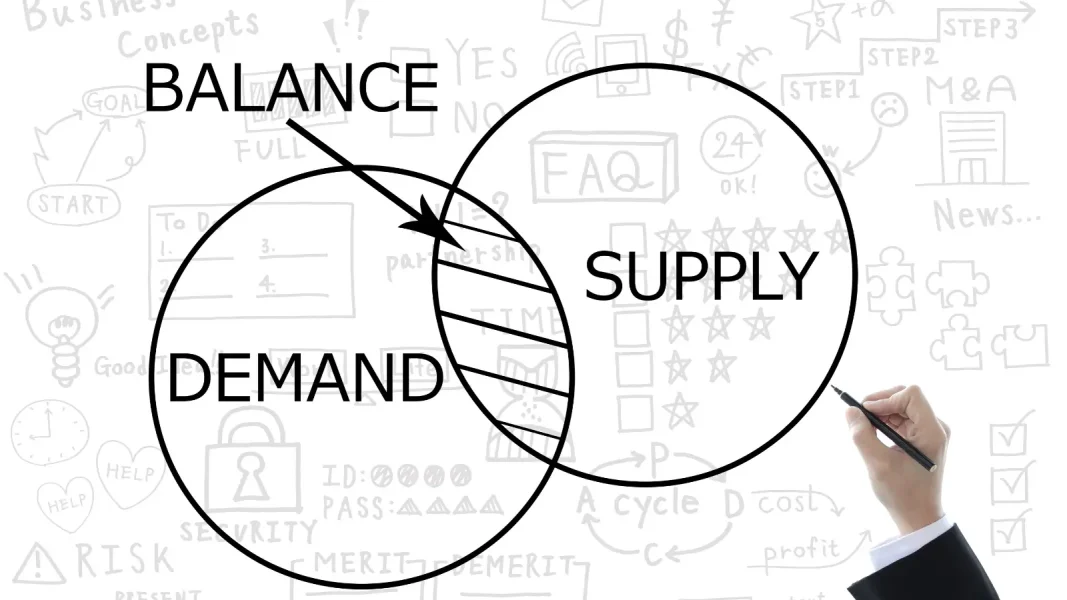
Stockouts result in lost sales, while excess inventory ties up cash. Optimization involves finding the right balance—one that minimizes excess while ensuring availability. It’s an ongoing process, driven by cleaner data and more accurate forecasts.
Improve the uptime rate
A good availability rate is not just an indicator—it’s a direct driver of customer satisfaction. Optimization aims to maintain this high level, even when workflows become more complex or supplier lead times increase.
Improving Responsiveness to Unforeseen Events
Unforeseen events such as delays, breakdowns, or fluctuations in demand will not disappear. But an optimized supply chain will enable you to respond more quickly, readjust priorities, and ensure the security of your operations thanks to a more unified view of your workflows.
To achieve these objectives, supply chain optimization must be based on a structured approach. From data quality to inventory management, including demand forecasting and procurement, there are several strategies that can be used to sustainably improve supply chain performance.

How to Optimize Your Supply Chain, Step by Step
Map workflows and identify bottlenecks
Optimization begins with a clear understanding of the flow of operations, identifying where products move, where bottlenecks occur, and where errors recur. This mapping provides an immediate overview of areas for improvement and paves the way for the first concrete adjustments.
Ensuring the reliability of historical data
Clean data leads to more reliable decisions. Cleaning historical data, correcting anomalies, and standardizing formats creates a solid foundation for more robust analysis.
Better Forecasting of Demand
More reliable forecasting reduces variances and stabilizes operations. It incorporates trends, weak signals, promotions, and seasonal variations to produce a more realistic picture of future volumes. Modern forecasting solutions now rely on artificial intelligence to analyze this data and improve the accuracy of decisions.
Adjust Supplies
Once demand is better anticipated, procurement becomes more accurate. Orders are better sized, lead times are better managed, and priorities are better aligned with actual needs.
Optimize Inventory
The goal is to maintain the right level—neither too much nor too little. Optimization involves product segmentation, improved inventory turnover, and continuous adaptation to fluctuations in demand.
Streamlining Logistics and Transportation
Logistics becomes more efficient when flows are better synchronized. Better coordination between warehouses, carriers, and retail locations reduces lead times and improves service quality.
What KPIs should you track to manage your supply chain?
Effective management relies on metrics that can measure the actual performance of the supply chain. These KPIs help identify bottlenecks, anticipate risks, and guide decisions regarding procurement, warehousing, and distribution.
Service rate
The service rate measures a company’s ability to deliver the expected products at the right time and in the requested quantities. It directly reflects the quality of service provided to customers and is one of the key performance indicators for the supply chain.
Elongation at break
The out-of-stock rate tracks how often a product is unavailable when it is in demand. A high out-of-stock rate leads to lost sales, a poor customer experience, and strain on the entire supply chain.
Stock rotation
Inventory turnover indicates how quickly products are sold and replaced. This metric helps assess whether inventory levels are aligned with demand and identify SKUs that tie up capital unnecessarily.
OTIF (On Time In Full)
OTIF measures the ability to deliver orders on time and in full. This indicator is particularly useful for assessing the reliability of logistics operations and the quality of execution throughout the supply chain.
Lead Time
Lead time is the time required between an order and its delivery. Tracking it helps identify bottlenecks in the supply chain and measure the organization’s overall responsiveness.
Forecast Reliability
Forecast reliability measures the difference between forecast demand and actual demand. The more accurate the forecasts, the more effective decisions regarding procurement, production, and inventory management will be. This indicator is now one of the most important tools for simultaneously reducing stockouts, excess inventory, and logistics costs.

What Tools Can You Use to Optimize Your Supply Chain?
Supply chain optimization relies on a set of tools capable of centralizing data, automating processes, and improving decision-making. ERP, WMS, TMS, and APS systems enable effective management of operations, while sales forecasting solutions, artificial intelligence technologies, and real-time dashboards enhance teams’ ability to anticipate and respond to changes.
Each tool addresses specific needs depending on the company’s level of maturity and objectives. To learn more about their roles, benefits, and selection criteria, check out our comprehensive guide to supply chain tools.
Best Practices for a More Resilient Supply Chain
Collaborate with suppliers
A more open collaboration with suppliers enhances supply reliability and reduces the risk of shortages. By sharing more information and working toward common goals, the relationship becomes more stable and supports a more resilient supply chain.
Improve inventory visibility
Greater visibility allows for more accurate inventory planning and helps minimize areas of uncertainty. A better understanding of what comes in, what goes out, and what remains in stock improves responsiveness and ensures product availability.
Implement a culture of continuous improvement
Resilience is built over time: regular adjustments, careful performance analysis, and a commitment to optimizing processes lead to more stable operations. This continuous improvement allows us to absorb fluctuations without compromising service quality.
Integrating Performance and Sustainability Goals
Performance is no longer limited to costs. It now encompasses environmental impact, service quality, and operational stability. Integrating these sustainability goals into management enhances the consistency of decisions and paves the way for a more responsible and resilient supply chain.
How Our Forecast & Replenishment Solution Helps Companies Optimize Their Supply Chains
More Reliable Forecasts Thanks to AI
The Solution Forecast & Replenishment Optimix Solutions uses artificial intelligence and advanced forecasting models to analyze sales history, detect trends, account for seasonal effects, and take into consideration events that may influence demand. By correcting biases in the data and identifying weak signals, it improves forecast accuracy and ensures reliable planning decisions.
Optimize inventory and reduce stockouts
Better forecasting allows companies to fine-tune inventory levels to actual market demand. With automated replenishment recommendations and a more accurate view of future demand, companies can minimize excess inventory, reduce out-of-stock situations, and improve product availability while managing their working capital requirements.
Automate and improve the reliability of procurement decisions
Forecast & Replenishment helps teams determine order quantities based on forecasts, inventory levels, supplier lead times, and service level targets. Procurement becomes more consistent, the risk of errors decreases, and decisions can be made more quickly thanks to reliable, up-to-date data.
Centralized supply chain management
The solution provides comprehensive visibility into forecasts, inventory, replenishment needs, and performance metrics. Teams have a shared view of the supply chain, enabling them to identify risks earlier, make more effective trade-offs, and manage operations more responsively.
Seamless integration into the existing ecosystem
Forecast & Replenishment integrates with existing ERP systems and tools to leverage existing data without disrupting processes. By connecting the various links in the supply chain around a single source of information, Optimix Solutions promotes more consistent planning, better collaboration among teams, and a more efficient supply chain.
Do you want to improve the accuracy of your forecasts, reduce stockouts, or optimize your inventory levels? Discover how Optimix Solutions’ Forecast & Replenishment solution helps companies manage their supply chains using artificial intelligence and advanced demand forecasting.
Plan Ahead to Better Manage Your Supply Chain
Optimizing your supply chain is not just about reducing costs or improving lead times. Above all, it is a management process based on reliable data, greater visibility into flows, and an enhanced ability to anticipate demand. By improving the accuracy of forecasts, fine-tuning inventory levels, and coordinating procurement more effectively, companies can minimize stockouts, reduce excess inventory, and sustainably improve their service levels.
Artificial intelligence and optimization tools play a key role in this transformation. They enable companies to analyze historical data more thoroughly, detect weak signals, account for seasonality and promotions, and turn data into concrete decisions. As a result, the supply chain becomes more responsive, stable, and resilient.
In an environment where demand is changing rapidly, the most successful companies are those that shift from a reactive approach to a more predictive one. An optimized supply chain thus becomes a key driver of performance, capable of supporting product availability, customer satisfaction, and cost control.