

Out-of-stocks remain one of the most costly challenges for retailers and distribution players. According to industry studies, between 7% and 10% of sales are lost every year due to product unavailability. Nowadays, when consumers compare, order and buy with just a few clicks, failing to provide them with a product at the right time can seriously damage a retailer’s sales performance and reputation.
Inventory management and optimization has become a strategic element in the supply chain, directly affecting customer satisfaction, competitiveness and profitability. Thanks to new technologies, including advanced forecasting software boosted by artificial intelligence, it is now possible to anticipate shortages, optimize supplies and maintain an optimal level of service.
What is an out-of-stock condition?
An out-of-stock condition is defined as a situation in which a product is no longer available for sale due to the complete exhaustion of inventory before a new replenishment takes place. This unavailability affects both physical points of sale, where the shelves remain empty, and e-commerce platforms, which display the status “product unavailable”.
The term reflects a break in the normal flow of supply. This occurs when the pace of sales exceeds that of replenishment, creating an imbalance between available supply and actual customer demand. In inventory management systems, the break generally triggers automatic alerts to the purchasing and logistics teams, theoretically speeding up the replenishment process.
The different types of rupture
Temporary stock-outs
Temporary out-of-stocks represent the majority of cases observed. This refers to the temporary unavailability of a product, which will continue to be sold once it has been restocked. These shortages are the result of a one-off mismatch between supply and demand, such as an unexpected sales peak during a promotion, a supplier’s late delivery, a localized logistical problem or a forecasting error.
Definitive stock-outs
Definitive stock-outs occur when a product will never be available again: a manufacturing stop, the end of marketing of a seasonal product, delisting decided by the retailer, or exhaustion of stocks on limited editions. These situations call for radically different anticipatory management, with controlled disposal of the last stocks and preparation of replacement solutions to guide customers towards satisfactory alternatives.

The main causes of a stock shortage
Poor demand forecasting
Demand forecasting is the foundation of effective inventory management. Underestimating demand is the most direct cause of stock-outs. This situation occurs during exceptional events: viral success of a product on social networks, a heat wave boosting fan sales, a recommendation by an influencer, or a news item creating unforeseen demand.
Forecasting methods themselves may be to blame. Over-simplistic approaches based solely on historical averages ignore trends and seasonality. Lack of coordination between marketing and supply chain creates problematic time lags when launching promotional campaigns. Insufficient granularity generates localized disruptions even when overall forecasts are correct.
Today, advanced tools such as Optimix XFR make it possible to anticipate fluctuations with even greater precision. Relying on predictive algorithms and the analysis of historical data, these solutions automatically adjust stock levels in line with actual market variations.
Poor inventory management
Accounting errors create a discrepancy between the theoretical stock recorded in the system and the physical stock actually available. This discrepancy is caused by input errors at receiving, undetected theft, unrecorded breakage, inventory errors or misplaced products. When the system displays available stock when the shelves are empty, no replenishment is triggered.
Poorly calibrated management parameters are another major source. Warning thresholds that are too low leave insufficient safety margin to absorb an acceleration in demand or a delay in delivery. Insufficient safety stocks leave the company constantly exposed to stock-outs.
Supply delays and logistical problems
Delays in supplier deliveries are a frequent cause: machine breakdowns, lack of raw materials, quality problems, or under-capacity in the face of strong global demand. Transport disruptions are another major factor: extreme weather conditions, strikes, accidents, or port congestion.
Customs and regulatory problems complicate international sourcing. Changes in regulations, tighter controls or geopolitical tensions suddenly disrupt established supply chains. Diversifying sources and strengthening supplier partnerships are essential levers for reducing these risks.
Other causes: human error, unreliable suppliers, just-in-time delivery
Human error is rife throughout the supply chain: orders with incorrect quantities, incorrect reference numbers, incorrect dates, wrong choice of supplier. Structurally unreliable suppliers, with regularly late deliveries and non-compliant quantities, create permanent exposure to shortages.
Just-in-time strategies, while effective in reducing inventories, mechanically increase vulnerability. By minimizing safety stocks and sourcing just-in-time, these approaches leave little margin to absorb the slightest contingency. Poorly anticipated seasonal peaks in demand (holidays, back-to-school, Black Friday) create tensions even when annual volumes are correctly forecast.

The consequences of an out-of-stock situation
Immediate loss of sales
The most direct impact is lost sales. For a retailer with annual sales of one hundred million euros, the 7% to 10% lost due to out-of-stock represents seven to ten million euros evaporated. The impact is not limited to the out-of-stock product: customers rarely buy an item in isolation. When the main product is missing, the whole basket is often abandoned.
Degradation of the customer experience and relationship
In addition to the financial loss, disruptions profoundly damage the customer experience. Disappointed customers experience frustration that leaves a lasting mark on their perception of the brand. Frequent break-ups seriously damage loyalty: consumers end up turning to other brands for good. The degraded experience creates negative word-of-mouth, amplified on social networks.
In the omnichannel world, the break takes on an even more critical dimension. A customer who consults the website, checks availability, then visits the store only to discover that the product is unavailable, experiences amplified disappointment. This inconsistency between channels creates a major loss of credibility.
Impact on reputation and hidden costs
Repeated breakdowns damage the company’s image and reputation. Poor management is perceived as a sign of organizational failure. A damaged reputation also affects relations with suppliers and reduces bargaining power.
Hidden costs are added to the loss of sales: mobilization of resources for crisis management, systematically more expensive emergency orders, internal disorganization upsetting planning, transfers of goods between sites creating sub-optimal movements. This instability reduces overall stock reliability and impacts supply chain efficiency.

How to avoid stock-outs?
Anticipate with reliable sales and demand forecasts
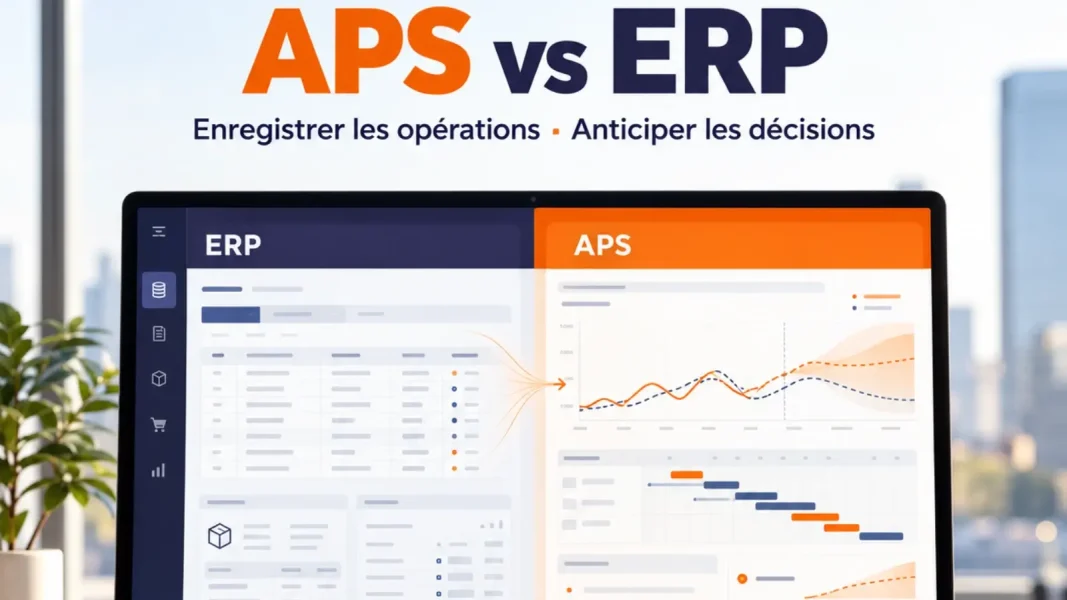
The quality of sales or demand forecasts is the foundation of prevention. Analysis of historical data enables trends and seasonality to be identified. The integration of external data (economic indicators, weather, events) considerably enhances accuracy. APS solutions powered by predictive algorithms and artificial intelligence represent powerful tools for processing large volumes of data and refining forecasts in real time.
Advanced solutions like XFR-Optimix Forecast and Replenishment use AI to accurately anticipate fluctuations. They thus help to better forecast demand.
Safety stock and room for maneuver
Safety stock represents an additional quantity kept in reserve to deal with unforeseen events. Its sizing takes into account demand variability, replenishment lead times, desired service level and product criticality. Statistical formulas incorporate the standard deviation of demand and lead time to determine the level of buffer stock required.
Alert stock or reorder point automatically triggers a replenishment action. It is calculated by adding the average consumption during the replenishment lead time and the safety stock. Its precise setting is crucial: if too high, it leads to overstocking; if too low, it exposes you to stock-outs.
The category-based approach is particularly effective. ABC analysis classifies references according to their importance and adapts the strategy accordingly. A-products, which account for 80% of sales, deserve special attention and a substantial safety stock.
Digitization and automated management tools
Warehouse management systems (WMS) track all movements in real time, reducing accounting errors. Integrated ERP solutions connect all functions and automatically synchronize information. Dashboards and alerts enable you to visualize levels, identify references in tension and intervene rapidly.
The permanent inventory distributes counts throughout the year. Each item is checked regularly, according to its criticality. Modern technologies (barcodes, RFID, IoT sensors) make this considerably easier. The detection of discrepancies must trigger an analysis to understand the root cause and continuously improve processes.
Working with suppliers
Sharing information with suppliers is a win-win situation. By communicating your forecasts, you enable suppliers to anticipate and plan their production. Diversification of sources reduces dependency and limits risk. Regular assessment of supplier performance (service rates, delivery times, quality) helps you identify reliable partners.
Framework contracts and capacity agreements guarantee priority access to resources during periods of high demand. This contractual security makes all the difference during seasonal peaks.
Tracking key indicators
Management is based on relevant indicators. The service rate measures the ability to satisfy demand without interruption (target 95% or more). The out-of-stock rate quantifies frequency and duration. Stock rotation indicates the speed of renewal. Coverage rate expresses the number of sales days represented by current stock. Forecast accuracy measures the difference between forecast and actual sales.
Regular analysis of these indicators, ideally on a monthly basis, enables us to constantly adjust management parameters and progressively reduce risks.

Out-of-stocks: Which software solutions for efficient stock management?
Key features of good inventory management software
Effective inventory management software needs to offer real-time visibility of all stocks, regardless of their location. Advanced forecasting functionalities, based on AI and machine learning, enable precise anticipation of demand. Automated calculation of management parameters (safety stock, reorder point, quantities) ensures dynamic adaptation to market conditions.
Integration with other systems (ERP, WMS, e-commerce, CRM) is crucial to ensure data consistency and process automation. Intelligent alerts and customizable dashboards enable managers to focus on exceptions and high-risk situations.
XFR – Optimix Forecast & Replenishment : The benchmark APS solution
XFR is an APS solution designed to optimize sales forecasts, inventory management and procurement. It relies on an artificial intelligence-based forecasting engine capable of analyzing sales history, promotions, seasonality and other signals to produce reliable forecasts.
Thanks to this data-driven approach, the solution aligns supply flows with actual demand, anticipates out-of-stock situations and significantly reduces overstock levels. It improves stock rotation and helps optimize cash flow.
In functional terms, the solution integrates :
automated collection and structuring of data from sales, inventory, promotions, suppliers and external sources;
an analysis engine capable of identifying demand patterns (seasonal variations, contingencies, promotional effects);
a replenishment optimization module that takes into account logistical constraints (MOQs, delivery frequencies, safety stocks, supplier capacities);
a control interface with dashboards for monitoring product availability, stock coverage, supplier reliability and key performance indicators.
The solution is aimed primarily at multi-channel distributors and retailers wishing to automate, make more reliable and industrialize their planning. It integrates easily with existing systems (ERP, WMS, POS) and adapts to the business constraints of each organization.
reducing disruptions, an imperative for reconciling customer experience and profitability
Out-of-stocks are a major issue, with consequences that go beyond lost sales: they affect the customer experience, brand reputation and competitiveness. Given the complexity of supply chains and the growing demands of consumers, managing stock-outs has become a strategic necessity.
Solutions are based on a combination of complementary levers: refined forecasts thanks to analysis technologies, dynamic and automated inventory management, optimized safety stocks, reinforced collaboration with partners, and rigorous management via relevant indicators. Solutions such as XFR-Optimix Forecast and Replenishment orchestrate all these levers, offering real-time visibility, reliable planning and a sustainable reduction in stock-outs.