


The start of the school year brings together, within just a few weeks, many of the challenges that make inventory management complex: accelerating demand, volumes that are difficult to predict accurately, and a sales window that leaves little time to correct discrepancies.
In office supplies and school supplies, demand for certain items can be concentrated into just a few weeks. But the strain extends far beyond this sector. Electronics, beauty, and food: In many sectors, September brings changes in consumer behavior, promotional campaigns, and spikes in demand that challenge forecasting, procurement, and Inventory Management under pressure.
In light of this acceleration, the first instinct might be to build up more inventory.
But having more inventory doesn’t necessarily mean greater availability, let alone greater profitability.
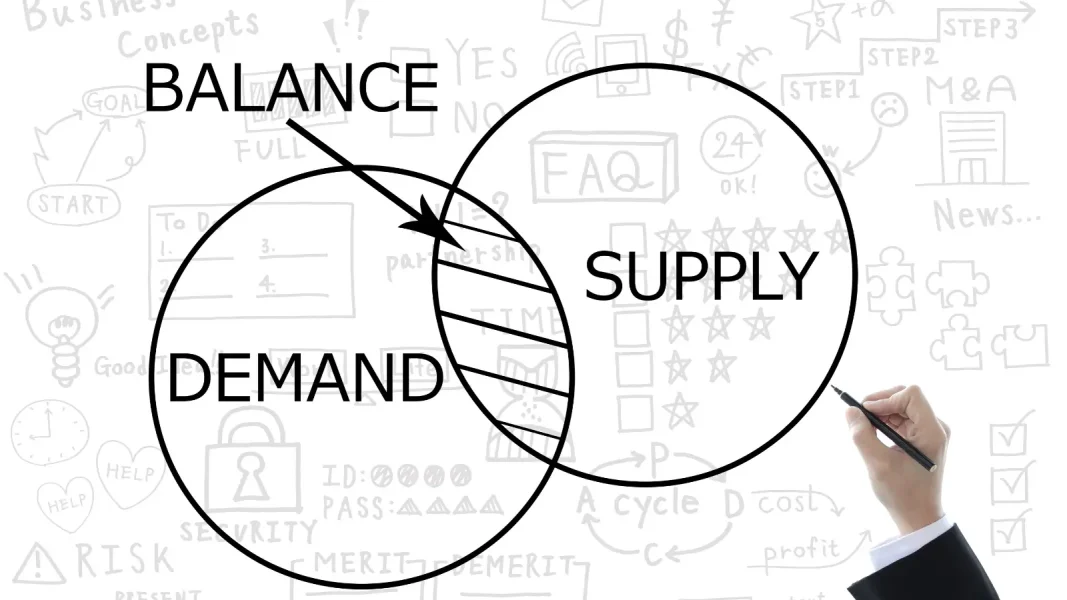
The real challenge lies in balancing two conflicting risks: having enough inventory to avoid losing sales during peak demand, without ending the period with excess inventory that will then need to be financed, moved, promoted, or marked down.
The start of the school year thus raises a question that is much more strategic than it seems:
How can you ensure product availability when demand is rising to prevent stockouts?
When demand picks up, inventory imbalances become more pronounced
Not all periods of high activity involve the same level of complexity.
One of the distinctive features of the back-to-school season is the concentration of demand. In certain categories, sales can pick up very quickly and then return to a much more normal pace a few weeks later.
And this acceleration is not uniform.
Not all products follow the same trend. Not all stores experience the same demand. Not all geographic areas respond in the same way. Promotions, trends, local product assortments, and omnichannel behavior can also affect expected sales volumes.
A demand forecast that is generally accurate can therefore mask significant imbalances at a much more granular level. Its quality is measured not only by its overall accuracy, but also by its ability to reflect demand at the level where procurement decisions are actually made. A discrepancy that is minor at the category level can thus become critical when it is concentrated among just a few SKUs or retail locations.
A retailer may have sufficient inventory nationwide and yet still experience stockouts at certain stores. A product may significantly exceed sales forecasts in one region while underperforming elsewhere. E-commerce sales may surge even though inventory has been primarily allocated to the brick-and-mortar network.
The challenge, therefore, is no longer simply to forecast sales volumes, but to determine which products will be in demand, where, when, and in what quantities.

The cost of a breakup far exceeds the lost sale
When a key product becomes unavailable right in the middle of back-to-school season, the immediate consequence is clear: the retailer potentially loses a sale.
But the impact could go even further.
In some categories, the missing product is part of a broader selection. A customer who has come to purchase several supplies, pieces of equipment, or complementary products may decide to make the entire purchase elsewhere if an important item is not available.
The disruption therefore no longer threatens only the sale of the product in question. It may affect the shopping cart, the associated sales, and the experience offered by the retailer.
This issue becomes even more sensitive when the product is being promoted.
But if the expected impact of the promotion on demand has not been properly factored into forecasts and inventory planning, the campaign’s commercial success could backfire: demand is generated, but inventory levels are no longer sufficient to meet it.
A sales operation cannot, therefore, be managed without taking into account its impact on demand, forecasts, and supply requirements.
Ensuring availability without falling into overstocking
Ensuring availability without falling into overstocking
Given the potential cost of a supply disruption, the solution seems simple: increase safety stock levels and place more orders before the peak.
That is precisely where the second pitfall lies.
Because excess inventory is the flip side of stockouts.
When demand slows down after peaking, the remaining inventory continues to tie up capital. Some items can be kept on hand and sold off gradually. Others, which are more seasonal, may quickly lose their commercial value.
The retailer must then choose among several options that are rarely neutral: slow down restocking, transfer inventory, increase promotions, offer markdowns, or accept a much slower inventory turnover.
The cost of caution then becomes apparent after the sales period.
That is the key challenge in coordinating inventory management for the start of the school year : ensuring sufficient inventory to meet the peak in demand, without creating excess inventory that will weigh on performance once the period is over.
Seeking to maximize availability without factoring in the risk of excess inventory therefore amounts to optimizing one metric at the expense of another.
In fact, the goal is not necessarily to aim for the same level of availability for every SKU. Depending on their commercial importance, substitutability, seasonality, or the cost of a stockout, products may warrant different service levels. Safety stock must therefore be determined based on these service requirements, as well as on demand variability and lead times.
A stockout can cost revenue today. Excess inventory can cost profit margins and working capital tomorrow.
The right decision lies somewhere in between.
Forecasting Demand to Better Manage Variances
Improving inventory management necessarily requires more reliable forecasts. But during a sales period as short as the back-to-school season, accuracy alone is not enough.
Even the best model cannot completely eliminate uncertainty.
A promotion may outperform expectations, a product may achieve unexpected success, a geographic region may experience unusual demand, or a competitor may change its positioning. Actual demand may vary.
The goal of a good forecast, therefore, is not to predict demand perfectly, but to provide a baseline scenario that is reliable enough to quickly detect deviations and adjust decisions before the sales window closes.
Supply chain performance therefore depends on two complementary capabilities: forecasting with sufficient accuracy and responding quickly enough when actual demand deviates from forecasts.

1. Plan at the level where decisions are actually made
A national forecast or one broken down by broad category can be useful for tracking an overall trend. However, it becomes insufficient when deciding how much to stock in a specific store.
To better manage the risk of both stockouts and overstocking, forecasts must be broken down to a level of detail consistent with operational decisions: product × store × time period.
However, this level of granularity should not become an end in itself. Breaking things down into ever finer details does not automatically improve the quality of the forecast: when volumes become low or irregular, the signal can, on the contrary, become noisier. The challenge, therefore, is to find the level of granularity that truly improves decision-making.
2. Anticipate the impact of promotions on demand
A promotion isn’t just a pricing or marketing decision.
It is also a supply chain event.
When a promotion is likely to boost sales, its expected impact on sales volume must be factored into forecasts early enough to adjust inventory requirements.
This connection becomes essential at the start of the school year: underestimating the impact of an operation increases the risk of stockouts; overestimating it increases the risk of excess inventory.
This requires moving away from a mindset in which the promotional plan is defined on one side and inventory levels are calculated on the other.
Forecast demand must become the point where business decisions, pricing, and the supply chain converge.
3. Manage deviations rather than trying to avoid them
Once the school year is underway, the value no longer lies solely in the initial forecast.
It shifts toward the ability to quickly compare what was supposed to happen with what is actually happening.
Which items are selling faster than expected? Which ones are selling more slowly? In which stores? Through which channels? Will the available inventory last until the next restock?
These signals should prompt action. That is the whole point of exception-based management: to focus teams’ attention on the products, stores, or situations where the deviation becomes significant enough to require a decision, rather than constantly reviewing the entire plan.
Outperformance may justify accelerating procurement or reallocating inventory. Underperformance, on the other hand, may lead to a reduction in future orders before the surplus becomes structural.
In such a short period of time, the speed of the response becomes almost as important as the quality of the forecast.

4. Before ordering more, make better use of available inventory
Finally, avoiding a stockout doesn’t necessarily mean ordering more.
The product you are looking for may already exist elsewhere in the network.
One store may have excess inventory while another is running low. Inventory may be available in a warehouse or through another channel, while demand is occurring elsewhere.
Before increasing overall inventory, the retailer must therefore ask itself: Can we make better use of the inventory we already have?
This approach requires a sufficiently detailed view of inventory levels and the ability to reallocate merchandise when actual sales deviate from forecasts.
Inventory then ceases to be merely a quantity associated with a retail location. It becomes a resource to be dynamically managed at the network level.
From Forecast Accuracy to Decision-Making Speed
The start of the school year highlights a more profound shift in inventory management: the challenge is no longer simply to forecast more accurately, nor to choose between availability and inventory control. It is to build an organization capable of continuously balancing service levels, the risk of stockouts, and the risk of overstocking.
This requires linking forecasts, actual sales, promotions, procurement, and inventory so that any new variance can quickly lead to a decision. A good forecast provides a baseline scenario; performance then depends on the ability to identify exceptions, measure their impact, and correct them quickly enough.
Solutions Forecast & Replenishment from Optimix are designed with this approach in mind: transforming sales history and demand signals into actionable forecasts, refining procurement requirements, and quickly identifying discrepancies that require a decision.
Performance, therefore, does not lie in seeking maximum or minimum inventory levels. It lies in the ability to set the right inventory level and then reassess it quickly enough as reality replaces the forecast.
Because as the school year begins, the goal isn’t simply to avoid stockouts. It’s to ensure that, in trying to secure today’s sales, the retailer doesn’t create tomorrow’s excess inventory.
Would you like to improve the accuracy of your forecasts and strike the right balance between product availability and inventory control? Let’s get in touch to discuss your supply chain challenges and identify the most effective ways to optimize your operations.