


Choosing the Right supply chain planning and management solution for your business is no small task, given the multitude of solutions on the market and the complexities inherent in today’s supply chain.
Recent challenges—marked by significant delays, outages, and disruptions—have put supply chain teams around the world to the test. To overcome these obstacles, supply chain planning has become essential to ensuring a robust and flexible supply chain.
Constantly evolving technology has given rise to a mature and highly competitive sector over the past decade. As a result, supply chain professionals have become more demanding in their evaluation of suppliers, favoring those offering holistic and comprehensive planning.
Inventory management: a central element of the supply chain
The supply chain is not merely an operational process; it represents the integration of business resources, logistical and managerial of a company to create a powerful and effective IT tool.
Thanks to e-logistics, it is now possible to integrate and optimize all the company’s operational flows within a single platform. This digitalization of management offers many advantages:
Efficient planning saves time
One of the major advantages is the considerable time savings that such a solution offers.
By centralizing and optimizing data, the decision-making process is accelerated, enabling companies to respond quickly to market changes or unforeseen events.
This responsiveness is essential in an increasingly competitive business environment.
Financial gains
More precise inventory management limits the costs associated with surplus goods or shortages. Warehouses and storage areas are optimized to ensure better availability of products to meet customer demand.
Implementing a supply chain planning solution in the retail sector can yield a variety of financial benefits.
These benefits may vary depending on the size of the company, the complexity of its operations, and how the solution is implemented.
Here are some of the potential financial benefits:
Reduce operational costs: Better supply chain planning can help reduce inventory management, logistics and labor costs. By minimizing inefficiencies, you can save money.
Inventory optimization: More precise planning can reduce unnecessary stock levels, while ensuring that products are available when customers need them. This reduces storage costs and interest on tied-up capital.
Improved Sales Management: Greater visibility into customer demand can help anticipate fluctuations in demand and adjust inventory levels accordingly, thereby reducing lost sales due to stockouts.
Reduced transportation costs: More efficient supply chain planning can help consolidate shipments more effectively, reduce transportation costs, optimize routes, and minimize penalties for delays.
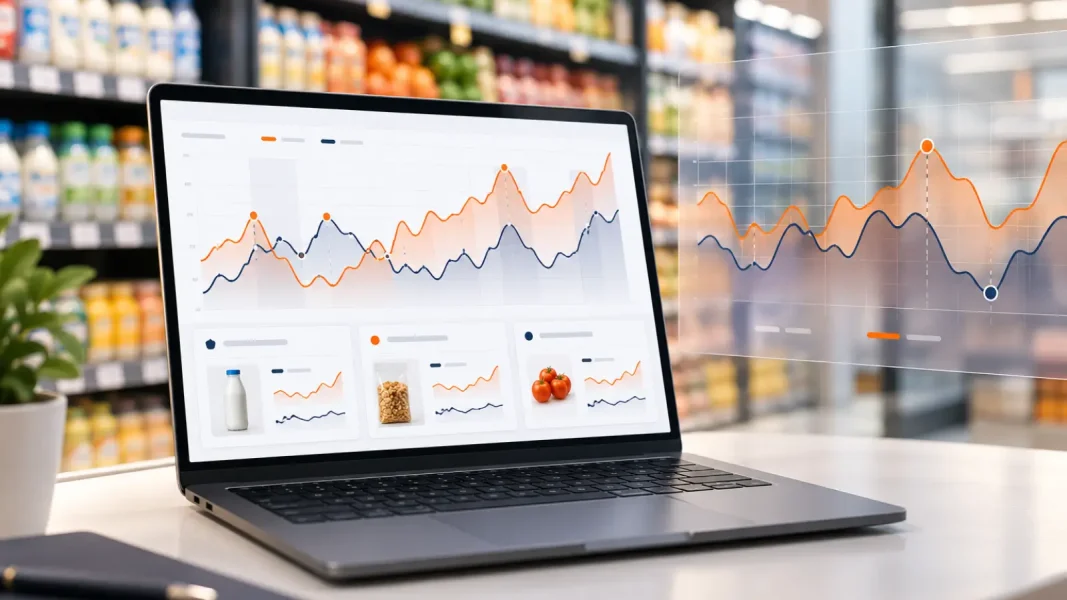
Improved Forecast Accuracy: A supply chain planning solution can use data and advanced models to improve the accuracy of demand forecasts, enabling better inventory management and reducing costs associated with excess inventory and stockouts.
Better Use of Retail Space: Effective planning can help maximize the use of retail space by ensuring that the most popular products are available and minimizing losses resulting from poor product placement.
Promotion Management: A planning solution can help optimize the planning and execution of promotions, maximizing sales while minimizing associated costs.
Reduced labor costs: Better supply chain planning can help optimize staff allocation based on demand, thereby reducing labor costs.
Improving Customer Satisfaction: By ensuring products are available when customers need them and minimizing stockouts, you can build greater customer loyalty and increase sales.
Reduced return costs: Better supply chain management can help reduce the number of product returns, saving money on return and restocking costs.
Ultimately, the financial gains from implementing a supply chain planning solution in retail depend on many factors, but they can be substantial in terms of reduced costs and increased profitability.
It is important to note that the effectiveness of the solution will depend on the quality of the data and how it is implemented; therefore, proper planning and ongoing evaluation are essential to maximize the financial benefits.
These major benefits are all reasons why companies are investing in modern solutions designed to drive the digital transformation of their supply chains.

How to identify a good supply chain planning solution - 5 key tips
1. Choose a highly configurable solution
When you’re looking for supply chain management software, opt for a highly configurable solution.. Indeed, every industry has its own specific characteristics, and every company has its own unique features. Consequently, it is essential to focus on a tool that meets your planning and operational needs. It is in this context that configurability takes on its full significance—far more so than simple customization.
An ideal solution is one that allows you to tailor it to meet your company’s specific needs. This could mean being able to customize user interfaces and enable or disable certain features depending on the challenges you face. The goal is to have a tool that adapts to you—not the other way around.
In addition, it is essential that your partner/publisher be able to make changes or optimizations to the planning environment without having to resort to custom development.
It is important to note that, although some publishers offer custom-built configurations, such approaches can prove difficult to maintain and scale over the long term.
2. Prioritize state-of-the-art solutions
Choosing a solution that is regularly updated is crucial to ensuring optimal security for your information systems. By taking this approach, you not only ensure that you benefit from the latest technological advancements, but also that you remain compliant with current standards and regulations.
It is also essential to choose a tool with a robust planning strategy, including annual validations of its security level. To be fully effective and impartial, these validations should ideally be entrusted to a specialized external entity, such as a service provider. qualified PASSI– an expert in information systems security audits.
Also make sure that your solution provides strict data separation by client, thereby minimizing the risk of data leaks and ensuring secure planning for each user.

3. Cloud or On-Premise solution: which to choose?
The question of whether to favor a cloud-based or an on-premises planning solution is a complex one, and depends on each company’s particular situation. The key parameters to consider are the company’s existing tools and systems, as well as its specific needs regarding the supply chain.
It’s vital to realize that there is no one-size-fits-all answer when it comes to planning. Each option has its own advantages and disadvantages. So it’s crucial to evaluate these aspects in relation to your current and future planning needs.
Over the years, cloud-based technologies have have experienced considerable growth, benefiting from massive investment and growing adoption by businesses. This trend is not surprising, given the many advantages associated with the cloud. These include faster data processing, better integration between different systems, enhanced security, and greater flexibility and scalability. These features can give your supply chain greater agility, enabling you to optimize your operations.
However, if your company already has an on-premise scheduling solution, the transition to the cloud should not be taken lightly. It’s essential to assess whether such a change would add significant value to your supply chain, and whether the potential benefits justify the necessary investment.
4. Supply chain planning and AI
In today’s digital age, the ability of a planning solution to adapt and anticipate needs is paramount. Artificial intelligence (AI) is at the heart of this evolution. It adds considerable value to supply chain planning, making processes more fluid, predictable and refined. Here are some AI-based features that can revolutionize the way you plan and manage your supply chain:
Anomaly Detection in Historical Data
This feature goes beyond simple trend analysis. It identifies unexpected variations or possible historical corrections to be made irregularities in the data, such as abnormal sales, that could indicate a problem or an opportunity.
Automatic Data Cleaning
Once anomalies are detected, it is crucial to have a system capable of correcting or removing this erroneous data to maintain the integrity of your database.
Large-scale forecasts for planning
When you manage a large inventory and serve a wide range of customers, a tool capable of making historical corrections for thousands of items is essential. AI can process large amounts of data and provide accurate large-scale forecasts.
Retrospective simulations
Testing the reliability of your forecasts is essential. Being able to simulate scenarios based on past data gives you the confidence to ensure that your models are robust and relevant.
By opting for an AI-integrated planning tool, you’re choosing a solution tailored to modern supply chain requirements. However, an important reminder: AI and algorithms must not only be sophisticated; they must, above all, be understandable and provide real added value to the user. After all, the goal is not just to automate, but to improve and optimize every step of the supply chain.

5. support is key
Imagine the following situation: you’ve chosen and integrated a supply chain management and planning solution into your company. Everything works perfectly, until the day an update is needed or an unexpected problem arises. Without proper planning and solid support, your business could face costly and unexpected interruptions.
It is therefore essential to partner with a solution provider that understands not only the technical challenges but also the business challenges you encounter. An ideal technology partner doesn’t just sell you a solution; it makes a long-term commitment to you. He’s with you every step of the way, anticipating future developments and ensuring that the solution evolves in perfect harmony with your company’s changing needs.
So, when looking for the perfect supply chain management solution, don’t just evaluate the software’s functionality. Make sure, too, that your technology partner is there to support you, in good times and bad, always complying with the specific standards and requirements of logistics management.
Read
‘s feedback on his experience as a baker at Paris Retail Week 2023:
Managing Change in the Face of Increasingly Diverse Competition?

Optimix: Your trusted partner for a high-performance supply chain
Our vision of a successful collaboration is like a “partnership of trust” between Optimix, the software publisher, and you, the customer. This partnership is based on mutual expectations of transparency, collaboration, reliability and support.