

Inventory management is one of the pillars of retail performance. Too much stock means tied-up capital, storage costs, and sometimes obsolescence. Too little, and the result is stock-outs, lost sales and dissatisfied customers. Between these two extremes, the role of inventory management software has become crucial. These solutions are no longer limited to simple inventory-taking: they support warehouse and supply chain managers in forecasting, flow management and synchronization with sales.
In this article, we review the the best inventory management softwarehighlighting their specific features, their advantages, and the contexts in which they bring the most value.
Why invest in inventory management software?
Reactivity and precision have become decisive assets in today’s commercial landscape. Inventory management can no longer be based on intuition or approximate methods. Installing dedicated software is not simply a technological choice: it’s a strategic decision that boosts operational efficiency, improves profitability and brings real peace of mind to logistics teams.
Good inventory management software provides an instant, centralized view of stock levels, whether in the warehouse, in store or in transit. This transparency makes it possible to anticipate needs, avoid errors and better manage flows. These technologies for inventory management have a number of advantages, including stock optimization.
– Fewer breakages, less overstocking
Thanks to intelligent alerts and forecasts based on actual demand, companies can reduce stock-outs that harm the customer experience, while limiting overstocking that unnecessarily ties up capital.
– Logistics optimization
Automated replenishment modules make the supply chain more fluid, taking into account supplier lead times, safety thresholds and operational priorities. The result: better-sized inventories and more agile logistics.
– Automation of repetitive tasks
No more tedious manual inventories or paper-based tracking. The software takes over time-consuming tasks such as tracking movements, generating alerts or updating stock levels, freeing up time for teams.
– Data-driven decisions
By transforming data into clear indicators, the software helps managers to make informed decisions: adjusting orders, rationalizing assortments, monitoring performance… Data becomes a genuine management tool.

Essential criteria for choosing the right inventory management software
Investing in inventory management software is more than just ticking technical boxes. It’s a strategic choice that must respond to the realities of the field, business challenges and performance ambitions. Here are the main criteria to consider when making the right choice.
Ergonomics and ease of use
A tool, no matter how powerful, is worth nothing if it isn’t adopted by teams in the field. The interface must be intuitive, fluid, and designed for operational users: stock managers, store managers, logisticians. Ease of use promotes ownership, reduces errors and accelerates return on investment.
Artificial intelligence and automation
The best software now incorporatespredictive AI to anticipate demand, detect anomalies or optimize replenishment. These functionalities make it possible to move from a reactive to a proactive logic, based on continuous learning models.
Key features of inventory management software
Good software should cover the following needs:
- Demand forecasting (seasonality, promotions, trends)
- Multi-warehouse and multi-site management
- Threshold and break alerts
- Automated replenishment
- Real-time tracking of stock movements
These functionalities must be configurable according to the company’s specific needs.
Integration with existing ecosystem
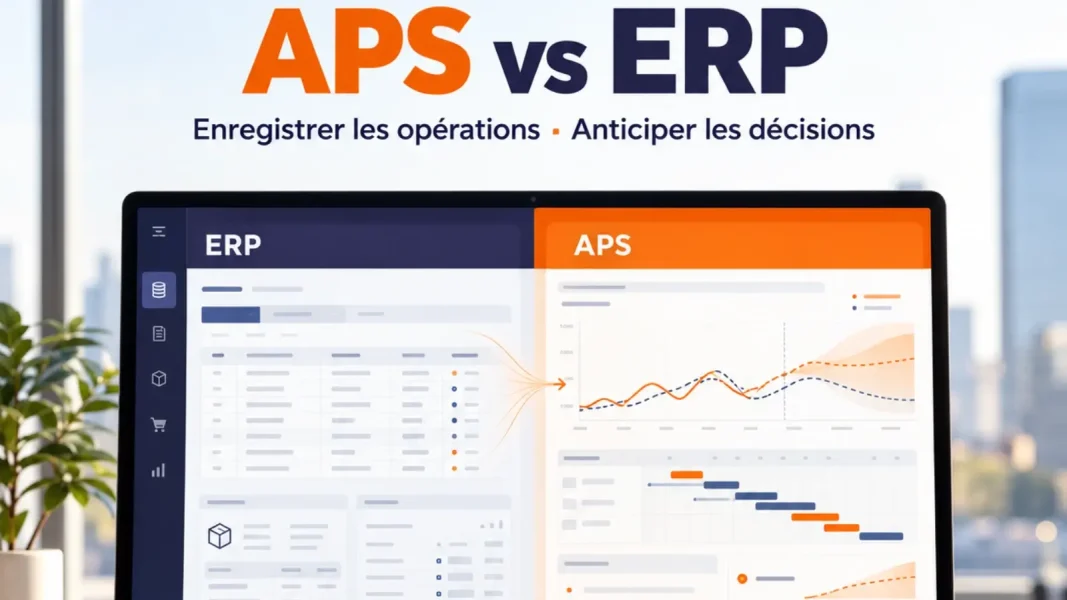
Compatibility with existing tools is crucial: ERP, e-commerce platforms, cash register software, WMS… The aim is to create a fluid ecosystem, with no re-keying, and optimal circulation of data between departments.
Sector adaptability
Each sector has its own constraints:
- In thefood sector, managing best-before dates and fast rotations is key
- In the DIY sector, long lead times and multiple formats complicate stock management.
- In textiles, sizes, colors and seasonality call for finely-tuned piloting.
The software must be able to adapt to these specificities without additional parameterization costs.
Value for money
Finally, the choice must be guided by a logic of rapid return on investment. Good software allows you to :
- Reduce losses due to out-of-stocks or overstocks
- Improve product availability and therefore sales
- Optimize logistics costs and tied-up cash
The best software for inventory management and optimization
1. Operational monitoring solutions
These tools enable precise monitoring of stock levels, inbound and outbound movements, and alerts on critical thresholds. They also offer simple dashboards and basic indicators for tracking product rotation and anticipating needs.
Examples:
Track entries and exits with real-time updates.
Automatic alerts when levels reach a critical threshold.
Monthly reports including simple KPIs on stock levels and product turnover.
Ideal for: small businesses or shops with limited product flow.
2. Modular, scalable solutions
For growing companies, these solutions offer the possibility of gradually adding advanced functionalities as required. They often include data analysis and KPIs to better manage flows and optimize performance.
Examples:
Multi-warehouse and distribution site management.
Batch traceability and expiration date tracking.
Integration with ERP or e-commerce platforms for inventory synchronization.
Reports and dashboards to identify bottlenecks and areas for improvement.
Ideal for: companies with complex workflows requiring adaptable modules.
3. Advanced automated solutions powered by artificial intelligence
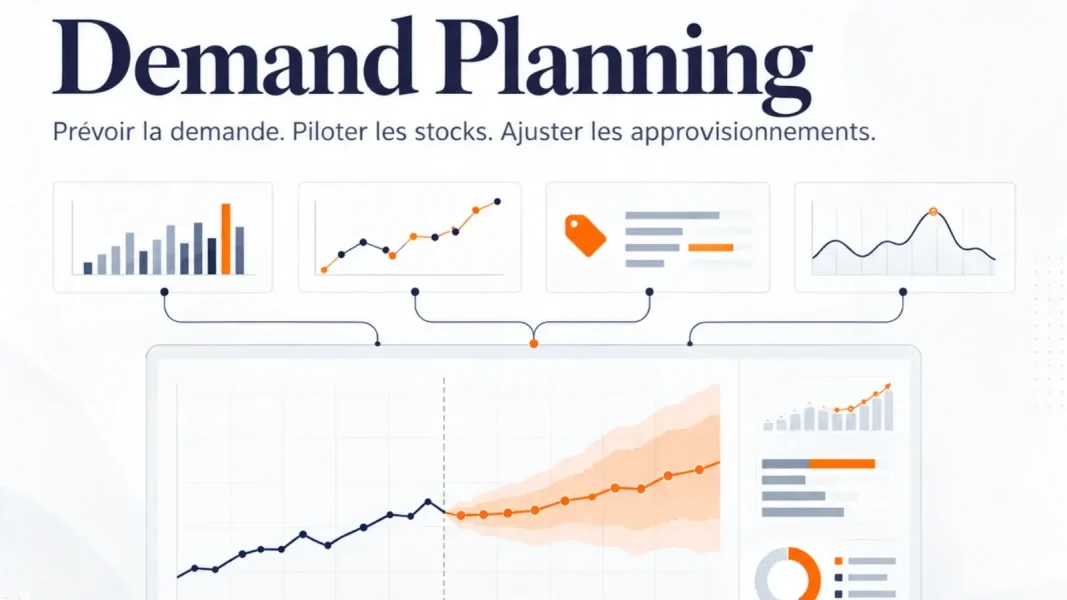
This software uses automation and artificial intelligence to anticipate demand, optimize stock levels and reduce out-of-stocks or overstocks. They are also equipped with advanced analysis tools to monitor performance and adjust strategies according to KPIs.
Examples:
Automatic demand forecasting based on historical data and seasonal trends.
Automatic replenishment when stock reaches a critical level.
Optimization of stock levels to reduce overstocking and shortages.
Advanced dashboards with KPIs on stock levels, stock-out rates and product rotation.
These are the features offered by our supply chain software XFR- Optimix Forcast & Replenishment! Thanks to its predictive algorithms and analytical dashboards, it anticipates the exact requirements for each product, helps reduce out-of-stocks and overstocks, and enables proactive supply chain management.
Ideal for: companies with complex, seasonal or international flows who want to combine precision, responsiveness and advanced control.
4. Solutions integrated into the global supply chain
For companies with extended supply chains, these solutions ensure coordination between suppliers, warehouses, production and distribution. They include advanced performance indicators to optimize all flows and secure operational continuity.
Examples:
Automated coordination between suppliers, warehouses and distribution centers.
Replenishment planning based on production and sales forecasts.
Multi-site flow management to optimize costs and availability.
Strategic dashboards with KPIs on overall supply chain efficiency and areas for improvement.
Ideal for: large companies with complex supply chains requiring global management.
XFR - Optimix Forecast & Replenishment: an intelligent solution for inventory management
XFR – Optimix Forecast & Replenishment is an advanced forecasting, replenishment and inventory optimization solution designed to meet the challenges of retail inventory management. Thanks to its predictive algorithms, XFR enables companies to secure their flows, optimize their stock levels and reinforce their operational agility.
Key benefits of XFR
Anticipate shortages and reduce overstocking: by adjusting quantities as closely as possible to actual and projected demand.
Dynamic optimization of stock levels: each product, each sales outlet, each warehouse benefits from detailed, contextualized management.
Global visibility of supply chain flows: from customer request to supplier, with clear, actionable indicators.
Increased reactivity in procurement strategies: adjustments are made in real time, according to deviations or unforeseen events.
Operation based on data intelligence
Detailed analysis of sales histories and seasonal trends to detect consumption patterns.
Automated forecasting of requirements by product, channel and location, integrating logistical and commercial constraints.
Generate optimized replenishment recommendations, validated by configurable business rules.
Real-time monitoring of stock levels, with automatic adjustments as soon as a significant deviation is detected.
With the XFR solution, companies move from a reactive to a proactive approach to inventory management. They gain in reliability, reduce costs linked to overstocking and out-of-stock situations, and strengthen their ability to meet market expectations with precision.
The right inventory tool: an ally in anticipation, reliability and performance
Choosing an inventory management software package shouldn’t be based solely on a list of functionalities. It must meet the concrete needs of the store or chain: anticipate, make reliable, and simplify the life of the teams. XFR – Optimix Forecasting and Replenishment stands out for its approach focused on forecasting and intelligent replenishment, but each retailer will benefit from comparing tools according to its model, constraints and ambitions.
Good inventory management software is first and foremost a strategic partner, helping to transform logistical constraints into levers of performance and customer satisfaction.