


Competitive mapping: why a market scan is essential for pricing?
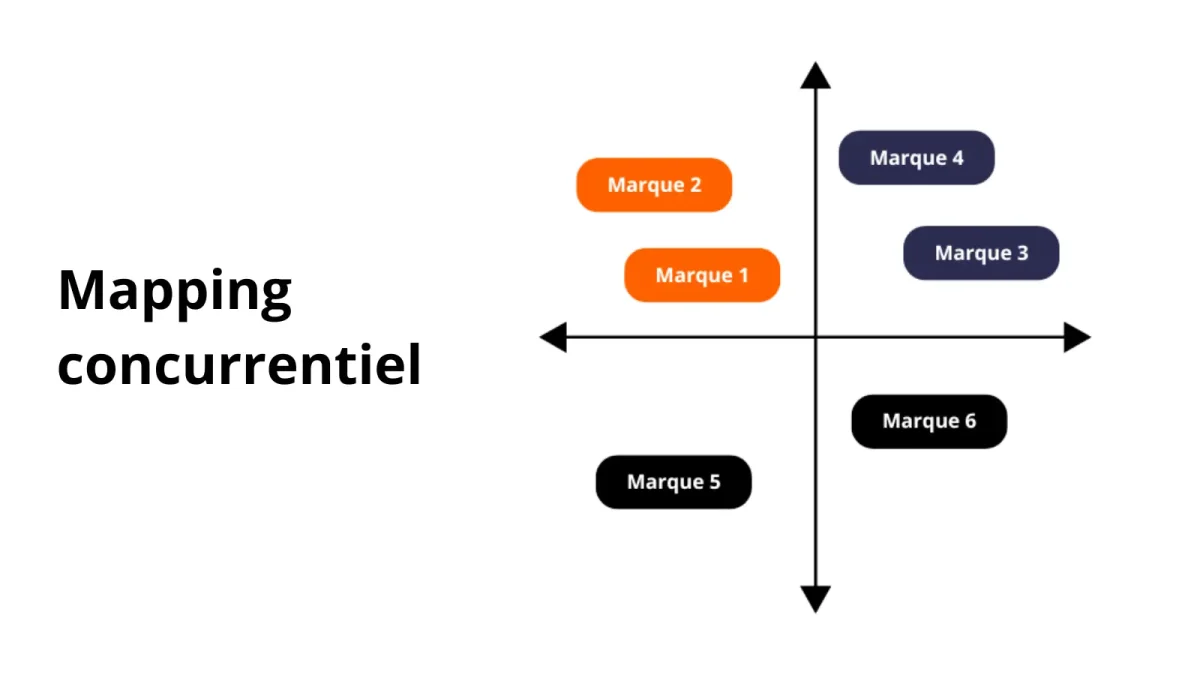
Competitive mapping enables you to visualize the positioning of market players and adjust your pricing strategy to remain competitive.
Psychological pricing: levers to influence purchasing decisions

Psychological pricing influences price perception and purchasing decisions. Discover the key techniques for optimizing your pricing strategy.
Pricing strategies for short-dated products?

Short-dated products require an adapted pricing strategy. Find out how to adjust prices to reduce losses and optimize margins.
Web scraping prices: steering your pricing strategy with market data

Web scraping of prices enables you to analyze market data and competitor prices. Find out how to use it to steer your pricing strategy.
Geopolitical crises: tense inventories, rising costs, weakened prices – how can retailers limit out-of-stock situations?

Rising costs, inventory pressures, supply disruptions: geopolitical crises are making retail more fragile. Find out how to anticipate risks and protect your margins.
Price sensitivity: why your pricing decisions (often) destroy more value than they create

A poor understanding of price sensitivity can harm your margins and growth. Find out why some pricing decisions destroy more value than they create.
Automated pricing: understand, structure and optimize your pricing strategy

Automated pricing allows you to adjust your prices in real time according to demand and competition. Learn how to structure and optimize your pricing strategy.
Why conduct a supply and demand analysis?

Analysis of supply and demand enables us to identify market opportunities, adjust prices and improve sales performance.
What are the advantages and disadvantages of price alignment?

Aligning prices helps you stay competitive, but can also impact margins. Analyze the advantages and limitations for your strategy.
How to use price elasticity in your pricing strategy?

Price elasticity measures the impact of price variations on demand. Find out how to use it to refine your pricing strategy and maximize your performance.
Dynamic pricing: What is it?

Dynamic pricing allows you to adjust your prices in real time according to demand, competition and other key factors. Find out how it works and its benefits.
Factors influencing price elasticity

Price elasticity depends on a number of factors, such as competition, perceived value and customer sensitivity. Learn how to master them.
Pricing algorithms: how to ensure lasting trust?

Explore the world of algorithmic pricing and learn how to build lasting trust in this new era of automated pricing.
Automation in pricing: how to keep control while using AI?

Discover how to balance automation and control in pricing management, and optimize your pricing strategies without losing flexibility or control.
Offer analysis: definition, methods and tools for better market positioning

How can you effectively stand out in a competitive market? Analyze your offering to assess its strengths, weaknesses and competitive positioning. Discover the methods, strategic tools and best practices for refining your value proposition and strengthening your competitive edge.
Quantitative and qualitative offer analysis: what are the differences and why combine them?

Quantitative or qualitative offer analysis: what are their specific features and how can they be used effectively? These two approaches are complementary when it comes to understanding your market, fine-tuning your positioning and making informed strategic decisions. Discover their differences and why combining them can boost your performance.
What is a rules engine?

A rules engine automates the application of business rules to make decisions more reliable, save time and ensure operational consistency.
Setting the selling price: the key stages

Setting the right selling price involves structuring your approach, analyzing costs, the market and perceived value, in order to arbitrate between volume and profitability.
Automated price monitoring: how to industrialize market price monitoring to stay competitive

Automation and AI are revolutionizing pricing intelligence, offering a more accurate and reactive view of competitor prices and market dynamics.
How can you analyze the differences between your prices and those of your competitors?

Understanding the differences between your prices and those of your competitors enables you to adjust your positioning, protect your margins and strengthen your competitiveness.
Price Matching: What is it?

Price matching has become an essential lever for strengthening price competitiveness. This guide explains how to use it effectively to attract and retain customers.
What is price modeling?

Price modeling helps to understand the effect of price variations on demand, margins and competitiveness, thanks to data.
Black Friday 2025: How price image and perceived value are reshaping brand strategies

Black Friday 2025 marks a turning point: brands are rethinking their price image and reinforcing perceived value to attract customers without sacrificing profitability. Discover the new winning strategies.
Price Monitoring: A Complete Guide to Tracking Competitors and Adjusting Your Prices

Price monitoring is an essential tool for understanding the market, tracking competitors, and adjusting your prices in real time. This comprehensive guide helps you implement an effective strategy to stay competitive, protect your margins, and anticipate industry developments.
Organic retailers: how to set prices that are consistent with the competition?

Discover our tips and solutions for calculating your organic retailer’s prices by comparing yourself with the competition on variation criteria.