


The summer sales remain one of the most strategic events on the retail calendar. In 2025, 41% of French people aged 18 to 64 took part in the summer sales, confirming their importance in purchasing behavior.
For some retailers, this period accounts for up to 25% of annual revenue, all concentrated into just four weeks. Sales volumes are skyrocketing, foot traffic is rising sharply, and competition is heating up.
But behind this business opportunity lies a more complex reality.
An improperly calibrated discount can quickly turn growth potential into margin erosion. Poorly managed inventory can lead to stockouts of top-selling items or, conversely, costly excess inventory at the end of the sales cycle. As for unreliable forecasts, they undermine the entire decision-making process.
In the face of this pressure, three questions become crucial:
- Are inventory levels truly aligned with expected demand?
- What impact will the promotions have on the margin even before they are launched?
- Do pricing decisions take into account changes in the competitive landscape?
Sales performance no longer depends on a single factor. It now hinges on the ability to align several strategic decisions around a single goal: selling more, selling better, and maintaining profitability.
Why Do Siloed Organizations Quickly Reach Their Limits?
At many retailers, pricing, the supply chain, and sales forecasting continue to be managed separately.
Under normal circumstances, these discrepancies can be absorbed. During sales, however, they amplify risk.
Case #1: The Promotion That Breaks the Mold
A product is eligible for a 40% discount and significant marketing exposure. Demand is skyrocketing, but inventory levels were not scaled accordingly.
The result: a breakdown after just a few days, right when demand peaked.
Case #2: Excess Inventory That Eats Into Profits
Orders were carefully secured ahead of the sales. However, the discounts offered are not enough to move the expected volume.
Unsold inventory then requires additional markdowns, which significantly reduce profitability.
Case #3: The Forecast That Ignores the Promotional Plan
The forecasts are based primarily on historical data and generic promotional coefficients.
They do not take into account the discounts that are actually offered, competitors’ behavior, or specific consumer reactions.
Orders are then poorly calibrated, and teams manage the period with limited visibility.
In each of these scenarios, the problem is not a lack of data.
The problem is the lack of alignment between pricing decisions, demand forecasts, and procurement strategies.

The 5 Keys to a Successful Sales Season
To succeed during sales events, retailers must move beyond a siloed approach and synchronize multiple strategic decisions. The top-performing retailers rely on five complementary strategies that enable them to align their sales, pricing, and operational decisions throughout the sales period.
1. Accurately forecast demand
It all starts with the quality of the forecasts.
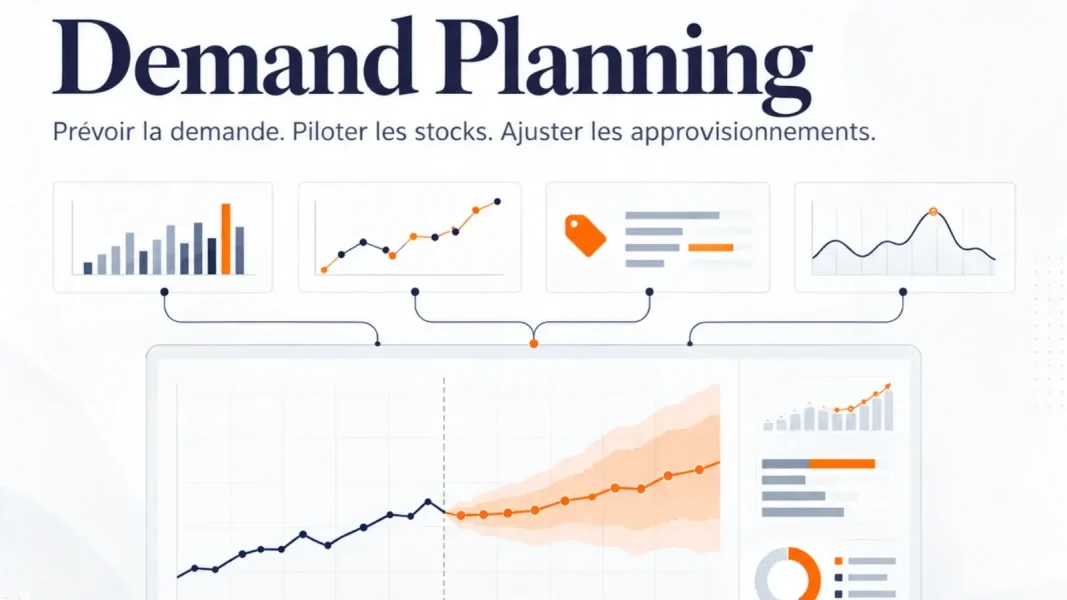
A reliable forecast is no longer simply a matter of replicating past sales. It must include:
- the expected impact of the discounts;
- promotional activities by category;
- weak signals observed in real time;
- historical data;
- business objectives.
It also helps align the Supply Chain, Sales, and Finance teams around a shared vision.
Good forecasting means fewer uncertainties and more opportunities.
2. Optimize prices and promotions
The success of a sale does not depend on the maximum discount.
It depends on how relevant they are.
The top-performing retailers seek to:
- simulate the impact of promotions on revenue and margin;
- Identify the items that actually require a price reduction;
- measure the elasticity of demand;
- adjust discounts based on the observed results.
The goal is simple:
Apply the right promotion, at the right time, to the right product.
3. Secure supplies before demand peaks
The best forecasts are only valuable if they enable you to make the right procurement decisions. During sales events, the ability to anticipate inventory needs becomes a key factor in meeting demand while keeping inventory levels under control.
Supplier order forecasting must take into account not only expected volumes, but also promotional effects, lead times, and various possible sales scenarios. Underestimating demand can lead to stockouts on the most popular items, while overestimating it exposes the retailer to costly excess inventory and additional markdowns at the end of a promotion.
To mitigate these risks, retailers must be able to forecast the quantities to order, evaluate various scenarios based on anticipated discount levels, and identify in advance the categories most vulnerable to supply constraints or excess inventory.
This preparation is particularly strategic for retailers whose suppliers impose long restocking lead times. Ideally, sales forecasts, the promotional plan, and the supply chain should be aligned six to eight weeks before the start of the sales season to secure supplies and ensure product availability when demand peaks.
4. Incorporate competitive intelligence into pricing decisions
Consumers in 2026 compare prices in real time.
During sales, competitors are constantly adjusting their promotions, markdowns, and offers.
Setting prices without visibility into the market is like making decisions in the dark.
Effective competitive intelligence enables:
- to monitor changes in market prices;
- to identify positioning discrepancies;
- to quickly detect changes in strategy;
- to adjust discounts without triggering a price war.
This ability to respond is becoming a key differentiator in an increasingly dynamic environment.
5. Optimize inventory throughout the operation
Inventory is no longer just an operational constraint.
During sales, it becomes a real driver of performance.
The most successful retailers seek to:
- align inventory levels with projected demand;
- simultaneously reduce excess inventory and stockouts;
- reallocate products to the best-performing stores or channels;
- ensure the availability of the most appealing products.
The goal is twofold:
Maximize sales while maintaining profitability.
When Forecasts, Prices, and Inventory Work Together
These five levers should not be managed independently.
They feed off each other.
Forecasts drive supply.
Inventory levels influence pricing decisions.
Promotions affect demand.
Competition affects discounts.
And each new piece of data should inform subsequent decisions.
This approach creates a true continuous management loop in which each function contributes to improving overall performance.

Management by Exception: Focusing Teams on Strategic Decisions
The goal of a data-driven organization is not to automate all decisions, but to simplify and ensure the reliability of recurring tasks so that teams can focus on activities that add the most value. Standard price adjustments, inventory level monitoring, restocking recommendations, and anomaly detection can thus be managed automatically based on predefined rules and up-to-date data.
This automation allows the Commerce, Pricing, and Supply Chain teams to devote more time to decisions that require true business expertise. They can then focus on analyzing competitor moves, making complex trade-offs between volume and profitability, or making strategic decisions regarding the most sensitive product categories during sales events.
Exception-based management is based on a simple principle: letting tools handle routine situations so that employees can focus on areas where their judgment, experience, and market knowledge add the most value.
Thanks to artificial intelligence, this approach is becoming even more powerful: algorithms identify situations requiring special attention, anticipate changes in demand, and recommend the most relevant actions. In a context as dynamic as sales events, this approach improves teams’ responsiveness, the quality of decisions made, and sales performance.
Sales aren’t just planned anymore—they’re managed with the right tools!
Sales are no longer a rigid commercial event planned several weeks in advance and then carried out according to a fixed schedule.
This is a fast-paced retail environment where market conditions are constantly changing: competitors’ prices change, inventory levels fluctuate with sales, purchasing behavior shifts between the first and last markdowns, and promotional performance varies by category, channel, or geographic region.
While advance preparation remains essential, success during the sales now depends on the ability to continuously adjust decisions based on up-to-date data shared among teams.
It is precisely with this in mind that the Forecast & Replenishment and Pricing Analytics from Optimix Solutions truly shine.
OptimiX Forecast & Replenishment enables continuous updating of demand forecasts and procurement needs by incorporating actual performance, promotional effects, and changes in consumption. This provides teams with a more reliable overview, enabling them to anticipate the risk of stockouts, adjust restocking schedules, and optimize inventory levels throughout the operation.
At the same time, OptimiX Pricing Analytics provides real-time visibility into the performance of promotions, changes in market prices, and opportunities for price adjustments. The solution enables companies to assess the impact of discounts on sales, revenue, and margins in order to make more precise pricing decisions.
By combining these two approaches, the Sales, Pricing, and Supply Chain teams draw on a shared understanding of demand, inventory, and the market. They can respond more quickly to changes, make decisions with greater confidence, and maintain a balance between sales growth, product availability, and profitability.
The most successful retailers no longer treat sales as mere promotional campaigns. They approach them as a genuine data-driven sprint, where every decision is driven by data and helps boost the company’s overall performance.
More Effective Sales Thanks to Synchronized Management
Success in the summer sales is no longer just about clearing out inventory or offering more promotions. In an environment where demand, prices, and purchasing behaviors are constantly changing, performance depends on the ability to coordinate all sales and operational decisions.
Demand forecasting, price optimization, supply planning, competitive intelligence, and inventory management are now the five key elements of a successful sales strategy.
By combining OptimiX Forecast & Replenishment and OptimiX Pricing Analytics, retailers gain a unified view that enables them to anticipate demand, adjust prices, ensure product availability, and protect their margins throughout the entire process.
The 2026 summer sales begin on June 24. The retailers that will make the most of them are those that start aligning their decisions today. Do you want to better manage your pricing, forecasting, and inventory during the sales?
Schedule an appointment with an Optimix Solutions expert.