



Sales price is one of the few levers capable of simultaneously influencing profitability, price image and purchasing behavior simultaneously. It affects both the customer’s decision and the company’s economic equilibrium. Even a small deviation can be enough to alter volumes, margins or the perception of value.
For determining a priceis a structuring choice that must reconcile several dimensions: internal costs, positioning, market reality and the value perceived by the customer. These elements evolve over time, which means that price must be seen as a living parameter, to be monitored and adjusted.
This article takes a look at the key steps involved in setting a coherent, controlled sales price. From the definition of pricing strategy to the use of data and analytical tools, the aim is to build a clear method for making decisions in line with sales objectives and the reality on the ground.
Step 1. Develop a coherent pricing strategy
Every price setting starts with a pricing strategy strategy. The selling price must reflect the chosen positioning, whether premium, accessible or differentiated. This orientation determines the pricing logic applied to the entire offer.
Premium positioning implies a high price justified by superior quality, exceptional service or exclusivity. Conversely, an accessible positioning aims to win volume through an attractive quality/price ratio. Differentiated positioning, on the other hand, seeks to create a perception of unique value that enables customers to avoid direct comparison with competitors.
Pricing strategy must also reflect specific objectives: maximizing margins, gaining market share, accelerating stock rotation or supporting a new product launch. These objectives directly influence price levels, range structure and discount rules. For example, a skimming strategy involves setting an initially high price to capture the least price-sensitive demand, before gradually lowering it to broaden the customer base. In contrast, a penetration strategy favors a low entry price to rapidly win market share.
A coherent price is one that is aligned with the brand promise. Without this strategic framework, pricing decisions become opportunistic and incoherent, undermining clarity for customers and internal teams alike. Price consistency is also a key factor in range management: the price difference between two products must reflect a difference in value that is perceptible to the customer.

Step 2. Know your costs and calculate your selling price
Calculating the selling price is based on a rigorous analysis of costs. The cost of goods sold must be precisely identified, integrating direct costs (purchasing, production, transport) and indirect costs (logistics, marketing, structure, customer service). A sufficiently detailed breakdown is essential to enable realistic allocation by product or product family.
Such an analysis can be used to determine the break-even point and set a target margin consistent with the pricing strategy. Methods such as cost-plus pricing provide an initial benchmark, but need to be adjusted according to the market and perceived value. Cost-plus pricing involves adding a predefined margin rate to the cost of goods sold. While this guarantees cost coverage, it has the disadvantage of neglecting market sensitivity and competitive pressure.
Cost control also plays a key role in securing future decisions: price adjustments, temporary promotions or commercial negotiations. Without sufficient visibility, any price cut becomes a risk factor for profitability. Cost analysis must therefore be updated regularly, particularly in inflationary contexts or when production volumes change significantly, modifying the breakdown of fixed costs.
Finally, it is essential to identify the marginal cost, i.e. the cost of producing an additional unit. This indicator proves decisive in promotional decisions or in negotiations with key accounts, when the aim is to optimize the marginal contribution rather than the average margin.
Step 3. Study the market and analyze your competitors’ prices
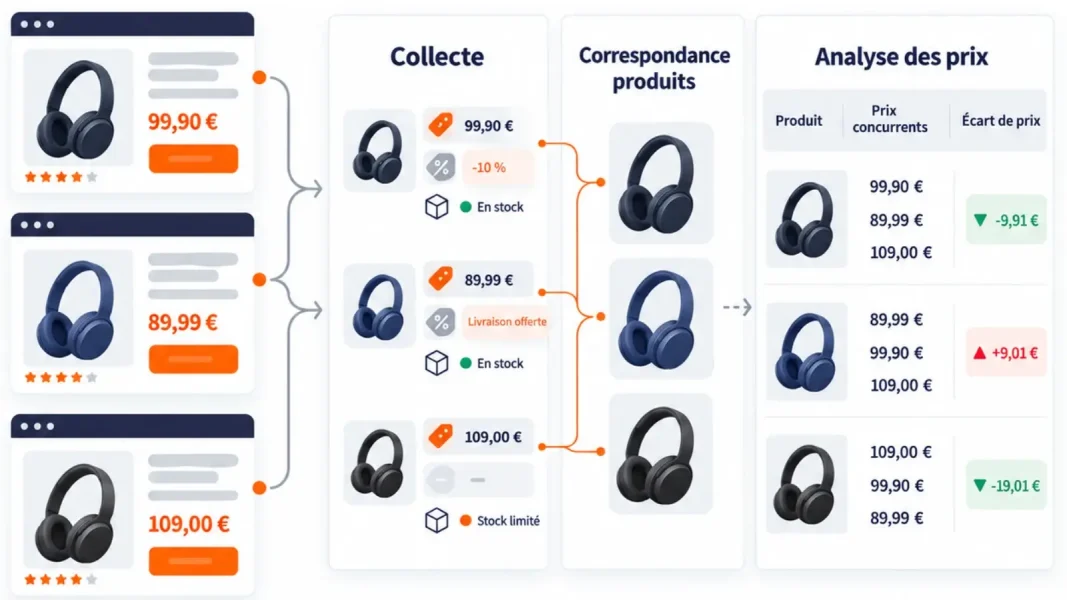
Sales prices are always set in a competitive environment. Competitive analysis enables us to identify price levels, positioning differences and dominant pricing strategies. It must cover both direct competitors and players offering alternative solutions likely to capture the same demand.
It’s not a question of copying competitors, but of understanding market logic: which products serve as price references, which segments are sensitive to price variations, which players play on differentiation rather than low price. Certain products, known as KVIs (Key Value Items), are particularly closely scrutinized by customers, and serve as benchmarks for assessing the overall competitiveness of an offer.
A structured price watch helps to anticipate market movements and avoid late reactions. It is an essential foundation for setting competitive prices, without entering into a value-destroying price war. In some sectors, this watch can be daily, particularly in e-commerce where prices change in real time. In other contexts, monthly or quarterly monitoring is sufficient.
Competitive analysis must also take into account competitors’ promotional practices, discount policies and pricing structures by distribution channel. These factors often reveal opportunities for differentiation, or risks of losing the competitive edge.
Step 4. Understanding perceived value and willingness to pay
The selling price is not only justified by an economic calculation. It must correspond to the value perceived by the customer. This value depends on the quality of the product, the proposed experience, the associated service, the brand and the purchasing context. It can vary considerably from one customer segment to another.
Two similar offers may be accepted at very different price levels, depending on their presentation and promise. Conversely, a price that is too low can degrade the perception of quality and reduce the credibility of the offer. This phenomenon, known as the Veblen effect, is particularly marked in the luxury goods, cosmetics or professional services sectors, where a high price becomes a signal of quality.
Understanding willingness to pay involves analyzing purchasing behavior, customer feedback, price testing and observing reactions to price changes. This step is central to any value-based pricing strategy. Research methods can include Van Westendorp-type surveys, which identify psychological thresholds of acceptable price, or conjoint analyses, which measure the relative importance of price in relation to other product attributes.
Perceived value is not static. It evolves with the product life cycle, consumer trends and competing innovations. A product perceived as innovative at launch may become commonplace a few months later, justifying a price adjustment.

Step 5. Define a clear, sustainable pricing policy
A pricing policy structures the setting and evolution of prices over time. It formalizes pricing rules: price grids, discount levels, consistency between channels, promotional conditions and exception management. This formalization avoids arbitrary decisions and guarantees fair treatment between customers.
This pricing policy must be understood and shared by all stakeholders: marketing, sales, finance and management. It guarantees the consistency of decisions and limits contradictory arbitrations in the field. The documentation of this policy facilitates the integration of new employees and reduces the risk of errors or inconsistencies in the application of tariffs.
An effective pricing policy remains flexible enough to adapt to market changes, without jeopardizing the stability perceived by customers. It must provide for adjustment mechanisms in the event of significant cost variations, major competitive shifts or exceptional commercial opportunities. These mechanisms may include automatic revision clauses indexed to economic indicators or predefined trigger thresholds.
Pricing policy must also address the issue of price discrimination, i.e. the practice of differentiated pricing according to customer segment, distribution channel or geographical area. Such differentiation must be objectively justified and compatible with the applicable regulatory framework.
Step 6. Test, adjust and pilot
Pricing management is based on experimentation and analysis of results. Testing different price levels, measuring the impact on volumes, margins and conversion rates, enables us to progressively refine our strategy. This iterative approach transforms initial uncertainty into structured learning.
Tests can be based on pilot areas, A/B tests or scenario simulations. The key is to monitor key indicators: gross margin, sales, price elasticity, customer perception. Price elasticity measures the sensitivity of demand to price variations. A high elasticity means that a small variation in price leads to a large variation in volumes, making price adjustments more risky.
This continuous monitoring transforms pricing into a controlled process, capable of evolving without interruption. It also makes it possible to quickly identify anomalies: under-priced products that generate volume without profitability, or over-priced products whose sales stagnate for no apparent reason.
The pricing management dashboard must include a variety of performance indicators: price realization rate (difference between catalog price and actual invoiced price), product mix, average discount rate, share of promotions in sales. These indicators provide a multi-dimensional view of pricing performance, making it easier to diagnose levers for improvement.
Step 7. Rely on data and high-performance pricing tools
Pricing relies on data to secure decisions. Centralizing information, analyzing competitor prices, simulating impacts and structuring pricing rules become indispensable as complexity increases. The multiplication of product references, distribution channels and customer segments makes efficient manual pricing management impossible.
From pricing tools such as XPA – Optimix Pricing Analytics help you to make more accurate decisions, structure your pricing strategy and automate certain adjustments within a controlled framework. These solutions offer a global vision of pricing, while leaving strategic arbitration in the hands of the user. They integrate optimization, simulation and competitive intelligence functionalities that accelerate decision-making and reduce the risk of error.
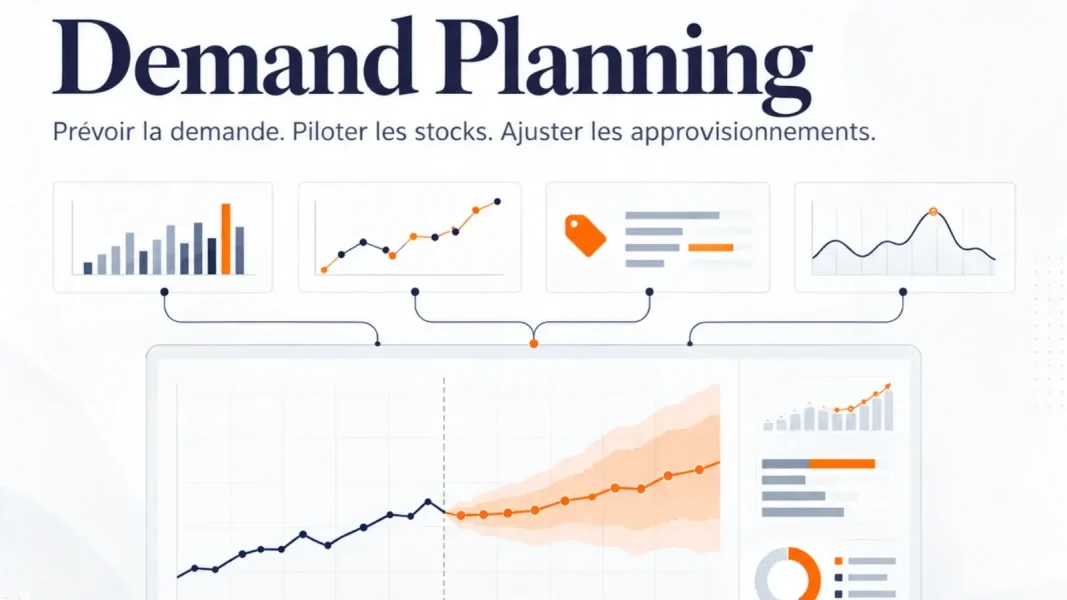
In this way, data becomes a decision-making tool, supporting more consistent and responsive pricing. Artificial intelligence and machine learning now make it possible to anticipate changes in demand, identify behavioral patterns and recommend pricing adjustments in real time. These technologies transform pricing from a reactive discipline into a predictive and proactive function.
Data can also be used to analyze past sales, observe purchasing behavior, take account of seasonal effects, and assess the real impact of marketing actions. It also enables us to identify cannibalization phenomena between products within the same range. By cross-referencing these elements, the company has a clearer picture of its performance levers, and can adjust its pricing decisions in line with its overall sales and marketing strategy.
Selling price as a strategic lever for value creation
Setting a sales price is above all a strategic choice, which goes far beyond the simple logic of cost coverage or competitive alignment. It requires a global vision that integrates corporate strategy, product positioning, customer value creation and long-term profitability objectives. It is in the coherence of these dimensions that pricing becomes a genuine performance management tool.
In an environment marked by intensifying competition, heightened market volatility and constant pressure on margins, pricing has become a governance lever in its own right. Backed by reliable data, advanced analytical tools and structured processes, pricing policy enables senior management to arbitrate priorities, guide growth and secure value creation over the long term. In this way, price ceases to be a tactical variable and becomes a strategic pillar in the service of the company’s competitiveness and economic trajectory.