

An unavailable product is a lost sale. It’s a simple rule known to all retailers.
Product availability has always been a pillar of retail performance. For a long time, it was essentially a matter of operational execution: forecasting demand accurately, stocking products correctly, limiting stock-outs to maximize sales.
With the emergence of agentic AIs, product availability became a selection argument. An unavailable product is no longer just a lost sale.
This brand is no longer offered.
AIs only present immediately actionable options. They filter upstream, arbitrate in real time and automatically exclude unavailable offers.
The changeover is major: we’re moving from an e-commerce where breakage penalizes conversion, to an e-commerce where it eliminates visibility.
In this new model, not being available means leaving the purchasing process.
In this article, we analyze how agentic AIs are transforming the rules of the game, why product availability is becoming a decisive criterion for existing in recommendations, and what solutions to put in place to respond effectively.
From lost sales to lost visibility: the impact of agentic AIs
In a traditional route, a stock-out had a measurable but limited impact: a lost sale, sometimes compensated by an alternative product, or deferred in time.
In an AI-driven pathway, this logic disappears.
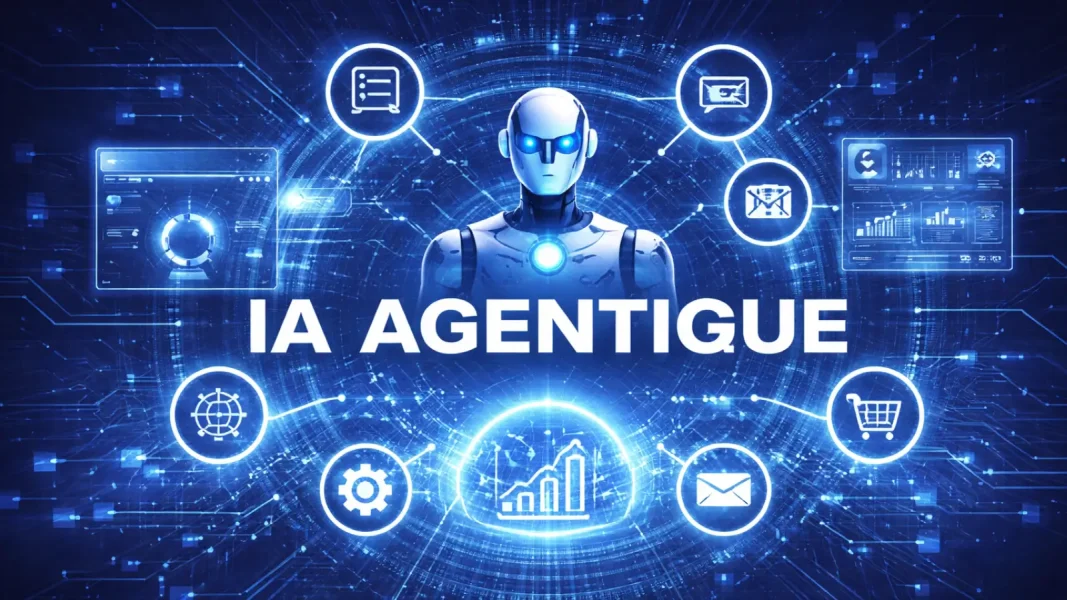
AI does not offer an unavailable product. It leaves no room for consumer arbitration. It only selects offers that can be acted upon immediately. Agentic AI relies on an LLM to reason, tools to act, and orchestration to decide.
The direct consequence is that out-of-stock situations become a factor of exclusion.
A discontinued product no longer simply loses a conversion opportunity. It disappears from the field of recommendations.
Agentic AIs amplify this dynamic by introducing an automated selection logic where previously existed an exploration logic.
They filter upstream in the purchasing process, selecting only those offers that can be acted upon immediately. This seemingly simple change profoundly alters the rules of competitive bidding.
The result is two major transformations:
- automatic and systematic selection of available offers, without displaying unavailable alternatives
- drastically reduced downtime tolerance, even for short or localized outages
Unlike a human user, an AI does not “store” an unavailable product in its memory, and does not reassess its interest at a later date. It arbitrates at the moment, solely on the basis of available options.
Better availability mechanically increases the probability of being recommended, as it guarantees immediate eligibility in selection systems. Conversely, even a one-off breakdown means immediate exclusion from the field of recommendation.
This mechanism introduces greater volatility of visibility: a product can move in and out of the recommendations according to its actual availability, sometimes at very short notice.
Competition is therefore no longer based solely on the quality of the offer or price positioning, but on the ability to be available on a continuous basis, at the precise moment when the decision is arbitrated by the AI.
In this new environment, availability becomes an algorithmic signal in its own right, just like price or product relevance.

Why are traditional models reaching their limits?
This development puts the traditional approaches to demand forecasting and replenishment under pressure.
Many models are still based on :
- little-enriched histories
- limited-frequency updates
- relatively static threshold logics
These approaches were suited to a relatively stable environment, where adjustment could be made a posteriori.
They are becoming insufficient in a context where :
- demand is more volatile
- immediate price effects
- competition is continuously assessed
- automated recommendation
The main point of weakness is the response time.
Late replenishment means not just a loss of sales, but also a loss of presence in the buying journey.
These limitations are no longer just operational inefficiencies: they become direct factors of exclusion in an AI-driven environment.
The role of advanced demand forecasting
Demand forecasting is evolving towards finer, more dynamic and more integrated models.
The aim is no longer simply to estimate volumes, but to accurately anticipate purchasing behavior.
This implies :
- increased granularity (product, point of sale, channel)
- integration of multiple signals (history, promotions, prices, market trends)
- the ability to capture rapid variations in demand
This approach makes it possible to align stock levels more closely with actual demand, and above all to reduce uncertainty. A price variation can generate a spike in demand that only a properly managed supply can absorb.
In an AI-driven environment, this precision becomes decisive:
better anticipation means a better guarantee of presence.

The role of replenishment
At the same time, replenishment becomes a strategic lever.
It’s no longer a question of simply reacting to a drop in stock, but of orchestrating flows proactively and continuously.
In this context, demand forecasting and supply management solutions play a central role.
They enable us to move from a reactive to an anticipatory logic, by aligning purchasing decisions more closely with actual demand.
In an environment where pricing decisions directly influence demand, the ability of the supply chain to absorb these variations becomes critical.
The stakes are many:
- automate replenishment decisions, based on predictive models
- optimize stock levels, in particular by integrating dynamic safety stocks, adjusted according to the variability of demand and supplier lead times
- integrate logistics constraints (lead times, capacities, delivery frequencies) into decisions
- synchronize decisions with demand dynamics, taking into account price, promotional and seasonal effects
Advanced solutions enable fine-tuned management of the trade-offs between availability, storage costs and service levels, by continuously adjusting key parameters (order quantities, replenishment frequency, trigger thresholds).
Without solutions capable of continuously orchestrating these dimensions, it becomes impossible to maintain availability compatible with AI recommendation logics.
The objective is no longer just operational efficiency, but continuity of availability.
In an environment where any downtime can lead to exclusion, consistency becomes a competitive advantage.
Orchestrate demand and inventory to stay in the game
Demand forecasting and replenishment are no longer simply a matter of operational performance. They are becoming strategic levers of visibility, directly linked to a retailer’s ability to be present in recommendation systems.
In an environment driven by agentic AI, anticipating demand, synchronizing flows and guaranteeing continuous availability no longer just make for better sales: they condition access to the purchasing journey itself.
Players capable of finely orchestrating these dimensions, supported by advanced supply chain tools, themselves powered by AI, will be able to continuously adjust their decisions, align forecasting and execution, and durably secure their presence in recommendations and thus their access to the market.