

Agentic AI: why product availability becomes critical to exist in the buying journey and the role of forecasting

Whitepaper-How-to-choose-a-Supplychain-solution-optimix-solutions

Discover our white paper

This guide offers you a clear methodology and concrete benchmarks to identify the Supply Chain solution best suited to your challenges, in the face of growing complexity and ever-increasing expectations.

disponibilite-produit-prevision-demande-reapprovisionnement-optimix-solutions

An unavailable product is a lost sale. It’s a simple rule known to all retailers.

Product availability has always been a pillar of retail performance. For a long time, it was essentially a matter of operational execution: forecasting demand accurately, stocking products correctly, limiting stock-outs to maximize sales.

With the emergence of agentic AIs, product availability became a selection argument. An unavailable product is no longer just a lost sale.

This brand is no longer offered.

AIs only present immediately actionable options. They filter upstream, arbitrate in real time and automatically exclude unavailable offers.

The changeover is major: we’re moving from an e-commerce where breakage penalizes conversion, to an e-commerce where it eliminates visibility.

In this new model, not being available means leaving the purchasing process.

In this article, we analyze how agentic AIs are transforming the rules of the game, why product availability is becoming a decisive criterion for existing in recommendations, and what solutions to put in place to respond effectively.

From lost sales to lost visibility: the impact of agentic AIs

In a traditional route, a stock-out had a measurable but limited impact: a lost sale, sometimes compensated by an alternative product, or deferred in time.

In an AI-driven pathway, this logic disappears.

AI does not offer an unavailable product. It leaves no room for consumer arbitration. It only selects offers that can be acted upon immediately. Agentic AI relies on an LLM to reason, tools to act, and orchestration to decide.

The direct consequence is that out-of-stock situations become a factor of exclusion.

A discontinued product no longer simply loses a conversion opportunity. It disappears from the field of recommendations.

Agentic AIs amplify this dynamic by introducing an automated selection logic where previously existed an exploration logic.

They filter upstream in the purchasing process, selecting only those offers that can be acted upon immediately. This seemingly simple change profoundly alters the rules of competitive bidding.

The result is two major transformations:

  • automatic and systematic selection of available offers, without displaying unavailable alternatives
  • drastically reduced downtime tolerance, even for short or localized outages

Unlike a human user, an AI does not “store” an unavailable product in its memory, and does not reassess its interest at a later date. It arbitrates at the moment, solely on the basis of available options.

Better availability mechanically increases the probability of being recommended, as it guarantees immediate eligibility in selection systems. Conversely, even a one-off breakdown means immediate exclusion from the field of recommendation.

This mechanism introduces greater volatility of visibility: a product can move in and out of the recommendations according to its actual availability, sometimes at very short notice.

Competition is therefore no longer based solely on the quality of the offer or price positioning, but on the ability to be available on a continuous basis, at the precise moment when the decision is arbitrated by the AI.

In this new environment, availability becomes an algorithmic signal in its own right, just like price or product relevance.

Why are traditional models reaching their limits?

This development puts the traditional approaches to demand forecasting and replenishment under pressure.

Many models are still based on :

  • little-enriched histories
  • limited-frequency updates
  • relatively static threshold logics

These approaches were suited to a relatively stable environment, where adjustment could be made a posteriori.

They are becoming insufficient in a context where :

  • demand is more volatile
  • immediate price effects
  • competition is continuously assessed
  • automated recommendation

The main point of weakness is the response time.
Late replenishment means not just a loss of sales, but also a loss of presence in the buying journey.

These limitations are no longer just operational inefficiencies: they become direct factors of exclusion in an AI-driven environment.

The role of advanced demand forecasting

Demand forecasting is evolving towards finer, more dynamic and more integrated models.

The aim is no longer simply to estimate volumes, but to accurately anticipate purchasing behavior.

This implies :

  • increased granularity (product, point of sale, channel)
  • integration of multiple signals (history, promotions, prices, market trends)
  • the ability to capture rapid variations in demand

This approach makes it possible to align stock levels more closely with actual demand, and above all to reduce uncertainty. A price variation can generate a spike in demand that only a properly managed supply can absorb.

In an AI-driven environment, this precision becomes decisive:
better anticipation means a better guarantee of presence.

The role of replenishment

At the same time, replenishment becomes a strategic lever.

It’s no longer a question of simply reacting to a drop in stock, but of orchestrating flows proactively and continuously.

In this context, demand forecasting and supply management solutions play a central role.

They enable us to move from a reactive to an anticipatory logic, by aligning purchasing decisions more closely with actual demand.

In an environment where pricing decisions directly influence demand, the ability of the supply chain to absorb these variations becomes critical.

The stakes are many:

  • automate replenishment decisions, based on predictive models
  • optimize stock levels, in particular by integrating dynamic safety stocks, adjusted according to the variability of demand and supplier lead times
  • integrate logistics constraints (lead times, capacities, delivery frequencies) into decisions
  • synchronize decisions with demand dynamics, taking into account price, promotional and seasonal effects

Advanced solutions enable fine-tuned management of the trade-offs between availability, storage costs and service levels, by continuously adjusting key parameters (order quantities, replenishment frequency, trigger thresholds).

Without solutions capable of continuously orchestrating these dimensions, it becomes impossible to maintain availability compatible with AI recommendation logics.

The objective is no longer just operational efficiency, but continuity of availability.

In an environment where any downtime can lead to exclusion, consistency becomes a competitive advantage.

Orchestrate demand and inventory to stay in the game

Demand forecasting and replenishment are no longer simply a matter of operational performance. They are becoming strategic levers of visibility, directly linked to a retailer’s ability to be present in recommendation systems.

In an environment driven by agentic AI, anticipating demand, synchronizing flows and guaranteeing continuous availability no longer just make for better sales: they condition access to the purchasing journey itself.

Players capable of finely orchestrating these dimensions, supported by advanced supply chain tools, themselves powered by AI, will be able to continuously adjust their decisions, align forecasting and execution, and durably secure their presence in recommendations and thus their access to the market.

Subscribe to our Newsletters :

Our Last Articles :

Why is Demand Planning Essential in Supply Chain Management?

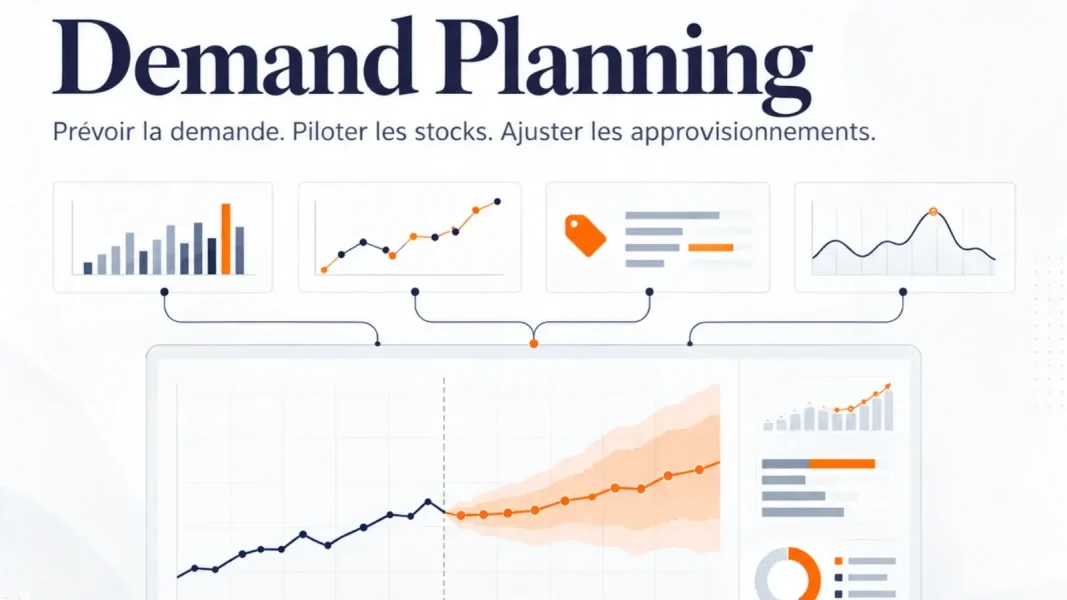
Some critical decisions in the supply chain must be made before the actual demand is known. Companies must commit to procurement, reserve capacity, start production, position inventory, and organize supply flows even before customers have made a purchase. However, these decisions cannot always be corrected quickly. The longer the lead times, the broader the product assortments, and the more complex the distribution networks, the more costly a forecasting error becomes. That is precisely what makes demand planning essential. Its role is not to perfectly predict future sales. Rather, it is to reduce uncertainty enough to enable the company to make better decisions before actual demand is known. Underestimating demand can lead to stockouts, lost sales, rush orders, and a decline in customer satisfaction. Overestimating demand ties up capital, increases inventory costs, and exposes the company to excess inventory, markdowns, or obsolescence. But the issue goes beyond the total quantity of goods available. It is essential to have the right product in the right place at the right time. The quality of demand planning thus directly influences inventory management, procurement management, production management, and, more broadly, the management of material flows. So the question isn’t just: “What will demand be?” Above all, it is: “What decisions do we need to make today, given what we know—and what we don’t yet know—about future demand?” Demand Planning: Plan to Make Decisions, Not to Eliminate Uncertainty The Demand Planninginvolves estimating future customer demand based on historical data, forecasting models, and business intelligence. Statistical forecasting is an important component of this process, but it does not encompass the entire approach. Demand planning must also take into account events that could affect demand: promotions, price changes, product launches, changes to the product mix, new store openings, or shifts in purchasing behavior. This distinction is fundamental. An algorithm can identify a trend or seasonality. It does not necessarily know the timeline of a planned sales campaign, the impending loss of a customer, or the expected substitution between two products. Conversely, business intuition is not necessarily more reliable than a model simply because it comes from the field. The challenge, therefore, is to compare the various sources of information, document the assumptions, and gradually assess their contribution to the quality of decisions. The expected result is not a figure presented as a certainty. It is a regularly updated estimate of what might be requested, accompanied by an understanding of the factors that could cause it to change. This approach changes the way we evaluate demand planning: A forecast isn’t valuable simply because it’s accurate. It’s valuable when it enables you to make a better decision early enough to still take action. Why is Demand Planning Essential to Supply Chain Performance? The supply chain operates with a structural lag: customers may want to be served immediately, while companies sometimes need several weeks or months to source, produce, and ship a product. This time lag between when a decision must be made and when demand actually becomes apparent accounts for much of the value of demand planning. The longer or more costly it is to reverse a decision, the more important it becomes to plan ahead. Reduce stockouts without increasing inventory levels In the face of uncertainty, a simple solution is to increase safety stock. This strategy can reduce certain stockouts, but it ties up more capital and does not guarantee that the additional inventory will be for the right SKUs or in the right location. Demand Planning enables a more selective approach to inventory management. Regular, seasonal, intermittent, or heavily discounted products do not carry the same level of uncertainty or have the same consequences in the event of an error. Similarly, a forecasting error for an item that is easy to restock does not have the same impact as one for a seasonal product ordered several months in advance. Not all forecasting errors are therefore the same. The goal should not be to uniformly maximize reserves or even statistical accuracy, but to focus efforts where uncertainty can actually impair service or economic performance. Demand planning thus helps minimize inventory while protecting the products, time periods, and markets where a stockout would have the most significant consequences. Provide visibility into procurement and production Suppliers and industrial sites need visibility to reserve capacity, organize raw materials, and plan their resources. When information arrives too late, the supply chain must compensate by making schedule changes, arranging urgent procurement, or using more expensive transportation solutions. When volumes are overestimated, however, the supply chain commits resources that may not necessarily be put to use. Demand Planning provides a time-based view of demand, which helps improve supply chain management and production planning. It also makes it possible to distinguish between relatively predictable volumes and those that depend on more uncertain assumptions. Teams can then adjust their commitments based on the level of risk rather than treating every forecast figure as a certainty. This visibility improves the organization’s responsiveness, but above all its agility : it’s not just about reacting faster, but about knowing in advance which decisions can be adjusted if demand deviates from the anticipated scenario. Prevent uncertainty from spreading throughout the supply chain A relatively small change in customer demand can lead to much larger adjustments as it moves up the supply chain. A distributor increases its orders as a precaution. The warehouse increases its requirements. The purchasing department reports an even larger increase to the supplier to secure the volumes. At each stage, the initial uncertainty can be amplified. The result is paradoxical: the company seeks to protect itself against risk, but in doing so, it actually contributes to creating greater volatility in its logistics flows. Shared demand planning limits this amplification by providing the various functions with a common reference point and, above all, by making visible the assumptions that explain its evolution. The quality of information flows then becomes just as important as that of physical flows. Better control of these flows is not simply a matter of

Read More »

What is price scraping?

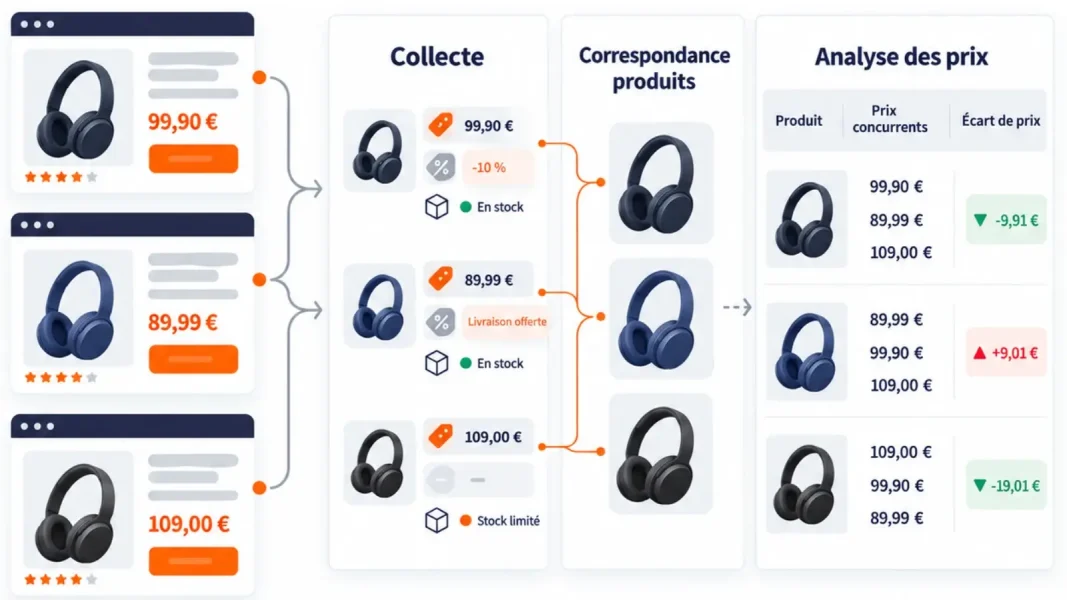
Price scraping automates the collection of prices and pricing information online. Learn how it works and how to use this data to analyze the competition and refine your pricing strategy.

Read More »

Trade news

Immerse yourself in the latest Pricing and Supply Chain news!

Découvrez nos actualités liées au Pricing et à la Supply Chain