


In a few months’ time, your customers will no longer visit your site before buying. The rise of generative AI has already profoundly transformed the way consumers search for information. But a more structuring mutation is underway: the emergence of agentic AI.
These systems no longer simply respond. They interpret an intention, explore options, compare offers and directly guide the purchasing decision.
In this new context, a major break is taking place in e-commerce: the customer journey is no longer driven by the user, but filtered by AI.
The traditional levers of SEO, SEA and merchandising are still necessary, but no longer sufficient. This “AI visibility” is based on several structuring factors.
First and foremost, the quality of product data becomes decisive. AIs prefer directly usable content: rich product sheets, precise attributes, complete descriptions, coherent taxonomies. A poorly structured catalog becomes difficult to interpret and therefore invisible.
Secondly, the ability to respond to complex intentions becomes key. AIs no longer think in terms of keywords alone, but in terms of implicit uses, constraints and preferences. Retailers must therefore clearly express the value of their products in relation to these criteria.
Finally, trust signals play a central role. Customer opinions, the consistency of information and the credibility of the source directly influence recommendations. Perceived quality becomes an algorithmic factor.
In this model, however, two criteria become decisive in the final decision: product availability and price. And it’s exactly on these 2 levers that we’re going to focus our article.
AI becomes the new entry point to e-commerce
Historically, e-commerce has been based on a logic of exploration: the user carries out a search, consults several sites, compares offers and then makes a decision. With agentic AI, this mechanism is gradually being replaced by a logic of delegation:
the user expresses an intention
“Find me the best running shoes under €150”
“What’s the best washing machine in terms of value for money?”
It interprets demand, filters options, selects a limited number of products and recommends merchants directly. The change is structural: AI no longer shows the whole market, it arbitrates, taking e-commerce to the next level through selection.
This shift redefines the value chain: where search engines organized access to information, agentic AIs now organize access to the offer, becoming at once a visibility filter, a prescriber and a point of entry in the purchasing journey. For retailers, this means a gradual loss of control: traffic is no longer directly acquired, the comparison is no longer made on their site, and the decision can be made even before the visit.
In other words, the battle is no longer being waged on your site alone, but upstream in the customer journey. In this new model, being visible is no longer enough, you have to be selected: we’re moving from an SEO logic to an “AI visibility” logic, where the sales site must be understandable to systems, relevant to an intention and reliable in its information.
But beyond these fundamentals, two requirements now dominate: availability and competitive pricing.

Product availability: from an operational constraint to a visibility issue
In a traditional route, an out-of-stock situation could be circumvented. The user could switch to an alternative product, come back later or navigate to another site.
With agentic AIs, this tolerance disappears.
A simple rule applies: what’s not available doesn’t exist.
An AI will not recommend an unavailable product. An out-of-stock product is therefore automatically excluded from the proposed results.
Out-of-stock is changing its nature: it’s no longer just a problem of conversion, but a problem of presence in the purchasing process.
Visibility directly linked to supply performance
Availability is becoming a market access factor. Retailers need to guarantee a reliable view of stocks, real-time synchronization and the ability to limit out-of-stock situations.
In an AI-driven environment, logistics performance directly conditions the ability to be recommended.
Why product availability is critical to success in the purchasing process ? We invite you to read our article to find out more.
Price: an immediate selection criterion
The second structuring filter is price.
Where a consumer could integrate subjective dimensions – brand preference, habit or experience – AI applies a more rational and systematic logic.
Constant comparison
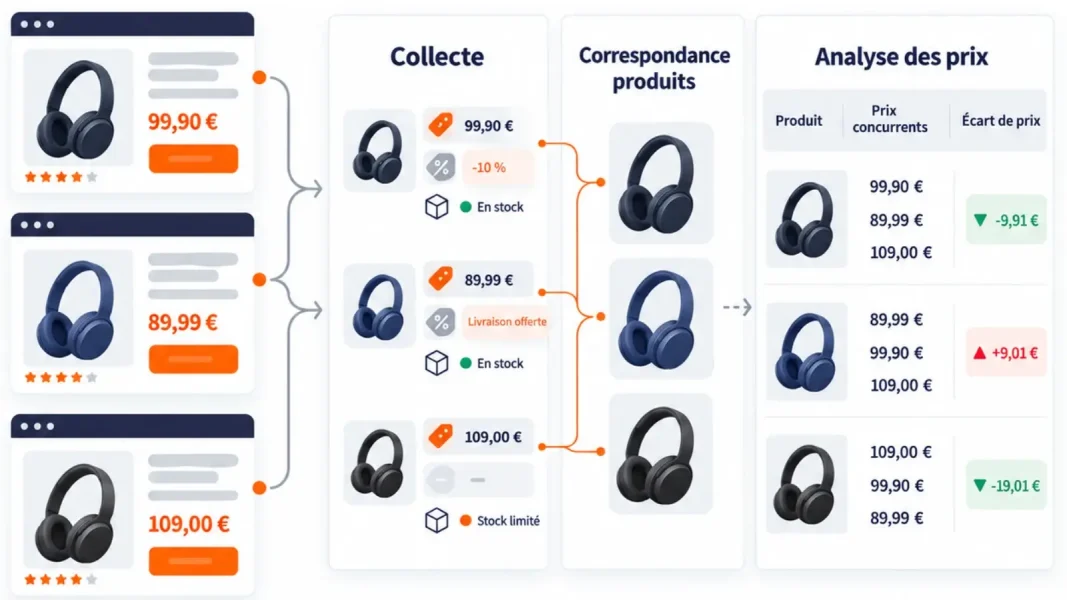
AIs compare offers in real time, identify price differences and favor the most competitive proposals, as ChatGPT, Claude, Perplexity and Google SGE already do..
A non-competitive offer is simply rejected.
The end of implicit arbitration
In a human journey, a user may accept a slightly higher price if he perceives additional value.
In an AI-driven journey, these trade-offs become marginal. AI prioritizes relevance, value for money and fit with purpose.
Price thus becomes a central criterion in algorithmic decision-making.
Real-time competition
Availability and price are no longer static variables. They are continuously assessed in an environment where inventories evolve, prices adjust and competition is immediately comparable.
Retailers therefore need to be able to adjust their prices quickly, maintain consistent stock levels and remain competitive at all times.
Agentic AI in e-commerce: what’s at stake for retailers?
Remain eligible for recommendation
In this new model, it’s no longer just a question of being attractive, but of being eligible.
This eligibility is based on three fundamentals: an available product, a competitive price and reliable information.
Without these elements, a retailer can disappear from the field of recommendations, even with good SEO, strong brand awareness or a high-performance site.
Towards gradual disintermediation
As AIs mature, they can go further: aggregating offers, automatically comparing and proposing a direct transaction.
In this scenario, the retailer becomes an integrated supplier in an AI-driven ecosystem, while the customer relationship can be partially captured by these agents.

What does this mean for retailers?
A transformation of the value chain
AIs won’t stop there.
They are already capable of aggregating offers, automatically comparing different options and directly recommending the best alternatives.
Tomorrow, they could go even further, by integrating the entire process right up to the transaction.
Faced with this transformation, several priorities have emerged.
Firstly, product data becomes a strategic asset. It must be structured, reliable and usable to be correctly interpreted by AIs.
Next, operational excellence becomes a prerequisite. Availability and pricing are no longer levers for optimization, but conditions for market access.
Finally, the visibility strategy needs to be rethought: it’s no longer just a question of attracting traffic, but of being selected upstream.
Pricing and forecasting & replenishment solutions: towards real-time performance control to stay competitive
In an environment where AI selection is heavily based on price and product availability, retailers need to equip themselves with solutions capable of orchestrating these two dimensions in a dynamic and integrated way.
Intelligent pricing solutions solutions enable us to propose the best price adjustment according to multiple signals: changes in demand, competitive positioning, product elasticity or margin constraints. The aim is twofold: to optimize profitability while remaining eligible for recommendations, thanks to real-time competitive positioning. With this in mind, we offer advanced, data-driven designed to meet the challenges of omnichannel competitiveness.
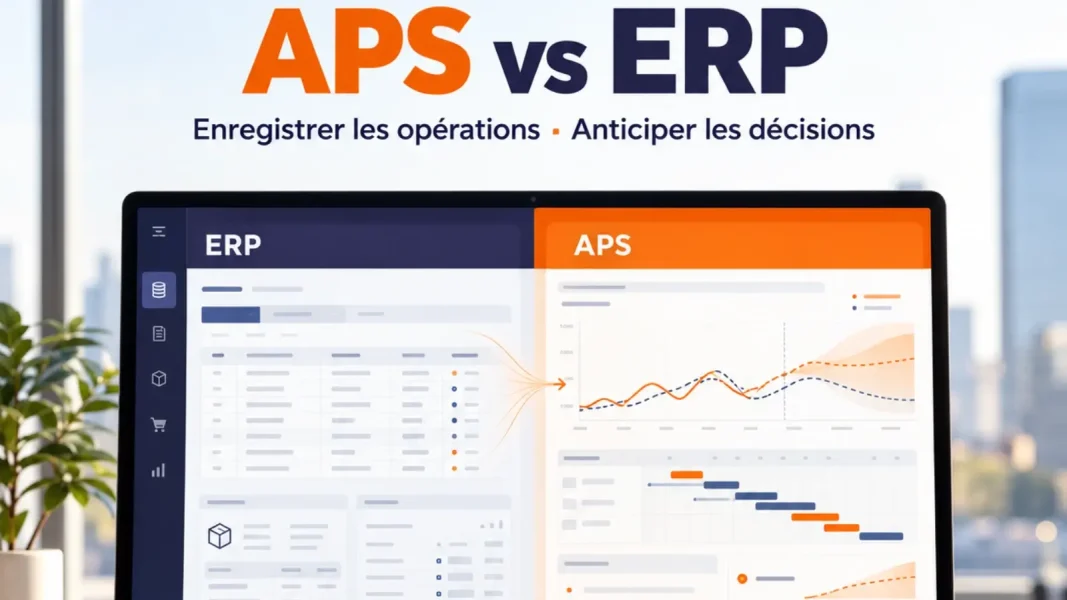
At the same time, forecasting and replenishment tools are becoming essential for securing product availability. Based on predictive models, they anticipate demand, optimize stock levels and automate replenishment. These approaches help to align forecasting and execution, limit out-of-stocks and guarantee a continuous presence in recommendation systems – a key challenge also addressed by the solutions developed by Optimix Solutions.
The key challenge lies in integrating these two components. Pricing and supply chain can no longer be managed in silos: a price cut can generate a peak in demand, while an out-of-stock situation can invalidate a pricing strategy. The most successful players are those capable of finely orchestrating these levers.
From visibility to eligibility: changing the rules of the game
Agentic AI marks a profound break: the transition from e-commerce explored by the user to e-commerce filtered, arbitrated and orchestrated by agents.
In this new environment, it’s no longer just a question of attracting traffic, but of meeting the selection criteria of AIs. Being visible is no longer enough: you have to be understandable, reliable and, above all, eligible for recommendation.
This eligibility is based on a clear foundation: structured product data, solid trust signals, controlled availability and competitive real-time price positioning. These dimensions, long managed independently, are now becoming interdependent and must be orchestrated coherently.
Retailers who know how to align data, pricing and supply chain, using solutions capable of synchronizing these levers, will be one step ahead in this AI-driven environment. The others risk, more silently, to leave the field of recommendations… and therefore of the buying journey.
More than an evolution, it’s a change in the rules of the game: in agent-driven e-commerce, existence no longer depends solely on your ability to seduce customers and produce content, but on your ability to be selected by the systems that automate and decide.