

Green Supply Chain : the key factor for enhancing competitiveness

Whitepaper-How-to-choose-a-Supplychain-solution-optimix-solutions
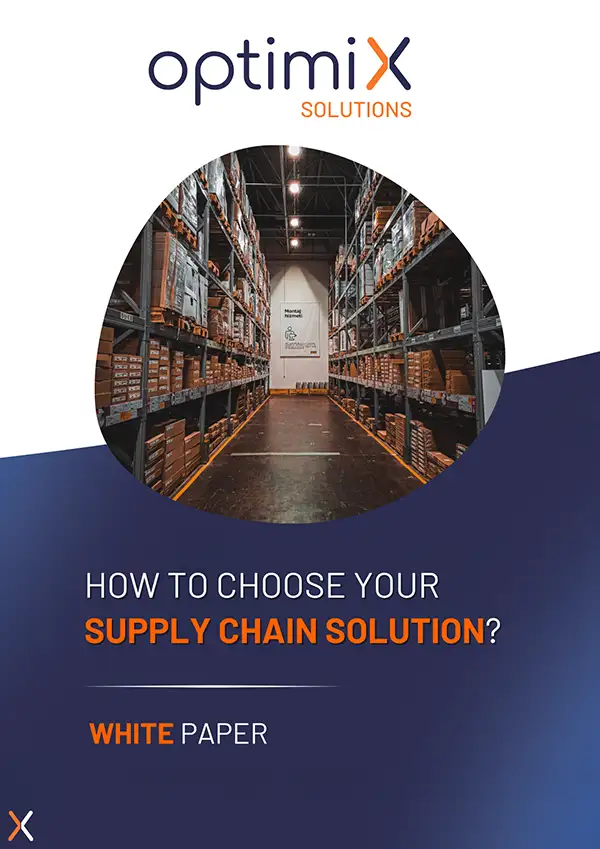
How to choose your Supply Chain solution?
This guide offers you a clear methodology and concrete benchmarks to identify the Supply Chain solution best suited to your challenges, in the face of growing complexity and ever-increasing expectations.
green supply chain the key factor to strengthen competitiveness optimix solutions mini

Introduction

In the contemporary business landscape, sustainability has emerged as a paramount concern, holding significant importance for numerous reasons. Notably, its benefits extend beyond the environmental sphere, encompassing cost savings and enhanced efficiency as well. In the retail sector, sustainability plays a pivotal role, particularly in supply chain optimization.

The path to operational efficiency lies in the precision of supply chain planning. When companies focus on improving accuracy, a cascade of benefits follows. By meticulously managing inventory volumes and minimizing losses, they create an agile and cost-effective system. This, in turn, enhances the efficiency of transportation and operations, thus laying the groundwork for versatile improvements.

Gaining a competitive advantage

The benefits of advanced supply chain planning go beyond financial gains. By strengthening their profitability, companies also pave the way for positive contributions to environmental sustainability. By reducing excess inventory, they curb wasteful practices and decrease their ecological footprint. Optimized transportation methods help minimize carbon emissions and embrace a more environmentally friendly approach. Optimized transportation methods help minimize carbon emissions and embrace a more environmentally friendly approach.

As a result, retailers are faced with the crucial task of meeting sustainability criteria and adapting their operations. This not only obliges them to provide products that comply with ecological standards but also to optimize their entire supply chain. Efficient resource management, streamlined transportation, and the adoption of environmentally friendly packaging practices are just a few of the essential measures they need to undertake.

By embracing these sustainable practices, companies can establish a meaningful connection with environmentally conscious consumers and retailers. This alignment with the growing market expectations for sustainability allows them to foster stronger partnerships and gain a distinct competitive advantage.

White Paper : Green Supply Chain

In today’s competitive market, the growing demand for eco-friendly products and ethical business practices, both from consumers and retailers, has put sustainability at the forefront for distribution companies. To remain relevant and meet customer expectations, these companies must now prioritize sustainability and seamlessly integrate it into their supply chain operations.

In this white paper, we explore ways to reconcile environmental sustainability with the imperatives of product availability, cost reduction, and customer satisfaction.

Discover how a forecast-based approach and logistic flow modeling contribute to an optimal balance between reducing greenhouse gas emissions and logistic performance.

Sustainable strategies for a green Supply Chain

Enhancing sustainability in the retail industry involves the integration of various initiatives to reduce CO2 emissions and minimize waste within the supply chain. By embracing cutting-edge technologies to enhance storage and selection processes, as well as implementing effective waste reduction strategies, these companies can significantly decrease their environmental footprint while simultaneously enhancing overall operational efficiency.

Optimizing order management

Retailers can enhance their environmentally friendly practices by optimizing order processes, ensuring trucks are efficiently loaded, and mitigating CO2 emissions stemming from partially filled trucks.

Moreover, robust inventory management systems and supply chain optimization strategies can effectively contribute to reducing environmental impact. For instance, they enable retailers to minimize the number of trips required for goods delivery.

Warehouse space optimization

Optimizing warehouse space is of crucial importance, especially when it comes to meeting cooling requirements. By strategically designing the floor plan, establishing streamlined picking routes, and implementing intelligent storage solutions, companies can effectively reduce cooling needs, resulting in significant energy savings.

Supply Chain management tools

The importance of supply chain optimization tools cannot be overstated, as they play a crucial role in helping businesses optimize their warehouse space and streamline operations for enhanced sustainability.

With the Optimix XFR solution, you can calculate accurate forecasts for consumer demand at the point of sale. The solution integrates store data, adjusts for influencing factors, corrects sales histories, and generates dependable forecasts.

In an integrated supply chain approach, the forecast then flows through all links of the supply chain.

As a result, the forecast helps ensure supply chain commitments : ensuring product availability, controlling logistical costs, as well as minimizing waste and thus reducing greenhouse gas emissions throughout the logistics chain.

Improvement in customer-supplier coordination

Enhancing coordination between customers and suppliers through collaborative demand planning offers significant benefits, not only by aligning scaling plans, but also by maximizing space utilization.

By seamlessly integrating these processes, companies can unlock significant synergies within their operations, leading to highly adaptive and efficient supply chains. This strategic approach promotes a closer partnership among all stakeholders and paves the way for mutual success.

The changing landscape highlights the growing importance of eco-friendly products and ethical business practices. To remain relevant and meet expectations, it has become imperative for companies to place sustainability at the forefront of their strategies.

However, this is not just a moral obligation : it is a strategic decision that can ultimately determine a company’s success in today’s dynamic and ever-evolving business environment.

By adopting environmentally friendly practices and integrating sustainability into their supply chain, companies can reap various benefits, leading to increased profits, optimized inventory management, efficient space utilization, and overall operational efficiencies.

Subscribe to our Newsletters :

Our Last Articles :

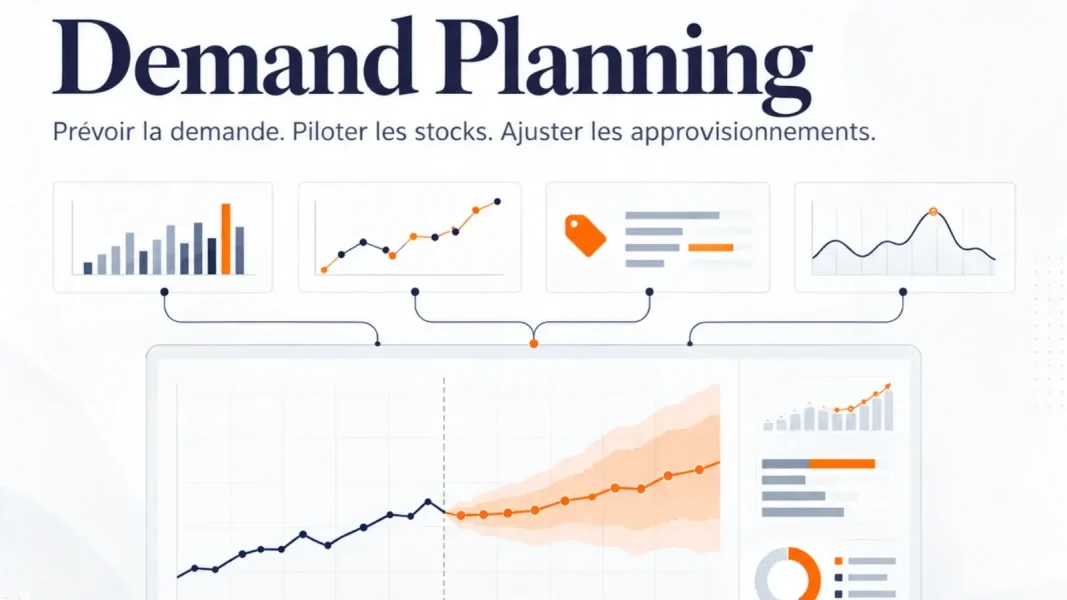
Why is Demand Planning Essential in Supply Chain Management?

Some critical decisions in the supply chain must be made before the actual demand is known. Companies must commit to procurement, reserve capacity, start production, position inventory, and organize supply flows even before customers have made a purchase. However, these decisions cannot always be corrected quickly. The longer the lead times, the broader the product assortments, and the more complex the distribution networks, the more costly a forecasting error becomes. That is precisely what makes demand planning essential. Its role is not to perfectly predict future sales. Rather, it is to reduce uncertainty enough to enable the company to make better decisions before actual demand is known. Underestimating demand can lead to stockouts, lost sales, rush orders, and a decline in customer satisfaction. Overestimating demand ties up capital, increases inventory costs, and exposes the company to excess inventory, markdowns, or obsolescence. But the issue goes beyond the total quantity of goods available. It is essential to have the right product in the right place at the right time. The quality of demand planning thus directly influences inventory management, procurement management, production management, and, more broadly, the management of material flows. So the question isn’t just: “What will demand be?” Above all, it is: “What decisions do we need to make today, given what we know—and what we don’t yet know—about future demand?” Demand Planning: Plan to Make Decisions, Not to Eliminate Uncertainty The Demand Planninginvolves estimating future customer demand based on historical data, forecasting models, and business intelligence. Statistical forecasting is an important component of this process, but it does not encompass the entire approach. Demand planning must also take into account events that could affect demand: promotions, price changes, product launches, changes to the product mix, new store openings, or shifts in purchasing behavior. This distinction is fundamental. An algorithm can identify a trend or seasonality. It does not necessarily know the timeline of a planned sales campaign, the impending loss of a customer, or the expected substitution between two products. Conversely, business intuition is not necessarily more reliable than a model simply because it comes from the field. The challenge, therefore, is to compare the various sources of information, document the assumptions, and gradually assess their contribution to the quality of decisions. The expected result is not a figure presented as a certainty. It is a regularly updated estimate of what might be requested, accompanied by an understanding of the factors that could cause it to change. This approach changes the way we evaluate demand planning: A forecast isn’t valuable simply because it’s accurate. It’s valuable when it enables you to make a better decision early enough to still take action. Why is Demand Planning Essential to Supply Chain Performance? The supply chain operates with a structural lag: customers may want to be served immediately, while companies sometimes need several weeks or months to source, produce, and ship a product. This time lag between when a decision must be made and when demand actually becomes apparent accounts for much of the value of demand planning. The longer or more costly it is to reverse a decision, the more important it becomes to plan ahead. Reduce stockouts without increasing inventory levels In the face of uncertainty, a simple solution is to increase safety stock. This strategy can reduce certain stockouts, but it ties up more capital and does not guarantee that the additional inventory will be for the right SKUs or in the right location. Demand Planning enables a more selective approach to inventory management. Regular, seasonal, intermittent, or heavily discounted products do not carry the same level of uncertainty or have the same consequences in the event of an error. Similarly, a forecasting error for an item that is easy to restock does not have the same impact as one for a seasonal product ordered several months in advance. Not all forecasting errors are therefore the same. The goal should not be to uniformly maximize reserves or even statistical accuracy, but to focus efforts where uncertainty can actually impair service or economic performance. Demand planning thus helps minimize inventory while protecting the products, time periods, and markets where a stockout would have the most significant consequences. Provide visibility into procurement and production Suppliers and industrial sites need visibility to reserve capacity, organize raw materials, and plan their resources. When information arrives too late, the supply chain must compensate by making schedule changes, arranging urgent procurement, or using more expensive transportation solutions. When volumes are overestimated, however, the supply chain commits resources that may not necessarily be put to use. Demand Planning provides a time-based view of demand, which helps improve supply chain management and production planning. It also makes it possible to distinguish between relatively predictable volumes and those that depend on more uncertain assumptions. Teams can then adjust their commitments based on the level of risk rather than treating every forecast figure as a certainty. This visibility improves the organization’s responsiveness, but above all its agility : it’s not just about reacting faster, but about knowing in advance which decisions can be adjusted if demand deviates from the anticipated scenario. Prevent uncertainty from spreading throughout the supply chain A relatively small change in customer demand can lead to much larger adjustments as it moves up the supply chain. A distributor increases its orders as a precaution. The warehouse increases its requirements. The purchasing department reports an even larger increase to the supplier to secure the volumes. At each stage, the initial uncertainty can be amplified. The result is paradoxical: the company seeks to protect itself against risk, but in doing so, it actually contributes to creating greater volatility in its logistics flows. Shared demand planning limits this amplification by providing the various functions with a common reference point and, above all, by making visible the assumptions that explain its evolution. The quality of information flows then becomes just as important as that of physical flows. Better control of these flows is not simply a matter of

Read More »

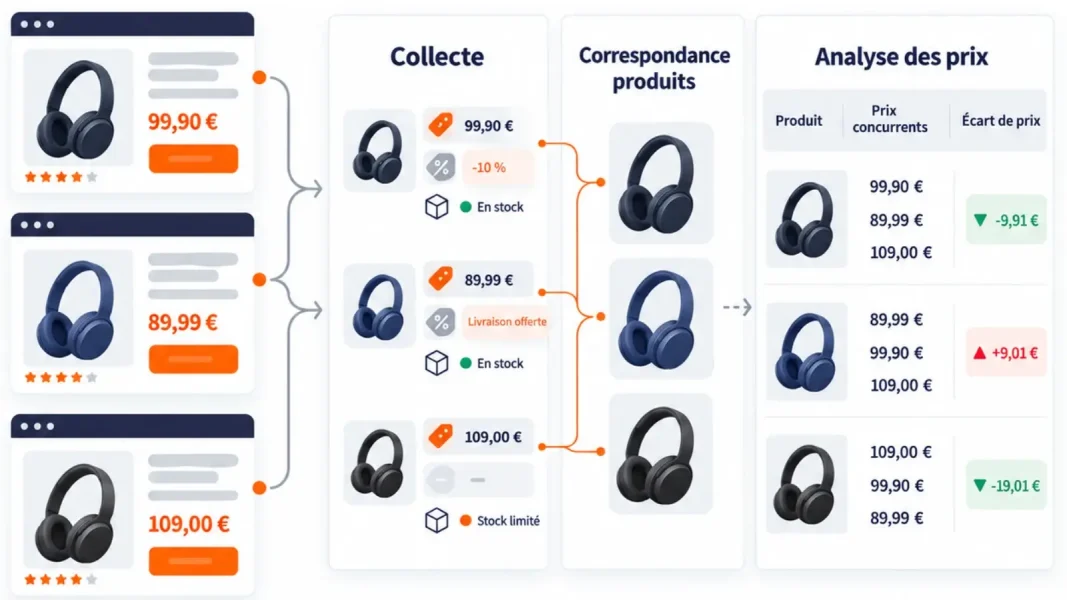
What is price scraping?

Price scraping automates the collection of prices and pricing information online. Learn how it works and how to use this data to analyze the competition and refine your pricing strategy.

Read More »

Trade news

Immerse yourself in the latest Pricing and Supply Chain news!

Découvrez nos actualités liées au Pricing et à la Supply Chain