



Pricing is still managed manually, with decisions taken at fixed intervals and often on the basis of incomplete data. Teams must therefore constantly arbitrate between margin, volume and competitiveness, with no overall visibility.
In this context, every pricing decision becomes an imperfect compromise. A poorly-adjusted price can impact margins, without these effects being anticipated. As catalogs expand and market signals multiply, complexity rapidly outstrips the human capacity to steer prices effectively.
In an environment where prices are constantly changing, costs fluctuate rapidly and customers instantly compare offers, this approach is reaching its limits. Pricing is becoming too complex to manage without pricing tool capable of analyzing and activating the right signals at the right time.
It is precisely in this context that price automation is essential. Not as a simple price adjustment tool, but as a structuring decision-making system, capable of continuously arbitrating between several objectives: profitability, volume, rotation, competitiveness and positioning consistency.
What is Automated Pricing?
Automated pricing refers to a system capable of autonomously adjusting prices on the basis of reliable, continuously updated data. The aim is to determine the right price at the right moment, taking into account demand, competitor movements, stock levels and operational signals. The price is no longer an amount fixed once and for all. It evolves in step with the market, and the company needs to move it forward with discernment to maintain a coherent price level and support its sales strategy.
Companies are adopting this method because manual management is no longer sufficient to determine prices in an environment where assortments are expanding and signals are changing rapidly. As the number of SKUs increases, the interactions between prices, volumes, margins and product availability become too numerous to be handled manually. A poorly positioned price can reduce margins, slow rotation or lead to stock-outs. In most cases, looking for an isolated “optimal price” is a mistake. Performance comes from the ability to arbitrate between several contradictory objectives, not from maximizing a single variable.
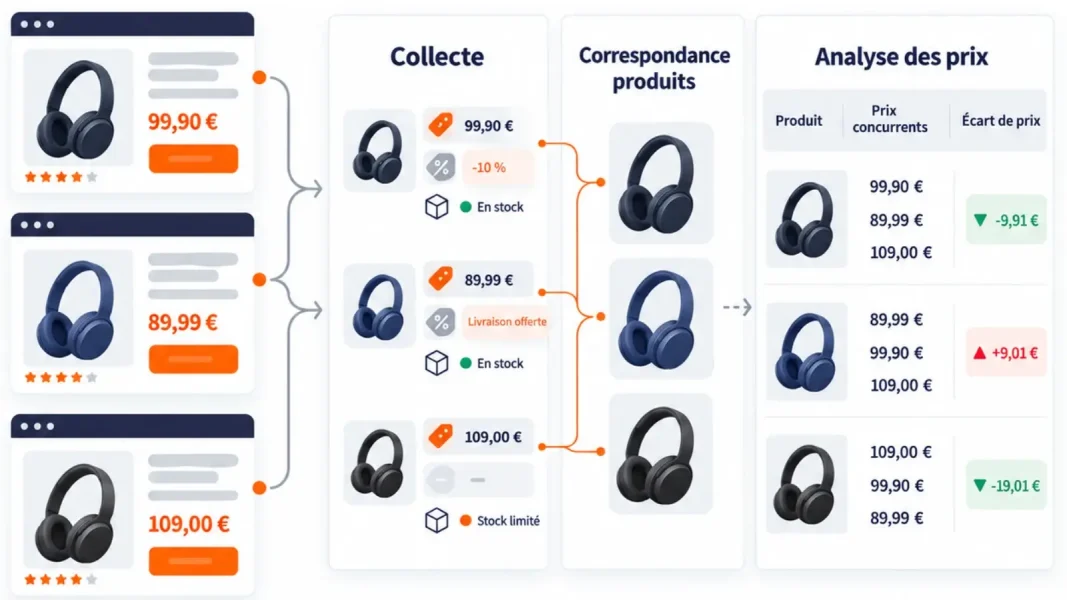
Data is the foundation of this way of working. Decisions are based on sales history, purchasing behavior, price sensitivityinventory levels, logistics costs, demand forecasts and competitive signals. The combined analysis of this information highlights areas of price sensitivity, price-related volume variations and opportunities for fine-tuning pricing.
Automated pricing does more than simply modify a price: it structures a pricing approach capable of anticipating market fluctuations, securing margins and improving sales performance over the entire product life cycle. By making it possible to propose prices adapted to the context, it helps the company to maintain a competitive price, attract potential customers and reinforce the coherence of its product policy.

Why is automated pricing increasingly popular?
- Firstly, the acceleration of the market: competitors’ prices change several times a day, comparisons are instantaneous and differences become immediately visible. In this context, weekly or monthly adjustments are no longer sufficient.
- Then there’s the volatility of costs: transport, energy, raw materials: these factors have a direct impact on margins. Maintaining fixed prices quickly creates a gap between sales price and economic reality.
- Lastly, operational complexity: the multiplication of product references, distribution channels and customer segments makes manual management difficult to sustain on a large scale.
In the face of these challenges, automated pricing provides a key response: the ability to make decisions faster, integrate more variables and ensure overall consistency, thanks to tailored tools.
Automated pricing maturity levels
Not all companies talk about the same level of automation.
There are generally 4 stages:
- Automation of simple rules (margins, thresholds)
- Dynamic pricing based on signals (stock, competition)
- Optimization via elasticity and scenarios
- Predictive and self-learning pricing
The majority of companies fall between levels 1 and 2, while levels 3 and 4 require more advanced data and organizational maturity.
The benefits of automated pricing
Automated pricing does more than just speed up price updates. It profoundly transforms the way pricing decisions are made and managed.
Firstly, it enables us to move from reactive pricing to controlled pricing. Decisions are no longer based solely on observation of past sales, but on ongoing analysis of market signals and performance targets. The company no longer suffers variations: it anticipates and manages them.
It also puts an end to inconsistent local decisions. In a manual environment, adjustments are often made product by product, channel by channel, with no overall vision. With automated pricing, a consistent logic can be applied to the entire catalog, while taking into account the specific features of each product.
This approach provides large-scale arbitration capability. Decisions are no longer taken in isolation: they are made by integrating their effects on margins, volumes, rotation and product availability. A price is no longer optimized individually, but as part of a global equilibrium. This also means accepting that some locally sub-optimal decisions are necessary to maximize overall performance.
Finally, automated pricing aligns the company’s key functions. Pricing is no longer disconnected from the supply chain, forecasting or commercial issues. It becomes a cross-functional lever, capable of synchronizing decisions between pricing, inventory and sales strategy.
To find out more : why automate pricing?
How an Automated Pricing System Works
An automated pricing system is based on a structured decision chain.
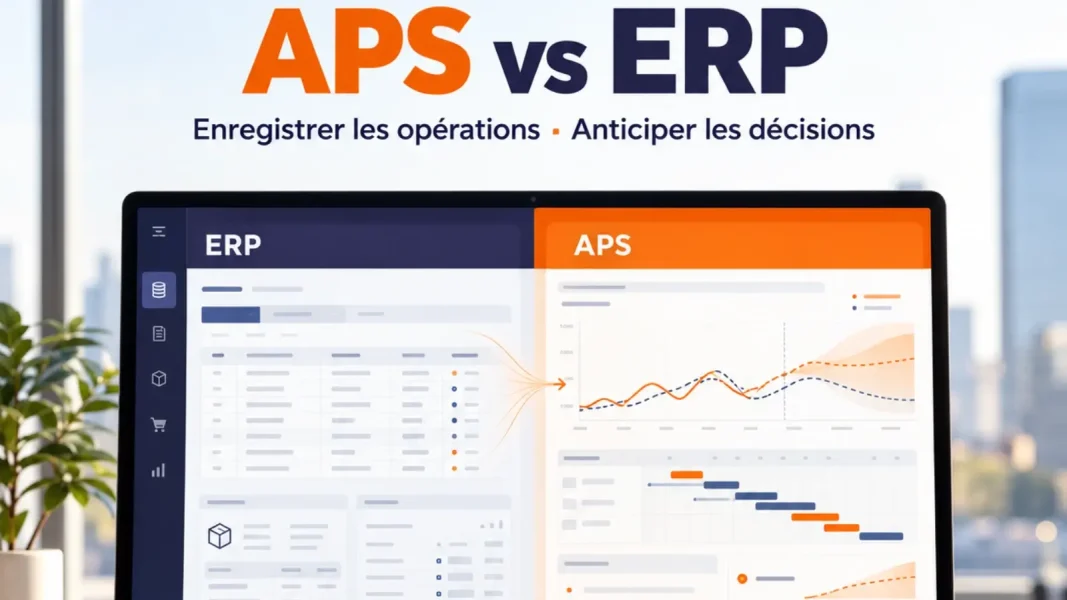
The first step concerns data. ERP, e-commerce, POS, supply chain and logistics systems feed a common base. The quality of this data is decisive: a high-performance model cannot compensate for poor data.
Next comes modeling. Algorithms analyze the relationships between prices, volumes, margins and market context. The aim is not only to understand the past, but also to anticipate reactions to price variations. This analysis must, however, be seen in a global perspective, as a price optimized at SKU level can degrade the performance of an entire category by modifying the trade-offs between products.
Business rules then frame these recommendations. They define the constraints: minimum margins, variation limits, price positioning, legal or commercial constraints.
Finally, the prices are activated in the operational systems. This stage is critical: good pricing that is not executed creates no value.
What role does AI play in price automation?
Artificial intelligence is revolutionizing pricing automation, moving companies from a reactive approach to a predictive and optimized logic.
Far from simple static rules, AI continuously analyzes massive volumes of data – competitor prices, demand levels, inventories, purchasing behavior – to adjust prices in real time and determine the optimal level according to set objectives (margin, volume, competitiveness).
Its real breakthrough lies in its ability to understand and anticipate. Thanks to machine learning, models learn price elasticity, forecast demand and adjust rates at the most opportune moment, rather than mechanically following market movements.
Another major advance is that decision-making becomes more strategic and coherent. AI systems arbitrate between several objectives (margin, price image, competitiveness) and adapt decisions by product, channel or zone, where traditional methods remained limited and often uniform.
Last but not least, AI enables real scaling: it automates thousands of decisions, reduces errors and frees up teams for higher value-added missions.
To go further: Discover how AI is redefining pricing strategies

Pricing, Forecasting and Inventory: an inseparable system
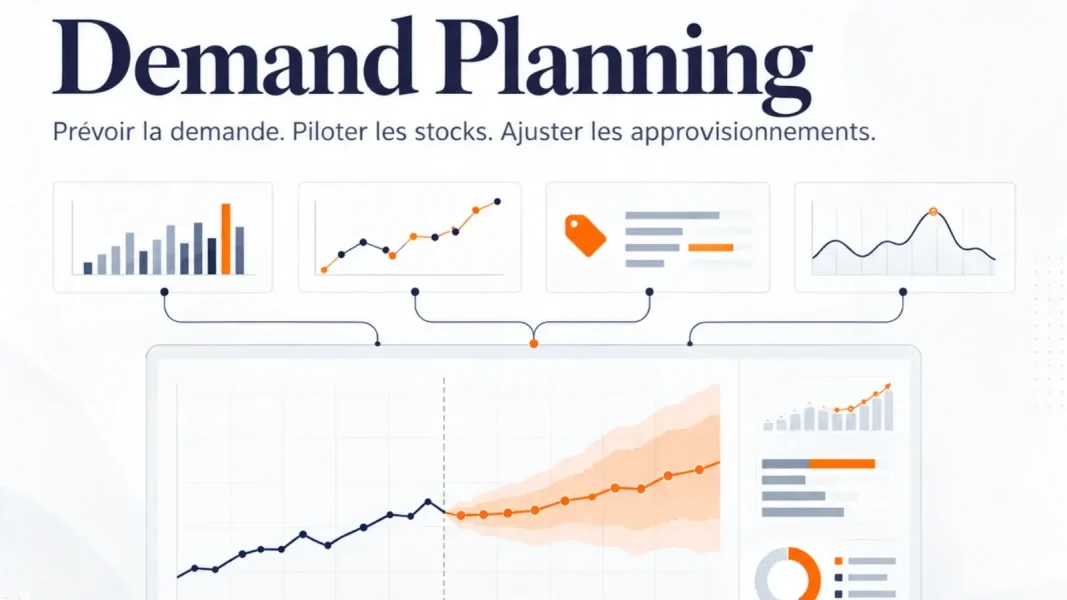
Automated pricing cannot work effectively in isolation. It must be connected to demand forecasting and inventory management.
Price directly influences sales volume. A drop can accelerate rotation to the point of rupture. An increase can slow demand and generate overstock.
Without integration with sales and demand forecastingpricing remains reactive. With predictive logic, it becomes proactive.
This makes it possible to :
- smooth demand,
- anticipate seasonal peaks,
- optimize promotions,
- secure product availability.
This convergence between pricing, forecasting and supply chain is now a key performance factor.
Where do you start to automate your retail pricing?
First step: clarify your strategy. What is your price positioning (leader, aligned, premium)? What objectives should you prioritize: margin, volume, price image? Without a clear framework, automation amplifies inconsistencies rather than correcting them.
Then, make the data reliable. Competitive prices, costs, sales histories, elasticity: the quality and freshness of these տվյալ are decisive. An automation engine is only as good as the information it uses.
Third step: define pricing rules. This involves translating strategy into operational logic (margin thresholds, competitive alignment, rules by category or channel). These rules form the basis for introducing more advanced models.
Finally, deploy gradually. Start with a restricted perimeter (one category, one channel), test, measure the impact, then expand. This approach secures the transformation and gets the teams on board.
Pricing automation is first and foremost a structuring business project, where technology comes in as a gas pedal, not as a starting point.
Conditions for a successful automated pricing project
Implementing automated pricing rarely fails because of the algorithms. More often than not, the main obstacle lies in team alignment, governance and the ability to integrate pricing into decision-making processes.
Data quality is the first critical point. Incomplete or inconsistent data immediately degrades the relevance of recommendations.
Clarity of objectives is also essential. Without a clearly defined optimization function, the system produces inconsistent decisions.
Governance plays a central role. It is necessary to define :
- which prices are automated,
- what levels of validation are required,
- what limits apply to variations,
- how to handle exceptions.
Business adoption is also a determining factor. A high-performance system that is not used by the teams generates no value.
Finally, experimentation is essential. A/B tests enable us to measure the real impact of strategies and gradually adjust models.
What tools can you use to automate your pricing?
Automated pricing tools play a key role in modernizing pricing management, since they enable data to be centralized, demand to be analyzed and prices to be continuously optimized, while providing a coherent view of the business. This provides companies with a unified environment in which pricing decisions are based on reliable, up-to-date information.
Pricing analytics solutions provide a more advanced level of analysis. They integrate functionalities such as elasticity studies, competitor price tracking and scenario simulation. These capabilities make it possible to understand how customers react to price variations, anticipate market movements and test several strategies before deploying them. Pricing teams gain in precision and speed, while reducing the risks associated with manual adjustments.
The most advanced platforms go even further, integrating forecasting and inventory management. This convergence between pricing, forecasting and supply chain enables pricing decisions to be linked to stock levels, sales patterns and operational constraints.
How to Choose an Automated Pricing Tool
The choice of a tool should not be limited to visible functionalities. It must be evaluated according to its ability to integrate into the existing ecosystem and to meet business constraints.
Key criteria include :
- integration with systems (ERP, e-commerce, supply),
- modeling capabilities (rules, elasticity, scenarios),
- workflow and validation management,
- transparent decision-making,
- exception handling,
- the ability to simulate before deployment,
- ergonomics for business teams.
A tool that is too rigid or complex can quickly slow down adoption and limit performance.
Common mistakes to avoid
Data quality remains one of the most sensitive issues. When information is incomplete or unreliable, the effectiveness of automated pricing is immediately reduced, as the models cannot produce relevant recommendations.
Automation can also become a source of inconsistency if it operates without control. Too-frequent or poorly supervised adjustments create confusion and undermine pricing consistency, for both teams and customers.
The absence of safety rules exposes the company to price variations that are difficult to control. Without safeguards, price movements can become too abrupt and have a negative impact on margins or customer perception.
Pricing that is disconnected from forecasts often leads to major imbalances. Poorly positioned prices sometimes accelerate sales to the point of rupture, or on the contrary slow down rotation and generate costly overstocking.
Finally, the rigidity of tools is a major obstacle. A solution that doesn’t adapt to market trends or company specificities ends up limiting performance and slowing down decision-making.
Real-life use cases
Automated pricing has a wide variety of applications in different sectors. In retail, it is essential for adjusting prices according to stock levels and demand forecasts. In this way, retailers can accelerate rotation on low-dynamic references, protect margins on high-value products and avoid out-of-stock situations on sensitive items. Price management becomes more precise and consistent with operational realities.
In e-commerce, speed of execution plays a decisive role. Competitors’ prices are constantly changing, and consumers systematically compare before they buy. An automated system makes it possible to track these movements in real time and adapt prices immediately, improving conversion and boosting competitiveness in the most exposed categories.
For retailers with extensive catalogs, automation becomes indispensable. Pricing teams no longer have to manually process thousands of SKUs, which reduces errors, speeds up updates and enables them to concentrate their efforts on strategic products. Margins are better protected, as each segment benefits from consistent pricing positioning.
The FMCG sector also illustrates the benefits of integrated management. By coordinating pricing, promotion and forecasting, we can better manage volumes, anticipate demand peaks and optimize sales campaigns. Pricing decisions become more relevant, inventories are better controlled and sales performance improves over the entire product life-cycle.
The future of automated pricing
Automated pricing is evolving towards systems capable of continuously integrating multiple signals and learning from their own decisions.
But technology isn’t the main issue.
Competitive advantage will come not only from the ability to adjust prices more quickly, but also from the capacity to structure an optimization logic that is coherent, controlled and aligned with the company’s overall strategy.
Successful organizations will be those that combine :
- data quality,
- relevant models,
- strong governance,
- and business adoption.
In an environment where pressure on margins and operational complexity continue to increase, automated pricing is no longer a lever for optimization, but a pillar of performance management.