

At a time when supply chains have to cope with market instability and competitive pressure, the supply chain is becoming an essential strategic lever for companies. It is no longer limited to logistics or transport: it covers all processes linking production, distribution, inventory management and customer satisfaction.
In just a few years, the supply chain has gone from being a mere operational function to a central pillar of performance. Efficient supply chain management can reduce costs, improve responsiveness to fluctuations in demand, and create a sustainable competitive advantage. Conversely, a poorly managed supply chain can lead to shortages, overstocking or margin losses, directly impacting profitability.
This comprehensive guide shows you how to optimize your supply chain, detailing the key stages, the contribution of new technologies including supply chain management softwareThe central role of data and artificial intelligence, as well as best practices for making the supply chain a strategic driver of performance and competitiveness.
What is the supply chain?
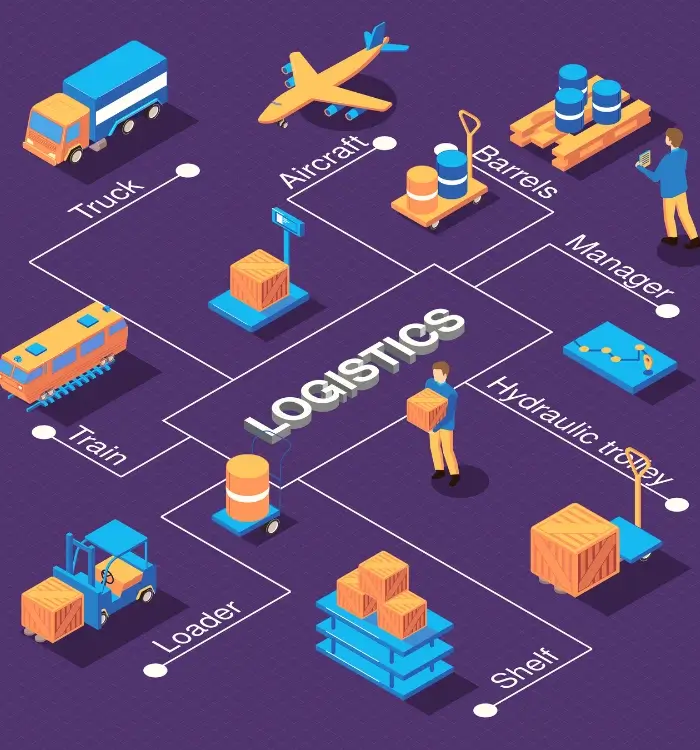
The supply chain encompasses all the processes involved in moving goods from suppliers to end customers. It covers supply management, warehousing, transport and order picking.
Far from being a purely operational function, the supply chain has become a strategic discipline of supply chain management (SCM), integrating global logistics, logistics flow optimization and flow management thanks to digital tools such as ERP and WMS.
The strategic importance of a well-managed supply chain
Supply chain management is no longer just an operational function: it is now a strategic pillar of a company’s competitiveness and overall performance. By ensuring product availability, controlling costs and synchronizing flows between suppliers, production sites and distribution channels, it enables operational execution to be aligned with business objectives.
Complete control of all links in the chain, from supply to final delivery, gives the company greater agility, improved service quality and the resilience it needs to cope with market disruptions (price volatility, supply tensions, geopolitical crises).
In a context where customer expectations are evolving towards greater speed, transparency and environmental responsibility, a supply chain managed with rigor and intelligence becomes a lever for differentiation. It transforms logistical constraints into a sustainable competitive advantage, creating value for both the company and its customers.
The issues and challenges of an agile, resilient supply chain
Supply chain management is evolving in an environment marked by increasing uncertainty and complexity. Companies now have to cope with volatile, hard-to-predict demand, accentuated by the rise of e-commerce and more changeable purchasing behavior. This instability makes forecasting and replenishment more strategic than ever.
Pressure on delivery times is another major challenge: customers, whether B2B or B2C, expect impeccable speed and reliability. This forces companies to set up an agile logistics organization, capable of efficiently coordinating road transport, warehousing and order-picking.
At the same time, the digitization of logistics and the growing demand for traceability require the use of high-performance information systems (ERP, WMS, flow management tools). These technologies are becoming indispensable for tracking goods flows in real time and improving operational responsiveness.
Finally, companies have to reconcile reducing logistics costs with maintaining competitiveness in the face of global competition. Added to this is the growing integration of CSR and sustainable development practices: limiting the carbon footprint of transport, rethinking warehousing and implementing green logistics solutions are now strategic priorities.
To meet these supply chain challengesTo meet these supply chain challenges, industry players need to focus on flexibility, collaboration with logistics service providers, targeted outsourcing of certain functions, and continuous process improvement.
Sustainability and the supply chain, a key factor for greater competitiveness?
Sustainability is now a major competitive lever. Far beyond environmental issues, it has become a genuine economic strategy and a key differentiating factor.
A sustainable sustainable supply chain supply chain aims to reconcile operational performance, social responsibility and respect for natural resources. By improving planning, collaboration between players and flow traceability, it reduces waste, limits overstocking and strengthens resilience in the face of market fluctuations and regulatory requirements.
In the agri-food sector, this approach takes on its full meaning. The issue is no longer simply to produce more, but to produce better, with less waste and greater efficiency.
How can you reduce food waste through a sustainable, optimized supply chain?
This is the challenge of more intelligent, connected and responsible logistics, where technology and data become the drivers of both economic and ecological performance.
This sustainability is based on intelligent optimization of logistics flows, better management of packaging, the integration of circularity practices such as reconditioning or second life for products, and collaboration with partners committed to CSR.
By combining forecasting technologies, automated control and sustainable initiatives, companies not only reduce their carbon footprint, but also improve their operational efficiency, enhance their brand image and create a sustainable competitive advantage in a market where performance and responsibility now go hand in hand.
Supply chain optimization challenges and levers in the organic, cosmetics and agri-food sectors
The organic, cosmetics and food sectors all share the same high standards of quality, traceability and product availability.
However, each sector is characterized by its own constraints, requiring detailed planning, solid partnerships and the use of anticipation tools capable of securing supply and meeting consumer expectations.
Organic supply chain Demand is growing fast, but volumes remain unstable according to the season. Companies need to secure their supplies from certified suppliers, while ensuring impeccable traceability and integrating sustainable logistics practices.
Supply chain in the cosmetics industry In the cosmetics industry, the complexity lies in the diversity of product references, short launch cycles and the need to comply with strict quality and safety standards. Planning, trend anticipation and stock optimization are essential to avoid shortages or overstocking.
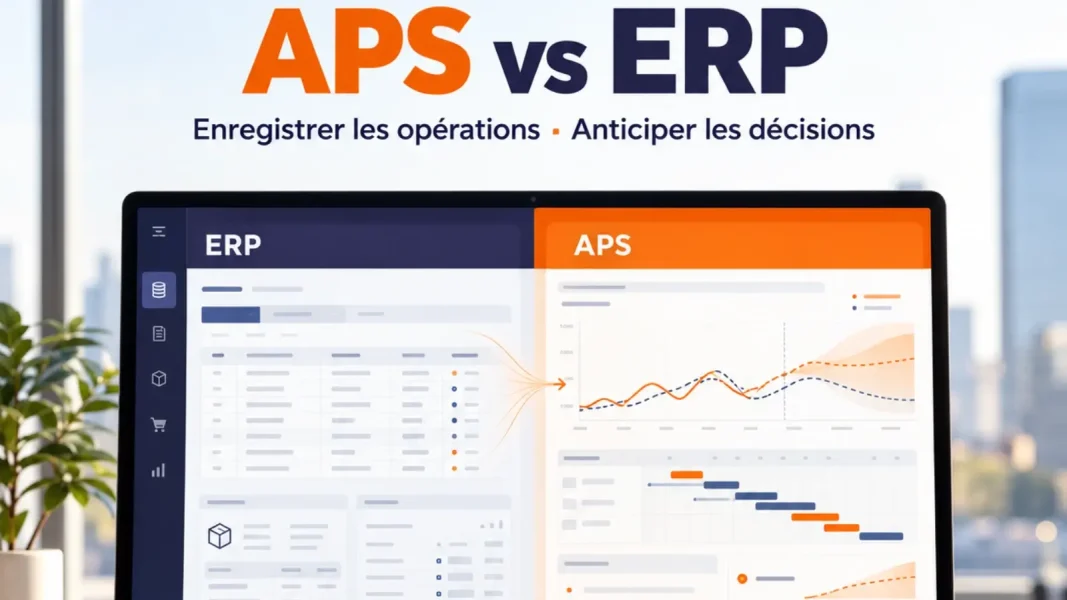
Supply chain in the food industry The management of perishable products requires real-time monitoring, maximum responsiveness and controlled transport conditions (cold chain, short delivery times). Demand forecasting, coupled with tools such as APS (Advanced Planning Systems), helps reduce wastage and improve stock rotation.
To meet these challenges, several optimization levers are available:
- Leverage data, AI and automation to improve forecasting and replenishment.
- Implement APS tools to plan production more precisely, adjust flows and measure the ROI of logistics decisions.
- Adopt a sustainable approach by optimizing routes, limiting packaging and choosing partners who respect our CSR commitments.
Essential steps for effective supply chain management
A high-performance supply chain is based on an integrated approach combining anticipation, agility and continuous improvement.
It all starts with strategic planning, aligned with the company’s objectives and supported by reliable forecasting tools. It is at this stage that the balance between demand, capacity and resources is established.
Once the vision has been established, rigorous supplier management takes over. Selection, collaboration and evaluation become the levers of a supply chain that is both reliable and resilient. This mastery of partners is the foundation on which the entire logistics system is built.
Gradually, attention is turning to optimizing flows: transport, storage and automation. These operational adjustments ensure the fluidity of exchanges while keeping costs under control.
In the same way, agile, flexible production enables us to rapidly adapt supply to actual demand, avoiding overstocking and shortages. This agility naturally extends to distribution, where speed, precision and customer experience are the hallmarks of an efficient supply chain.
Last but not least, the whole system cannot function sustainably without performance-based management. The integration of technologies such as AI, IoT or blockchain enhances visibility, traceability and continuous improvement, transforming the supply chain into a genuine strategic and sustainable lever for competitiveness.
How to evaluate the ROI of an APS software project in the Supply Chain?
Implementing an APS (Advanced Planning System) represents a strategic investment for any company wishing to improve its planning and gain in agility. But to convince management and secure the budget, it’s essential to quickly demonstrate the software’s added value. The ROI of APS software software is not limited to cost reduction: it also includes improved service levels, fewer out-of-stocks, optimized inventories and smoother logistics flows.
Measuring this return on investment means identifying the right indicators even before deployment. Among them: forecast accuracy, product availability rate, level of overstock avoided, or time saved by teams thanks to automation. By clearly tracking these KPIs, it becomes possible to quantify both financial and operational gains, and prove that APS contributes directly to the company’s overall competitiveness and profitability.
Towards an integrated supply chain: the answer to out-of-stocks and miscalibrated inventories?
An integrated supply chain synchronizes stores, depots and head offices around a single forecast and a single data repository. By breaking down silos (two separate forecasting engines for stores and depots, uncorrected historical data, invisible store operations on the depot side), we avoid out-of-stock situations generated by forecasts that are out of sync with actual demand, and reduce overstocking due to oversized safety stocks.
Store data (promotions, seasonality, weather, merchandising operations) are automatically fed back to adjust depot and safety stock requirements as closely as possible to demand. The result: greater forecast accuracy (up to +15 points observed), faster decisions and improved profitability thanks to finer stock allocation, by product and by sales outlet.
Supply chain optimization: How can forecasts be used to reduce transport times and costs?
Reducing transport times and costs starts long before the goods leave. The first step is to accurately anticipate demand, in order to avoid both costly overstocking and shortages that lead to emergency shipments. Reliable forecasts make it possible to plan flows, optimize routes and select the most economical modes of transport, while meeting customer deadlines.
Companies that rely on advanced forecasting tools – APS, ERP or solutions integrating AI and Machine Learning – have a clear vision of volumes to be shipped and peaks in activity. This ability to anticipate makes it easier to consolidate shipments, improve truck or container fill rates and limit empty runs, thus helping to reduce logistics costs and carbon emissions.
In sensitive sectors such as organic produce, cosmetics and the food industry, where quality and traceability are crucial, this upstream organization becomes even more decisive. Precise planning enables us to respect the cold chain, manage expiration dates and guarantee product availability, while securing margins.
Relying on data, artificial intelligence and close collaboration with carriers, companies are turning forecasting into a genuine supply chain management tool, boosting their responsiveness, securing supplies and sustainably reducing transport costs.
How can you align your supply chain management with your e-commerce strategy?
The rise of e-commerce has profoundly transformed logistics requirements: speed, flexibility, reliability and transparency are now the pillars of a successful customer experience. Against this backdrop, the supply chain can no longer be seen as a mere execution lever, but as a strategic vector closely aligned with sales strategy.
Aligning your supply chain with your business strategyis first and foremost about ensuring greater consistency between demand forecasts, operational planning and business objectives. By connecting data from sales, marketing and e-commerce channels, companies can refine their forecasts, anticipate peaks in activity and adjust their resources in real time. This synchronization improves the reliability of decisions, while limiting out-of-stocks and overstocks.
The impact of AI, data and automation in the supply chain
Supply chain process automation: from steering to execution
Logistics automation tools simplify order picking, optimize warehouse handling and improve shipping speed. These solutions contribute to efficient logistics and the reduction of operational errors.
Data and Machine Learning for decision optimization
Logistics data coupled with Machine Learning promotes better supply management, flow control and real-time logistics optimization. These technologies enable supply chain and logistics managers to make decisions based on reliable data.
Generative AI supply chain: new uses
Generative AI in the supply chain is profoundly transforming supply chain management, bringing a new dimension of intelligence and autonomy to processes.
It is becoming a true decision-making assistant, capable of assisting planning, making scheduling recommendations and automating administrative tasks linked to logistics and transport.
By continuously analyzing data from sales, inventory and market conditions, generative AI enables us to anticipate needs, optimize flows and reduce reaction times to unforeseen events.
These innovations enhance the flexibility, agility and resilience of businesses, while freeing operational teams from repetitive tasks to concentrate on higher value-added missions.
What tools to optimize your supply chain?
Optimizing the supply chain requires the use of tools capable of managing all operations, from planning to execution, while guaranteeing smooth logistics flows and cost control.
APS software coordinates production, procurement and stock levels, while anticipating variations in demand. Coupled with ERP and WMS systems, they provide global visibility and facilitate decision-making.
However, generic tools (Excel, standard ERP modules) quickly reach their limits: reliability, real-time collaboration, specific functional coverage. That’s why companies are turning to dedicated solutions like Optimix’s XFR, designed to manage the growing complexity of operations: demand forecasting, inventory optimization, shipment tracking and automated logistics management. These tools make it possible to anticipate peaks in activity, improve service levels and reduce operating costs.
Finally, supply chain dashboards and KPIs complete the package, providing real-time performance measurement and early detection of friction points. Together, they transform the supply chain into an agile, high-performance process, capable of sustainably supporting the company’s growth and competitiveness.
How do you choose your supply chain solution?
Choosing a supply chain solution is a strategic decision. It must meet your company’s specific challenges, while integrating seamlessly with your existing processes. Here are the key steps to making an informed choice:
1️. Assess your needs: identify priority issues (inventory, forecasting, procurement, collaboration).
2️. Define your criteria: scalability, integration, accessibility and quality of support.
3. Compare solutions:
- ERP for a global vision,
- APS for advanced planning and forecasting,
- WMS for operational warehouse management
4. Evaluate ROI: costs, productivity, service rate.
5. Test before you deploy: pilot, measure, adjust.
An effective supply chain solution needs to be scalable, integrated and data-centric to become a true performance driver.
How do you go about implementing supply chain software?
Implementing supply chain software is a strategic project that requires method and preparation. Here are the essential steps:
Understanding your processes
First of all, analyze your current workflows, from receipt of raw materials to final delivery. Identify bottlenecks and sources of unnecessary costs.
Define your goals
Set clear objectives: reduce lead times, improve forecast accuracy or optimize inventory. This enables you to choose the right solution and measure the project’s success.
Choosing the right solution
Select software (APS, ERP, WMS…) that meets your needs and integrates easily with your existing processes. Scenario simulation and flow optimization are key criteria.
Involving teams
Involve supply chain, logistics and IT teams from the outset. Good communication and hands-on workshops facilitate buy-in and project success.
Deploy and train
Plan the roll-out, start with a pilot phase, then train users to ensure optimal use.
Tracking performance
Measure results regularly with pre-defined KPIs, and adjust your processes for continuous supply chain improvement.
The indicators you need to measure your supply chain performance
Supply chain KPIs provide a clear picture of the supply chain’s strengths and areas for improvement. They enable logistics teams and management to verify that operations are supporting strategic objectives in terms of efficiency, quality, costs and customer satisfaction.
Here are some key logistics indicators to keep an eye on:
- Stock levels: this measures whether your stocks are too high (storage costs, cash tie-up) or too low (risk of stock-outs and customer dissatisfaction). The balance depends on product mix, supplier lead times and historical volumes.
- Availability rate: percentage of references available for immediate delivery. This KPI reflects the company’s ability to fill orders quickly. It is particularly critical in the cosmetics, organic and agri-food supply chains, where regular deliveries are crucial to customer confidence.
- Breakage rate: in perishable or sensitive product sectors, breakage (damaged, expired or unsaleable products) can represent a significant loss. Tracking this indicator enables you to adjust inventory management, packaging or the cold chain.
- Supplier order conformity: this measures compliance with specifications (quantity, quality, lead times). A low compliance rate increases returns, rework and costs, while slowing down logistics management.
- Forecast accuracy: this indicator compares forecast demand with actual sales. Improving the reliability of forecasts enables us to optimize supplies, transport and stock levels, while reducing discrepancies between anticipation and reality.
Common supply chain mistakes and best practices
The supply chain is a complex ecosystem where the slightest failure can have a direct impact on a company’s overall performance. The challenges vary from one sector to another: supply chains in the cosmetics, agri-food or organic sectors, for example, but certain issues are common to all:
- Underestimating demand: an approximate forecast leads to shortages, which undermine customer satisfaction.
- Accumulating overstocks: often out of an abundance of caution, which increases storage costs and the risk of obsolescence.
- Lack of visibility over flows: the absence of real-time management tools limits responsiveness to unforeseen events.
- Choosing suppliers purely on price: neglecting the reliability and flexibility of logistics partners can generate hidden costs.
- Ignoring sustainability: a supply chain that doesn’t take carbon footprint or CSR into account risks losing competitiveness in the long term.
To avoid these pitfalls, certain best practices stand out:
- Integrate data and AI into flow forecasting and management to gain in accuracy.
- Diversify supply sources to limit the risks associated with shortages.
- Develop collaboration between suppliers, distributors and logistics service providers to improve the fluidity of operations.
- Adopt a continuous improvement approach: regular audits, KPIs monitored in real time and rapid adjustments.
- Combine performance and sustainability, by optimizing routes, reducing waste and choosing responsible partners.
Conclusion
By placing data, collaboration and agility at the heart of their logistics organization, companies can transform their risks into assets and build a resilient supply chain capable of sustaining growth.
Today, the supply chain plays a central role in business performance, improving competitiveness, enhancing customer satisfaction and optimizing profitability. In the face of market volatility, competitive pressure and new sustainability requirements, successful companies are those that make full use of data, AI and automation, while developing strong, resilient logistics partnerships.
Optimix supports this transformation with XFR – Optimix Forecast & Replenishment, a solution that enables you to forecast, manage and optimize flows in a practical way, combining operational performance, flexibility and cost control.
In this way, the supply chain becomes a real driver of performance and innovation, capable of creating a sustainable competitive advantage and meeting the growing demands of a complex market.